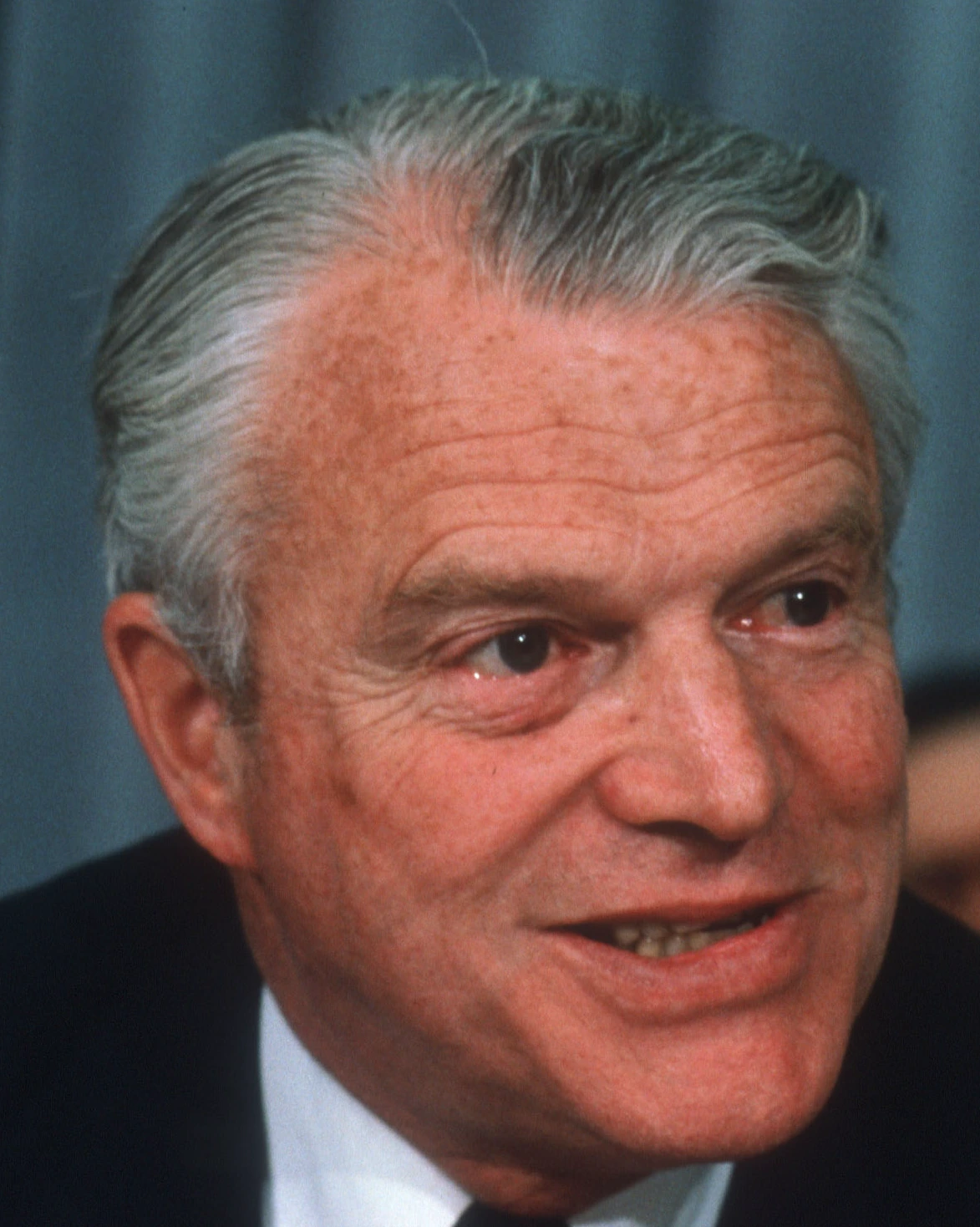
Biography
Jonkheer Van Lennep was born into an old mercantile family that had been elevated to nobility by royal decree in 1903. His father was a manager in the Van Eeghen bank in Amsterdam and an adviser to Queen Wilhelmina of the Netherlands. His mother also came from a prominent family. They belonged to the Dutch Reformed Church. Music played a large role in Van Lennep’s life and he spent several summer holidays abroad in order to improve his language skills. ‘Being born into the ruling classes’, Van Lennep (1998: 15) received an elite education at the Barlaeus Gymnasium and in 1937 earned a law degree from the Municipal University of Amsterdam. He then moved to Leiden, where he prepared a dissertation, but did not want to continue after the occupation of the Netherlands by Nazi Germany in May 1940. He had also met Alexa Labberton, a Leiden law student of Australian origin, whom he married in 1941. In 1940 he went to work at the Dutch Clearing Institute in The Hague, an institution set up during the Great Depression to monitor currency exchange and foreign trade, notably with Germany.
After the country’s liberation in May 1945 Van Lennep worked for the foreign department of De Nederlandsche Bank (the Dutch Central Bank), where Pieter Lieftinck, Dutch Finance Minister during postwar reconstruction and a modernizer of banking laws, was his mentor. Van Lennep became involved in high-level multilateral negotiations. As a delegate at both the Inter-Allied Reparations Agency in Brussels and the United Nations (UN) Economic Commission for Asia and the Far East, two institutions that dealt with German and Japanese war reparations, he collaborated with key economic and financial experts from the United States (US) and the United Kingdom (UK). In 1948 he was sent to Batavia (Jakarta), where he acted as Financial Counsellor to the High Representative of the Dutch Crown in Indonesia. In 1950 he returned to the Central Bank before being nominated to serve as Treasurer-General at the Ministry of Finance in April 1951, a key appointment with regard to policy preparation of financial, budgetary and monetary matters that he held until September 1969. Van Lennep started at the Ministry at a moment of improving economic growth in the Netherlands and of intensifying international cooperation. As a member of the Central Economic Commission of the Economic Committee of the Council of Ministers in the Netherlands, Van Lennep’s duties included the distribution and monitoring of Marshall Plan funds, as well as frequent cross-Atlantic travels as a delegate to the meetings of the International Monetary Fund (IMF) and the International Bank for Reconstruction and Development in Washington DC. At the time economists were a minority in finance ministries and Van Lennep’s law background was characteristic of a period during which, as Van Lennep (1998: 70) stated in his memoirs, ‘post-war dirigiste policies in an economy marked by scarcity centred on regulation, licenses, loans and, generally, fair distribution of wealth, areas where legal expertise was a distinct asset’. He worked with other high-flying European officials with strong Atlantic ties, such as Robert Marjolin, Secretary-General of the Organisation for European Economic Cooperation (OEEC) between 1948 and 1955. At the OEEC Van Lennep was involved in efforts by the European Payments Union to liberalize intra-European trade and to re-establish the convertibility of currencies. His nomination in June 1958 as the first Chairman of the Monetary Committee of the European Economic Community (EEC) underscored his prominence among a tightly knit milieu of Euro-Atlantic policymakers who actively participated in postwar reconstruction and cooperation efforts. His immediate focus as the Monetary Committee’s Chairman was to help solve the French Franc crisis of 1958. Van Lennep (1998: 92) secured both French and German support for a correction of the French unilateral policy that had caused the crisis and felt that they had established a new type of international cooperation: ‘regular meetings by a limited number of policy-making officials from EEC capital cities, discussing each others’ policies, problems, concerns and expectations’.
Van Lennep was a member of the Christian Historical Union, a Dutch conservative party, and his name circulated for potential nomination as State Secretary for European affairs (1959), transport and water works (1963) and even Finance Minister (1967). In 1963 he was also mentioned among the candidates for succeeding Per Jacobsson, the Swedish IMF Managing Director. Van Lennep was a regular participant at conferences of Western political and economic elites, such as the Bilderberg, Bellagio, Ditchley Park and Tidewater meetings, and, from the 1970s onwards, the European Management Forum (now called the World Economic Forum). Trade and capital liberalization remained paramount objectives of the postwar international economic order for Van Lennep, a perennial insider of multilateral diplomacy. He viewed economic integration as a way to consolidate political ties between capitalist states and remained committed to this Liberal Atlanticism throughout his life.
When the OEEC was transformed into the Organization for Economic Cooperation and Development (OECD) in 1961, Van Lennep was shortlisted to head the new Paris-based organization. However, during the final round of voting, his candidature came to a draw with Thorkil Kristensen. The French delegates, who cast the final vote, chose the Danish economist, but Van Lennep did not come away empty-handed from this episode. In April 1961 Walter Heller, Chairman of the Council of Economic Advisers to US President John F. Kennedy, and US Treasury official Robert Roosa summoned Van Lennep to the White House. They informed him that he had been chosen to chair two key OECD committees, namely the Economic Policy Committee (EPC), which focused on fostering economic growth, and the restricted EPC Working Party No. 3 on Policies for the Promotion of Better International Payments Equilibrium (WP3). During EPC and WP3 meetings Van Lennep acted in close collaboration with Otmar Emminger, Germany’s central banker and WP3 Vice-Chairman. When Kristensen’s second term as Secretary-General of the OECD expired in late September 1969, Van Lennep had already been designated as the natural candidate to succeed him, months in advance of the official decision. His start as second Secretary-General on 1 October 1969 not only furthered an already successful career at the highest echelon of international affairs, but also opened the longest tenure (fifteen years) as OECD head. During this period Van Lennep belonged to a quartet of prominent Dutch officials heading international organizations: Jelle Zijlstra at the Bank for International Settlements (BIS) (1967-1981), Joseph Luns at the North Atlantic Treaty Organization (1971-1984) and Johannes Witteveen at the IMF (1973-1978).
During his three terms as Secretary-General Van Lennep faced the challenge of economic turbulence which had replaced the continuous economic growth following the postwar reconstruction period. Van Lennep endeavoured to make the OECD the central forum where Western countries would cooperate to cope with monetary, economic and other crises and to meet the rising demands of the G77 group of developing countries. When he took office in 1969, he warned that ‘paralysis by analysis’ might endanger the standing of the OECD and was keen to reinvent the organization as an ‘action-oriented, policy-making body’ (quoted in Schmelzer 2016: 68). He encouraged the diversification of the OECD into new fields, such as education, the environment, as well as financial and fiscal affairs. He also tried, with mixed success, to rationalize the many ‘vertical committees’ that constituted the OEEC’s legacy. OECD member states often resisted his ambitious objectives and were unwilling to allow the Paris Secretariat to gain in autonomy and leverage. The OECD structure also proved cumbersome in comparison to new ad hoc platforms set up by an exclusive group of advanced economies in the early 1970s (the Group of 5, or G5, soon G7). Considered by British diplomats as an overconfident ‘empire builder’, keen to expand the OECD prerogatives, Van Lennep was nonetheless deemed ‘a great success as Chairman of Working Party 3, one of OECD’s most important groups, because of his good grasp of economic and financial policy’. However, the same British diplomats regarded his OECD secretarial leadership as ‘less successful mainly because he is a poor administrator (reluctant to delegate yet determined to avoid involvement in administrative detail, let alone staffing problems)’ (National Archives, London, FCO59/1539).
During his first term in office (1969-1974) Van Lennep mobilized the organization to help Western countries overcome the monetary, economic and energy crises of these turbulent years. His first report urged OECD member states to tackle inflation. Considering that his analyses and criticism could weigh on the formulation of domestic economic policies of member states, Van Lennep overestimated his standing and ruffled feathers among powerful OECD members. The British Prime Minister lambasted Van Lennep for his intrusive opinion about the British economy, presented during his first visit to the UK and based on OECD data, but seen as an improper intervention. After this tumultuous start Van Lennep established an economic Bureau, through which he would informally consult major member states in order to avoid future diplomatic crises. Following the US decision to suspend the convertibility of the US dollar in gold in August 1971, the OECD Secretariat and WP3 facilitated discussions between countries that were willing to make resources available and, alongside the IMF and the BIS, they provided much needed technical analysis. However, Van Lennep was excluded from the final negotiations that led to the so-called Smithsonian Agreement of December 1971. Encouraged by the US Treasury, Van Lennep hoped that the OECD could lead far-reaching monetary and trade negotiations in order to stabilize the international balance of payments, but, due to French opposition against comprehensive negotiations and hostility from the General Agreement on Tariffs and Trade (GATT) and the IMF towards such strengthening of the OECD, the project was scaled down. Both the OECD Executive Committee in Special Session and the high-level group led by former EEC Commissioner Jean Rey remained minor actors in the reform of Bretton Woods system and the Tokyo Round of the GATT. In 1973, when the administration of US President Richard Nixon floated Van Lennep’s name to replace Pierre-Paul Schweitzer as IMF Managing Director, Van Lennep decided to stay in Paris for a second term because he estimated that the OECD would be able to hold more sway on international economic affairs than the crisis-ridden IMF. However, France, Germany, the UK and the US preferred instead to steer the reform of the monetary system through the ad-hoc Library Group of finance ministers, which became the G5 when Japan joined them in 1974.
By the mid-1970s the OECD had become a platform for the three poles of Western capitalism, with membership spanning both the Atlantic (Western Europe and North America) and the Pacific (Japan had joined in 1964, Australia in 1971 and New Zealand in 1973). The 24 OECD member states (a number that would remain unchanged until the end of the Cold War) represented around two-thirds of the world’s Gross Domestic Product. In his editorials in the monthly OECD Observer, Van Lennep called the OECD the ‘economic conscience’ of the West (December 1973) and underscored the necessity of ‘knitting’ its members together in a tight multilateral ‘fabric’ (April 1974). In accordance with this perspective, Van Lennep envisioned that the OECD should coordinate the Western response to the first oil shock in the winter of 1973-1974. However, US Secretary of State Henry Kissinger deemed the OECD too bureaucratic and insufficiently policy-making-oriented to solve emergency situations. Whereas the OECD, once again, provided technical and analytical support for the February 1974 Washington Energy Conference, Van Lennep was kept out of the political decisions leading to the foundation, in autumn 1974, of the International Energy Agency, an autonomous body nested within the OECD. In spite of the crisis context, Van Lennep’s OECD strove to uphold multilateral liberalism. The so-called Trade Pledge, adopted in the spring of 1974, by which OECD countries pledged to avoid import restrictions and tariff increases to counter the economic consequence of the oil shock, figured among Van Lennep’s more successful endeavours. The OECD also facilitated negotiations and agreements to limit competition through export credits. Furthermore, Van Lennep envisioned a vast petrodollar recycling mechanism to increase financial solidarity among OECD members and to stabilize global financial markets, which suffered from a mismatch between dollars earned through oil exports and investment opportunities. Despite initial US support, the US Congress never ratified this Financial Stability Fund. Van Lennep, who once again had the standing of the OECD at heart, stubbornly pressed forward with the idea until 1977, to the inconvenience of member states that by then had designated the IMF as the best platform to monitor global imbalances of payments.
During his second term in office (1974-1979) Van Lennep fought an increasingly difficult battle to prevent the OECD’s side-lining by summits of the G5 and G7 (G5 plus Italy and Canada). When the G5 leaders announced that they would meet in Rambouillet, France in November 1975 to discuss the international economic situation, he was not invited, despite his demands to attend. This exclusion profoundly disappointed him, as he had been a prominent insider for decades. In order to prevent the institutionalization of such ad hoc meetings of a few major economies, he attempted to reform the OECD by increasing the sway of major states in decisions, but smaller OECD member states resisted this move. He also proved unable to focus the organization’s work on core economic activities as any downsizing in the OECD work program went against many member states’ special interests. His difficulties with keeping the budget and the scope of the organization under control (not to mention his profligate personal expenditures) also became a source of irritation for national delegations at a time when budgetary discipline was required domestically. Notwithstanding the growing relevance of the G7 summits, the OECD continued to play a key role in multilateral economic diplomacy, notably in domains such as the regulation of multinational firms, where the OECD Code of Conduct (1976) faced off with concurrent projects from the UN and the EEC. The OECD, notably its Development Assistance Committee, facilitated Western coordination against the New International Economic Order proposals put forward by the G77 in the UN Conference on Trade and Development. After the Club of Rome’s publication of The Limits to Growth (1972), the OECD helped to mitigate environmental demands so as to make them palatable to business interests. After the 1974-1975 recession Van Lennep strove to restore ‘sustainable growth’, i.e. non-inflationary growth not based on external deficits, among the Western bloc and contributed to the increasing shift away from Keynesian short-term fine-tuning of demand at the national level towards a medium-term demand management based on international cooperation.
From 1976 onwards the British Labour government and the administration of US President Jimmy Carter perceived Van Lennep as an ally in their attempts to persuade Japan and Germany to boost their economies and to play a ‘locomotive’ role among capitalist states. Van Lennep was tasked with providing statistical material, macroeconomic models and growth strategies to be discussed at G7 meetings as well as ensuring the follow-up of G7 decisions. In parallel, the OECD started to work on market-friendly ‘positive adjustment policies’ meant to facilitate the ‘structural adjustment’ of core Western economies. However, and to Van Lennep’s dismay, the ambitious package of macro- and microeconomic measures the OECD developed for the 1978 G7 Bonn Summit unravelled when the second oil shock hit Western economies in early 1979. In the aftermath of the Bonn reflation strategy, the legitimacy of coordinated international economic packages to boost the world economy was severely impaired. The OECD now prioritized work on ‘positive adjustment policies’ in order to foster growth. Protectionist industrial practices, agricultural subsidies, labour market rigidities and growing social expenditures came under attack.
In 1979, at the age of 65, Van Lennep was re-elected for a third term as OECD Secretary-General. Member states proved unable to agree on an alternative candidate and Van Lennep was supposed to retire as soon as a suitable solution was found within the next two and a half years. In November 1981 a diplomatic row brewed between Western Europe and the administration of US President Ronald Reagan. When no agreement over a new Secretary-General was reached, Van Lennep continued until 1 October 1984, when he was succeeded by Jean-Claude Paye, a French senior official and former G7 ‘sherpa’ (the personal representative of the French president). This dithering transition underscored the crisis of Western economic cooperation, with the US government under Reagan disregarding macroeconomic cooperation and paying virtually no attention to criticism of its domestic policies raised at G7, IMF and OECD meetings. At the same time France and other Western states fiercely resisted economic reforms pushed by the US in these meetings. Van Lennep and the OECD found themselves between hammer and anvil. While he supported the trend towards economic liberalization, as he had done since the 1950s, and resisted protectionism and French Socialist experiments, Van Lennep also remained unconvinced by Reaganomics and monetarist experiments. During his final years at the OECD he attempted to reconcile these antagonist positions. He also encouraged preparatory work for further liberalization of trade and services, an agenda that would be at the core of the Uruguay Round of the GATT during the second half of the 1980s.
Van Lennep’s departure from the OECD in 1984 did not mean retirement. The tireless Dutchman continued to work as an advisor for the Dutch Ministry of Finance (he kept a personal office at the Ministry until his death) and as a special emissary in complex disputes involving Dutch investment in oil refineries and gas pipelines in Venezuela and Argentina. He was also a consultant for international organizations (such as a 1987 review for the Asian Development Bank) and an active participant in various ‘wise men councils’, where he continued to meet the former heads of state and high civil servants with whom he had collaborated during many decades. As a member of the Earth Council and former advisor to the 1992 UN Conference on Environment and Development (UNCED) in Rio de Janeiro he was concerned with the development of financial instruments for a sustainable economy. Deemed by central banker Paul Volcker as a ‘prime example of the talent and dedication the Dutch have traditionally supplied to international organizations’, Van Lennep was also considered as a genuine ‘conductor of the world economy and of the international monetary orchestra, leading musicians to follow the tune of the high and low dollar, of inflation, growth and oil’ (Jansen and De Waard 1991). In 1990 he was awarded the Freedom from Want Award. In 1996 he was engaged in preparing the UNCED follow-up conference. Van Lennep died suddenly in October 1996, a few days after he returned from an IMF meeting in Washington DC.