Biography
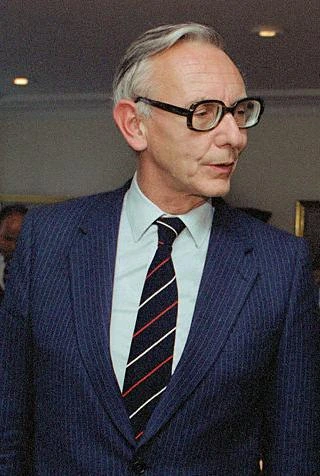
Van der Stoel grew up as the only child in a non-religious family and became politically interested at a young age, when he started to follow developments in national-socialist Germany (Marinus van der Lubbe, who set fire to the Reichstag in Berlin, was a patient of his father) and in fascist Italy. Van der Stoel attended grammar school in Leiden (1936-1942) and detested the 1940 German occupation of his country. In early 1943 the Germans executed the head of his primary school and the vice-principal of his grammar school in reprisal for an attack by the resistance movement. Thanks to his father he worked as a volunteer (listed as one year younger than in real life to qualify since this position prevented him from being forced to work in Nazi Germany) at the municipal secretariat of his birthplace Voorschoten, which allowed him to secretly listen to BBC broadcasts from London. He was shocked to learn that Soviet troops in Poland had not helped the population of Warsaw when they revolted against the Germans in 1944. He interpreted for the Canadian troops that liberated his part of the country in May 1945 and started his study of Dutch law and sociology at Leiden University (1945-1953). In 1946 he became a member of the newly founded Labour Party and the social-democratic student association Politeia, through which he encountered other socialist student associations in Europe. Between 1953, the year he married, and 1958 he worked as a staff member at the party’s scientific bureau and headed its institute for international relations research between 1957 and 1965. When Alfred Mozer became chief of staff for Sicco Mansholt at the European Commission in 1958, Van der Stoel succeeded Mozer as the party’s international secretary. His public career began when he was elected as a Member of the Senate (1960-1963), where he became spokesperson for foreign affairs, and a Member of the House of Representatives for the first time (1963-1965).
In July 1965 Van der Stoel was appointed State Secretary for Foreign Affairs, in charge of Dutch relations with the United Nations (UN) and the organization’s specialized agencies. He handled the proposed treaty on non-proliferation of nuclear weapons and at home defended the proposal to have the military headquarters of American troops of the North Atlantic Treaty Organization (NATO) located in the Netherlands. His cooperation with Foreign Minister Joseph Luns was good, although they differed in opinion on decolonization and development aid. In a 1961 report for his party Van der Stoel had argued, unlike Luns, in favour of transferring the political future of Dutch New Guinea to the UN. Due to a major political crisis the cabinet fell in November 1966. In February 1967 Van der Stoel was elected for the second time as a Member of the House of Representatives, where he became spokesperson for foreign affairs. The influential New Left group within the Labour Party regarded him as ‘right wing’, given his pro-Atlantic stance, his continued support of NATO membership (given the dictatorships in Greece and Portugal, which he also condemned, New Left proposed leaving NATO), his rejection of anti-American sentiments regarding the Vietnam War (which he however was more critical of than Minister Luns) and his unwillingness to unilaterally recognize the German Democratic Republic (as proposed by New Left).
As a Dutch parliamentarian Van der Stoel widened his international contacts as he also became a Member of the Parliamentary Assembly of the Council of Europe (where his father-in-law was Director of Legal Affairs) and the Assembly of the Western European Union (both between May 1968 and May 1973), the Parliamentary Assembly of NATO (May 1969-May 1973) and the European Parliament of the European Communities (September 1971-May 1973). After a military junta overthrew the democratic regime in Greece in 1967, the Council of Europe appointed Van der Stoel Rapporteur for this country. He presented regular and well-supported reports to the Parliamentary Assembly, based on visits and serious inquiries in which he demonstrated that torture had taken place. Heated debates in the Assembly resulted in the withdrawal, or according to the Council’s Committee of Ministers a de facto suspension, of Greece from the organization. This lasted until the fall of the dictatorship in 1974 and Greece’s readmittance to the Council of Europe. As part of the widely felt Greek gratitude Van der Stoel had a street in Athens named after him.
Although New Left did not fully support the appointment, Van der Stoel was selected to be Minister of Foreign Affairs in the left-leaning government led by Joop den Uyl in May 1973. After the military coup in Chile in September Van der Stoel arranged for the admission of a generous number of Chilean refugees into the Netherlands. During the Yom Kippur War of 1973 the Netherlands supported Israel (Minister of Defence Henk Vredeling even supplied weapons, without informing Van der Stoel), resulting in an oil boycott by the Organization of Arab Petroleum Exporting Countries against several countries. This did not deter Van der Stoel from working to improve relations with the Arab countries at the UN Special Session of the General Assembly on Raw Materials and Development in April 1974. After the Carnation Revolution, which overthrew the authoritarian regime in Portugal on 25 April, the Dutch government supported the democratic government led by social-democrat Mário Soares, who visited The Hague on 4 May. Relations between Van der Stoel and left-wing Minister for Development Cooperation Jan Pronk were tense. They agreed on the relevance of international organizations and the promotion of human rights in the South but had different work styles. While Pronk openly exerted pressure on regimes that violated human rights, the more cautious Van der Stoel preferred quiet diplomacy.
NATO remained the cornerstone of Van der Stoel’s foreign policy in East-West relations. To reconcile the two wings in his party, he was both a loyal and critical ally within NATO. He developed relations with the Soviet Union and China and, in 1975, published, together with State Secretary for Foreign Affairs Peter Kooijmans, a report on disarmament and security that favoured both arms control and reduction. Détente between East and West was promoted by the Conference on Security and Cooperation in Europe (CSCE), which started with a meeting of foreign ministers in Helsinki in 1973, followed by two years of negotiations in Geneva and the Helsinki Final Act of 1975. Van der Stoel, who contributed to making human rights one of the purposes of Dutch foreign policy, focused on discussing both international relations and human rights within the CSCE. Apart from security and economic cooperation the Final Act agreed on a third section (‘basket’) on cooperation in humanitarian and other fields, which included, as fostered by Van der Stoel, human contacts and the exchange of information between East and West. His persistence (even Western states did not support him for a long time) led to Principle VIII (self-determination) being formulated in such a way that human rights activists ‘felt empowered to claim the right to participate in the decision making of their governments’ (Lamberti 2012: 56). When Van der Stoel visited Czechoslovakia in 1977, he made it a condition that he could bring anyone he wanted (in this case a journalist who was denied visas) and could discuss any topic. When Jan Patočka, co-author of Charter 77 (with Jiři Hájek, Václav Havel and others), contacted him through the journalist, they met at his hotel. The get-together created a commotion in the media and cancellation of his meeting with the Czechoslovak president, but the dissidents viewed this as moral support (Patočka was arrested afterwards).
After the cabinet fell Van der Stoel was re-elected to the House of Representatives (1977-1981), including renewed membership of the NATO Parliamentary Assembly (1978-1981), to be appointed again as Minister of Foreign Affairs in a cabinet that existed shortly between September 1981 and May 1982. He helped Spain, which had seen a transition to democracy after the death of dictator Francisco Franco, become a member of NATO. At this time East-West tensions were increasing. The NATO Double Track Decision of December 1979 aimed to deploy American cruise missiles in Europe and the Netherlands, to balance the numbers of the Warsaw Pact’s SS20 missiles. At the same time NATO offered negotiations with the Warsaw Pact to prevent deployment, which started in November 1981. With a huge street demonstration against any cruise missiles that month and the Dutch government willing to make concessions, Van der Stoel opposed unilateral Dutch steps, given his view of the Soviet Union’s aggressive intentions. The Labour Party criticized his continued support of NATO’s Double Track Decision. After his ministership ended he decided not to stand again for election.
In 1982 the Dutch government nominated Van der Stoel to succeed Danish Poul Hartling as UN High Commissioner for Refugees but this was blocked by the US preference for Hartling’s continuation and UN Secretary-General Javier Pérez de Cuéllar’s extension of Hartling’s term in office. A further Dutch nomination of Van der Stoel in 1985 also failed when the US signalled to the UN their preference for Swiss Jean-Pierre Hocké to become High Commissioner. From July 1983 to August 1986 Van der Stoel served as Dutch Ambassador to the UN. In December 1983 he chaired the Security Council (the Netherlands being a Council member during 1983 and 1984) and managed to gain Security Council support for the Secretary-General’s request that the five ships which would evacuate the Palestine Liberation Organization from Tripoli, Lebanon to Tunis, Tunisia would, for reasons of protection, also fly the UN flag. In March 1984 he contributed to the Security Council President making a statement on behalf of the Council in which the use of nerve gas by Iraq’s President Saddam Hussein was condemned and, in December, he convinced all Council members to extend the UN arms embargo against apartheid in South Africa to also include imports of South African weapons.
Van der Stoel went back to the Netherlands, where he served as a member of the Council of State between August 1986 and December 1992. He returned to the UN in March 1991, when the Commission on Human Rights appointed him as Special Rapporteur on the situation of human rights in Iraq focused on violations by the government. Iraq had invaded Kuwait in 1990 and was defeated by a US-led coalition during the Gulf War. Van der Stoel visited Iraq twice, succeeded in collecting testimonials and documents, and, in 1992, presented a well-documented and eye-opening report about torture and other human rights abuses by the regime. In August he was allowed to inform the Security Council in his personal capacity about the findings, thanks to his good relations with US Deputy Secretary of State Lawrence Eagleburger and a novel Council procedure. Iraq no longer allowed him into the country, but Van der Stoel reported in detail on violations year after year (until 1999), also demonstrating how Iraq’s government thwarted the UN Oil-for-Food Programme of 1996.
During the CSCE follow-up meetings in Belgrade (1977-1978), Madrid (1980-1983) and Vienna (1986-1989) Van der Stoel continued his plea for human rights, while remaining in contact with dissidents in Eastern Europe. When he, in a private capacity, visited Czechoslovakia in 1988 to attend a conference organized by the informal civic initiative Charter 77, Havel was arrested. Relations within the CSCE improved with Mikhail Gorbachev as Secretary-General of the Soviet Union’s Communist Party. Van der Stoel headed the Dutch delegation to the Human Dimension meetings in Paris (1989), Copenhagen (1990) and Moscow (1991). The explosion of nationalism in parts of Yugoslavia and the Soviet Union in the years after the fall of the Berlin Wall (1989) showed that many conflicts between population groups had remained hidden and unresolved. This awareness initiated the gradual institutionalization of the CSCE into the Organization for Security and Cooperation in Europe (OSCE) as of 1 January 1995. In 1991 the small CSCE Secretariat was established in Prague, Czechoslovakia, the Conflict Prevention Centre in Vienna, Austria and the Office for Free Elections (later Office for Democratic Institutions and Human Rights) in Warsaw, Poland. In April 1992 the Dutch government proposed the creation of a High Commissioner on National Minorities, a position meant to identify and seek early resolution of ethnic tensions that might endanger peace, stability and friendly relations between CSCE states, with the High Commissioner an instrument of conflict prevention at the earliest possible stage. Van der Stoel, 68 years old at this point, helped to create the position and, on 15 December, the Council of Foreign Ministers, aware of his recent UN report on human rights abuse in Iraq, appointed him for a three-year term as the first CSCE/OSCE High Commissioner on National Minorities. He took up the post on 1 January 1993.
The Dutch government provided an office in The Hague and seconded one personal advisor and a secretary. A non-governmental organization provided another staff member, Poland and Sweden seconded one official each and Van der Stoel created the Foundation on Inter-Ethnic Relations to raise money to attract staff to help with special projects. The modest but capable staff felt inspired by workaholic and sober-minded Van der Stoel. During the 1990s the CSCE/OSCE had missions in respectively Georgia, Moldova, Bosnia and Herzegovina, Macedonia and Serbia. Van der Stoel travelled to countries where ethnic tensions were rising such as Estonia and Latvia (discussing citizenship of ethnic Russians), Kazakhstan, Kosovo (the only time he issued a formal early warning in May 1999, which remained unheeded), Macedonia (forty visits in seven years), Romania, Russia and Ukraine, and he promoted rights for Roma and Sinti, the single largest minority in the OSCE region. Van der Stoel (2001: 28) sailed ‘into uncharted waters’, using ‘old-fashioned confidential shuttle diplomacy’ (Kemp 2011: 7) to reduce inter-ethnic tensions by stressing the need to protect the rights of persons belonging to national minorities. He based his work on available international standards. The mandate was ‘not always a textbook example of clarity’, but that also left some flexibility to the High Commissioner (Homan 2002: 7). Because his detailed mandate contained limitations (no individual cases, no terrorism) and ambiguous wording, Van der Stoel consulted international law and minority rights experts to clarify the mandate. He thus created a set of acceptable guidelines and practices.
Van der Stoel worked relatively independently but ensured that he had the backing of the political bodies of the CSCE/OSCE. His step-by-step approach started with being well-informed through several sources and understanding the root causes of tensions. He had highly tuned political instincts, was not afraid to ask hard questions and was able to identify, as he put it, ‘where the shoe pinches’ (Kemp 2011: 7). When on a mission he strived to be impartial, insisted on confidential talks (he created trust among his interlocutors by not talking about sensitive issues in public) and promoted follow-up meetings and incrementalism. He tried to work with the states he visited, rather than against them, aware that political solutions require compromise, for him a matter of pragmatism based on principles. Believing that inter-ethnic tensions often stem from a lack of communication, he favoured dialogue as a process for dispelling misperceptions and building confidence between the parties and regarded effective participation of national minorities in public life to be an essential component of a peaceful society. In the event of an impending disagreement, he used the so-called conference method by bringing the parties together in a pleasant place to talk in a relaxed atmosphere, including meetings at the bar (he was a moderate drinker). He rejected secession as a viable option for achieving lasting peace and kept promoting the multi-ethnic and multi-cultural ideal. He was reluctant to give an early warning when a situation was escalating (a High Commissioner’s right) and believed that informal contacts between themselves were more useful, because they allow to discuss where things go wrong. After almost every mission he made recommendations to the parties involved and he developed the practice of asking the government involved to respond to the recommendations. As soon as he received the response, he sent it to the Permanent Council of the OSCE. Most debates about recommendations resulted in strong support by the Council as well as the European Union (EU) and the US. As a skilful mediator and negotiator Van der Stoel, whose term in office was extended twice, carved out a strong role for later High Commissioners on National Minorities. On 1 July 2001 he was succeeded by Swedish diplomat Rolf Ekéus.
Partly overlapping with his High Commissionership, Van der Stoel was a part-time professor of peace and conflict studies at Leiden University (1999-2000) and a visiting professor of international and European law at Tilburg University (2001-2003). In 2001 Van der Stoel helped the Dutch government solve a constitutional crisis by traveling to Buenos Aires where he convinced Jorge Zorreguieta, who had been a minister under the Argentine dictatorship, to not attend the wedding of his daughter to the Dutch crown prince (who had been willing to give up his kingship for the marriage). In July 2001 Van der Stoel also became a special advisor on Macedonia to Javier Solana, the EU’s High Representative for Common Foreign and Security Policy. Van der Stoel, who died in 2011 at the age of 86, was recognized for his work with several honorary degrees, freedom awards and national honours but, despite several nominations, the Nobel Peace Prize eluded him, probably because the success of his work was hard to prove when nothing visible happened (Kemp 2011). The OSCE and the Dutch government created the Max van der Stoel Award (2001) and two Dutch foundations merged into the Foundation Max van der Stoel (2013), focused on democratization, development cooperation and dialogue. A park on Jan Patočka Street in Prague was named after him (2014), with a memorial unveiled in 2017.