Biography
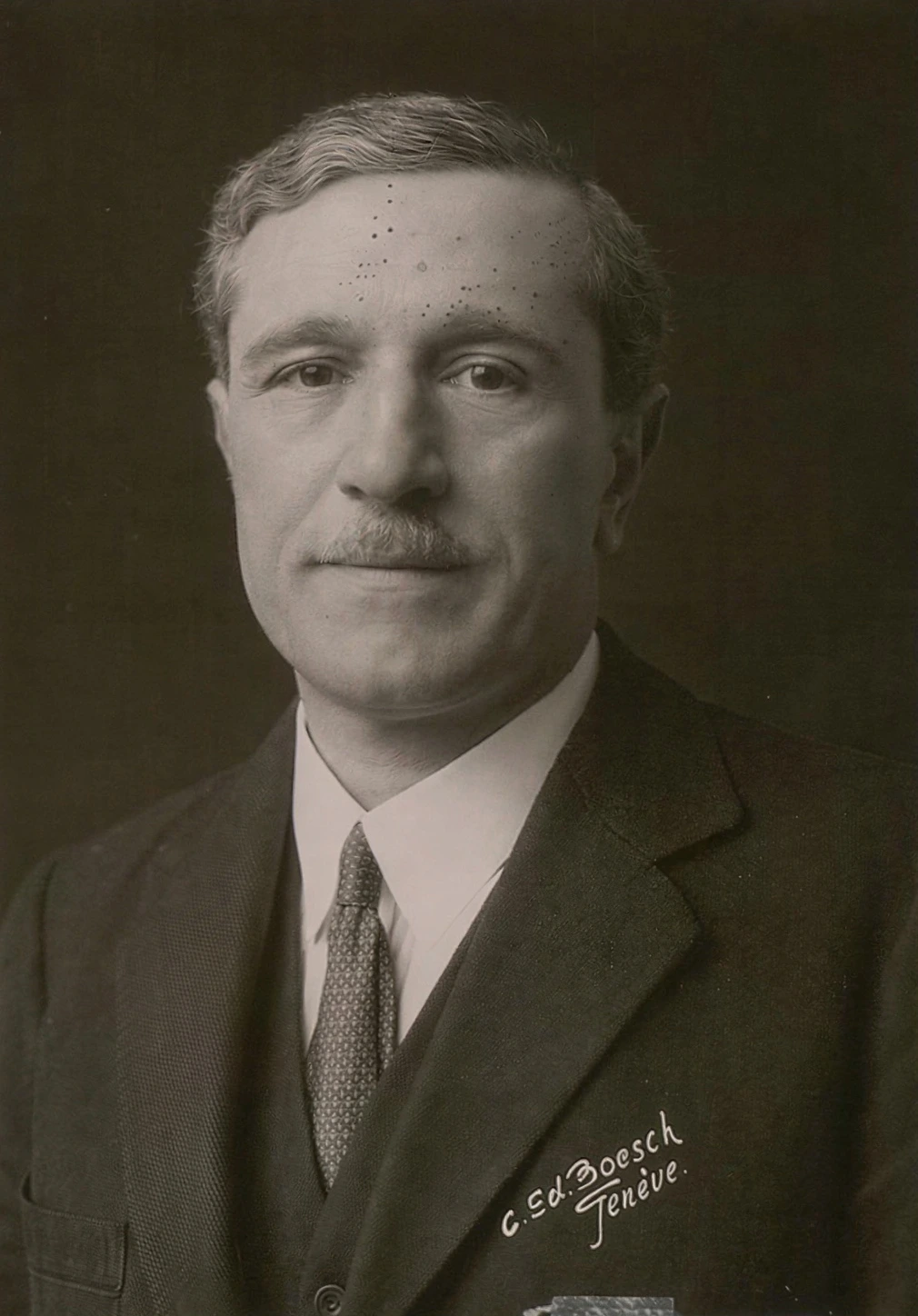
Stoppani was born and raised in Milan, Italy. He studied Romance languages and literature, earned a doctoral degree and became a teacher. He decided to continue his career in the United States (US). In September 1912 he arrived in New York and travelled on to Chicago, where he started at the University of Illinois as Lecturer in the Library School and General Assistant in the Library. He then became an Instructor in Romance languages at the Department of Romance Languages and Literatures of the University of Chicago, where he also taught elementary and intermediate Italian. After Italy agreed to enter the First World War on the side of France, Great Britain and Russia in the Treaty of London (April 1915), he expected to be assigned to service in the Hospital Corps of the Italian Army in August. In September the university granted him a leave of absence for one year (until 1 October 1916). Leaving for Milan to enter the training school for officers as a Lieutenant in November 1915, he was the University of Chicago’s third staff member joining the armies fighting in Europe. After the war’s end Stoppani remained in Europe, becoming an Attaché of the Italian Delegation to the 1919 Peace Conference in Versailles, France. However, there was ongoing disagreement about the Treaty of London, in which the Allied states had promised Italy postwar control over territory bordering the Austro-Hungarian Empire. The Allies argued that Italy had not sufficiently adhered to the war effort and US President Woodrow Wilson wanted to set the Treaty of London aside. The Italians, however, felt betrayed as they believed that treaty-based promises were not kept. On 24 April the delegation left the peace conference and returned to Rome, where frustration over the perceived ill-treatment spawned nationalist and anti-American feelings. After eleven days the delegation returned and Italy eventually received some territory, a permanent seat on the League of Nations’ Council and a share of German reparations. Stoppani became a member of the inter-Allied Reparation Commission, which held its first meeting in January 1920 and had Arthur Salter as Secretary-General until July 1922, when Salter returned as Director of the Economic and Financial Organization (EFO), a section of the League of Nations Secretariat in Geneva, Switzerland. Stoppani, who by then had acquired the necessary monetary insights, remained with the Reparation Commission and started his career in the League Secretariat as a member of Salter’s EFO on 18 February 1923.
Stoppani settled in Geneva, marrying his French wife in July and committing himself to the League’s economic mission. The Secretariat’s main method of working was preparing international conferences with delegates who were appointed by their governments but acted as experts in their field rather than as national representatives. This was practiced at the financial conference in Brussels, Belgium (1920) and the economic and financial conference in Genoa, Italy (1922). The conferences assessed situations and advised governments but also provided the League and its Secretariat with common economic views. The Brussels conference resulted in the establishment of the League’s Economic Committee (as well as a Financial Committee) with twelve members, most of them officials, appointed by the Council. The EFO served as the Committee’s secretariat and developed into one of the largest sections of the League Secretariat. Salter did not mind that Stoppani was not a real economist, as British EFO member Alexander Loveday had such technical economists available. The kind of man Salter wanted for dealing with the Economic Committee was ‘the official with training and experience in handling Committee work’. Salter had three such employees who possessed these qualities, of whom Stoppani was ‘naturally the best qualified’ (Minutes Appointments Committee, 2 October 1923, League Archives, S954-263-2: 10). Stoppani helped prepare the World Economic Conference, which eventually took place in Geneva in May 1927, with 194 delegates and 157 experts from fifty countries, including the US and the Soviet Union. Because many countries continued to obstruct the restoration of free world trade through placing restrictions, the conference laid the basis for a European system of bilateral trade agreements and a direction for future policy which consisted of long-term commercial treaties, the generalization of the most-favoured-nation treatment and a reduction in the level of tariffs. This policy direction appealed to liberal-minded Stoppani, whose work was well-respected at the League. Salter regarded him as ‘an indispensable member of the Secretariat’ and Salvador de Madariaga of the Disarmament Section viewed him as ‘the ablest of the Italians’ (Tollardo 2023: 222). As of 1 January 1929 Stoppani was made Chief of Salter’s EFO.
As can be expected from an international civil servant who should be well-informed about national developments, Stoppani had a normal relationship with his home country’s government, led by Benito Mussolini since 1922. Engaged in rather technical economic work, he rarely received direct requests from Rome. When Italian League employees were involved in a brawl between pro- and anti-Fascists in the Geneva Plainpalais district in June 1926, the League created an investigation committee, with Stoppani as one of its five members. The report concluded with a formal reprimand of the Italian employees involved. While they had violated the Secretariat’s staff regulations, further disciplinary measures were not taken. By now careful about his relationship with Fascist Italy, which tried to influence the League, Stoppani preferred independence and did not sign the final report. Participation in the committee did not harm his relationship with Italy, as illustrated by the fact that in 1928 Stoppani asked Giacomo Paulucci, Mussolini’s former Chief of Cabinet and the League’s Under Secretary-General in charge of the internal administration since 1927, the personal favour of helping to terminate a legal procedure against him and some relatives in Milan for the possession of some undeclared weapons (which Stoppani had collected during the war). In 1928 Italy also offered Stoppani the Secretary-General position of the Rome-based International Institute of Agriculture, but, after having discussed it with both Salter and the Institute, he refused the post. The League and Stoppani remained critical about the Institute’s functioning, and it was not until September 1932 that it proved acceptable as the League’s advisory body on agricultural matters. In 1932 Luciano de Feo, pro-Fascist leader of the League-affiliated International Educational Cinematographic Institute (set up in Rome in 1928), approached Stoppani to promote a free trade agreement for the abolition of customs duties on educational films. Given his free trade engagement, Stoppani supported this move which resulted in a convention in October 1933.
In 1931 Salter resigned as EFO Director. He favoured Stoppani, also the most senior official, as his successor, but, due to British pressure, the EFO section of the League Secretariat was split into two parts on 1 April 1931, with two Directors: Stoppani of the new Economic Relations Organization and Loveday of the Financial and Economic Intelligence Organization. Despite the organizational split, Stoppani and Loveday, who had developed the League’s statistical operations, joined forces by supporting each other’s work from their respective points of view. They presented the Economic Committee and the Financial Committee as independent bodies, based on dedication among qualified Secretariat employees, transnational networks of experts and sound understanding of the (political) relations with the League’s Assembly and its Second Committee (that dealt with economic, financial and technical questions). Stoppani’s Economic Committee, which had been given a fixed statute by the 1927 Geneva conference, continued its focus on trade and commercial policy, much aware of the political significance of trade. The EFO’s economic section was smaller than the financial one (which initially was burdened with more tasks), comprising between three to five permanent members with four additional experts on temporary secondment. The EFO produced many economic studies and statistical publications, among them (since 1932) the annual World Economic Survey. Stoppani and Loveday increased the League’s economic and financial activities during the 1930s, but this still drew less public attention than the League’s political activities. They believed that sound analysis would help coordination between states. Their stance on pressing economic and financial issues (the economic depression, protectionism, gold standard and clearing issues) was proactive as they sought to influence practice.
International economic relations had become tougher by the end of the 1920s because of ongoing problems with German reparation payments, exacerbated by the 1929 US stock market crash. US intervention helped to alleviate the reparation issue through the so-called Young Plan (named after businessman Owen Young) and the establishment, outside of the League, of the Bank for International Settlements (BIS) in 1930. Great Britain departed from the gold standard in 1931 and protectionist policies in Europe took regional forms, as in the customs union between France and its colonies (1928), the British Commonwealth (1932), the trading bloc between Austria, Hungary and Italy (1934), one between Balkan countries and another one between Baltic states. Stoppani and Loveday saw the World Economic Conference in London (1933) as an opportunity to discuss the rising levels of international protectionism, to be followed by discussions on draft proposals for tariff and quota reductions in the Economic Committee and the Assembly’s Second Committee. They recognized the relevance of the new international policy direction of the US that would result in the 1934 US Reciprocal Trade Agreements Act (RTAA), based on reciprocity and the most-favoured-nation principle. Stoppani’s Economic Committee took the initiative of having the new policy on the agenda of the world conference in London, where US Secretary of State Cordell Hull hoped to secure RTAA agreements with Great Britain and other European countries. The effect of Europe’s negative response in London was that the US then focused successfully on RTAA relations with Latin American countries.
During the following years Stoppani ensured that each Economic Committee agenda had an item that allowed for trade (and related financial) issues to be discussed. The EFO’s new method of working involved the preparation of conventions confined to certain states (for example used at the 1933 wheat conference in London) and the development of models which governments could use during negotiations on bilateral agreements (worked out for double taxation and operating profits by the Financial Committee in 1935). The EFO regarded the Economic Committee as the vehicle to influence delegates in the Assembly’s Second Committee. This activism was more sensitive to the Financial Committee, as its members held rather orthodox views and were less willing to discuss monetary policy publicly. Stoppani and Loveday solved such tensions by deliberately keeping the Financial Committee on the sidelines. Worried about actual developments in 1935, they made the Economic Committee submit a report to the Second Committee to trigger discussions on international protectionism and a return to an open world economy under League auspices. Stoppani and his staff drafted a report addressed to leading governments that sought to reconcile differences in British, French and US commercial and monetary policies. The process included preparatory meetings with Americans and culminated in a secret joint meeting between Economic and Financial Committee members in Paris, who agreed to release the report. However, the proposed reduction in trade restrictions based on the most-favoured-nation clause and supplemented by a new currency stabilization agreement was rejected by the national delegates and the US consul in Geneva expressed his frustration.
Stoppani did not give up and, in 1936, proposed that the three countries should sponsor a five-power conference with Germany and Italy and that the Economic Committee should be the initiator. In July he toured Europe to discuss the key advantages with politicians from the three countries in secret meetings. No one power rejected his scheme outright, but after a while Stoppani understood that Great Britain and the US in fact did not support his proposal (only France was in favour). His ensuing report on the Economic Committee’s work, however, broke new ground in the field of the League’s economic policy, as it ‘articulated the agreed view of the League and all the nation-states present at the [Economic Committee] meeting that the world should move towards a reduction of trade restrictions combined with a programme of co-ordinated “currency adjustment” – in other words a devaluation of the gold bloc currencies’ (Clavin and Wessels 2005: 489). This was the League’s first report to propose currency devaluation, resulting in the signing of the Tripartite Agreement to stabilize exchange rates in September (to which three smaller gold bloc countries adhered). According to Clavin and Wessels (2005: 489), Stoppani’s covert meetings had acted as ‘avenues for negotiations integral to the conclusion’ of this agreement. Stoppani had substantiated his vision in a memorandum that connected regional economic cooperation with ideas about European union. Acting on a French initiative, the 1930 Assembly of the League had established the Commission of Enquiry for European Union, whose pro-free trade studies were discussed at a conference in Stresa, Italy in 1932. In this context Stoppani’s 1936 ‘Crusade’ emphasized the need to combat nationalism and promote cooperation between European states (Tollardo 2016a: 301; Nabăr 2009). Although Stoppani and Loveday’s initiative stalled, the EFO’s rather autonomous advocacy for the reduction of trade restrictions based on the most-favoured-nation principle in 1935 and 1936 was remarkable. They used not only the official organizational structure and procedures to put forward ‘what they considered to be an appropriate policy course out of the deadlock in international economic relations’ but also used the informal means at their disposal (private meetings with key figures in Geneva and elsewhere) and the production and dissemination of memoranda and supporting data (Clavin and Wessels 2005: 488).
Stoppani was not personally a Fascist, but with increasing Fascist pressure on Italian League employees, he started questioning his national identity in relation to his League allegiance. Like all Italian employees he participated in the gold collection promoted by the Fascists in December 1935 to finance Italy’s Ethiopian war. Stoppani felt he could not refuse and decided ‘not to take any risks, as long as his life and career were not directly challenged by Fascism’ (Tollardo 2016b: 224). In December 1937, however, he decided to not follow the Fascist regime’s request to leave his post (a well-paid job with a generous retirement pension that would start in March 1939 when he would be sixty years old). In his letter to Mussolini of 4 January 1938 he explained his decision to maintain his job, which he described as ‘purely technical’. Despite his unshakeable love for Italy, he had not been in the country for almost thirty years. Instead, he had become a well-respected international civil servant with a network of colleagues who was used to ‘think[ing] and act[ing] in complete independence’. The tone of his letter was ‘cordial, but not submissive’ (Tollardo 2016b: 221). Stoppani’s disobedience came as a surprise to the Italian Foreign Ministry, which could not do very much as Italy was no longer a League member. However, it obstructed Stoppani’s work by informing the Bulgarian government in 1938, when he was on a League mission as an expert on rural areas, that he was an unwelcome person to Italy. On 7 March 1939 Stoppani retired as Director of the League’s Economic Relations Organization but continued to work on a contract as League expert in charge of organizing the European Rural Life Conference. When the outbreak of the Second World War in September postponed the conference, League of Nations Secretary-General Joseph Avenol, who now regarded Stoppani as anti-League and a spy, terminated his contract on 15 October. By the time Stoppani was ready to leave Geneva for Versailles, where his wife and daughter had lived since late 1938, he was denied a visa to France and had to stay in Switzerland.
After the fall of the Italian Fascist regime in September 1943, Stoppani met and developed a friendship with the mathematician and engineer Gustavo Colonnetti and the economist Luigi Einaudi, who had fled from Italy to Switzerland given the advance of the Allied forces. In 1944 Colonnetti created the Italian Campus for Internees in Lausanne with the purpose of helping young Italians to continue their studies, engaging both Einaudi and Stoppani as teachers. That year Colonnetti also founded the Centre for Italian Reconstruction, with Stoppani as Vice President. This Centre was set up to compensate for the lack of a commercial office at the Italian Embassy in Bern and aimed to encourage Swiss contribution to postwar Italian reconstruction. Stoppani, who had moved to the smaller town of Chésières sur Ollon (in the canton of Vaud), established contacts with Swiss industry, made a survey of interested businesses, contacted the British Embassy and asked the League for relevant publications. In December 1944 the new Italian government asked Colonnetti and Einaudi to return to Italy. When Einaudi returned to Italy, Stoppani stressed that he did not need a job but proposed himself as an adviser or liaison officer with British and American Allies. Stoppani continued the work of the Centre and saw it transformed into the Interministerial Centre for Reconstruction in early 1945. To assist with reconstruction Stoppani focused on the exportation of Swiss goods and industrial products as well as the investment of Swiss capital in the Italian industry. Based on his early League experience he looked for large numbers of creditors, as that created more trust. He felt committed to the Federal Movement of Europe project led by Altiero Spinelli and Ernesto Rossi, with whom he corresponded. During the Dumbarton Oaks Conference in the early fall of 1944 he contacted Leo Pasvolsky, a friend from the League years and then adviser of the US Secretary of State, arguing that economic reconstruction was a good occasion to pave the way to a European federation. Stoppani’s interest in federalism was related to his ‘long-term commitment to free trade and the idea that a customs union could help create and maintain peace’ (Tollardo 2016b: 228).
When Einaudi became Governor of the Bank of Italy in 1945, he nominated Stoppani as his Deputy at the Board of Directors of the BIS in Basel, where Stoppani met former colleagues and acquaintances from the League years, among them former EFO staff member Per Jacobsson. Stoppani remained at the BIS for more than twenty years, replacing Einaudi in 1948 as one of the two Italian Directors on the Board, first as a full member (until 1960), then as an alternate member (until his death in 1968). His search for an additional international post (also necessary, because inflation in Italy had affected his League pension badly) was hindered by the fact that Italy was not a member of the United Nations (UN), as he found out when contacting Sean Lester of the League and Maximilien Suetens, the President of the Preparatory Conference for the International Trade Organization. Instead, Stoppani became an expert member of Italian delegations to international conferences and organizations. He was a member of the delegation to the Marshall Aid-related Conference on European Economic Cooperation in Paris (July-September 1947), where he participated in the discussions with US Under Secretary-General for Economic Affairs William Clayton and his old friend Hervé Alphand of the French Foreign Ministry. The conference resulted in the creation of the Organization for European Economic Cooperation (OEEC) in 1948. As financial expert of the Italian delegation to the OEEC, Stoppani actively supported the plan for a new system of inter-European payments, the temporary regional project of France, Italy and the Benelux countries, called FRITALUX, and the creation of the European Payments Union in July 1950. He was part of the Italian delegation to the Conference for the European Defence Community in 1951, holding a key position in the Financial Committee during the crucial moments of these negotiations. However, the attempt to create a European army failed. In the 1950s Stoppani also worked as National Commissioner of the Paris-based International Chamber of Commerce. He remained active until his death in 1968.
Although two studies (by Clavin and Wessels, and Tollardo) shed light on Stoppani’s career, he is not well-known in the history of international organizations. Yet, he was a noteworthy leader, together with Loveday, of the economic part of the League of Nations Secretariat, not afraid to take daring initiatives during the 1930s to promote the principle of free trade and regional cooperation. He also embodies the continuity of multilateral economic and financial expertise between the interwar and postwar periods. Italy impacted his career twice, first by Fascist pressure on an international civil servant and later by Italy’s non-membership of the UN (until 1955), which limited his postwar career to being an expert in Italian delegations. Despite his early and active role in Italy’s reconstruction, Stoppani remains a ‘forgotten figure’ in this regard (Tollardo 2016b: 228). Two facets remain hidden: his personal life, as not much is known about this, and how this linguist acquired his profound economic insights.