Biography
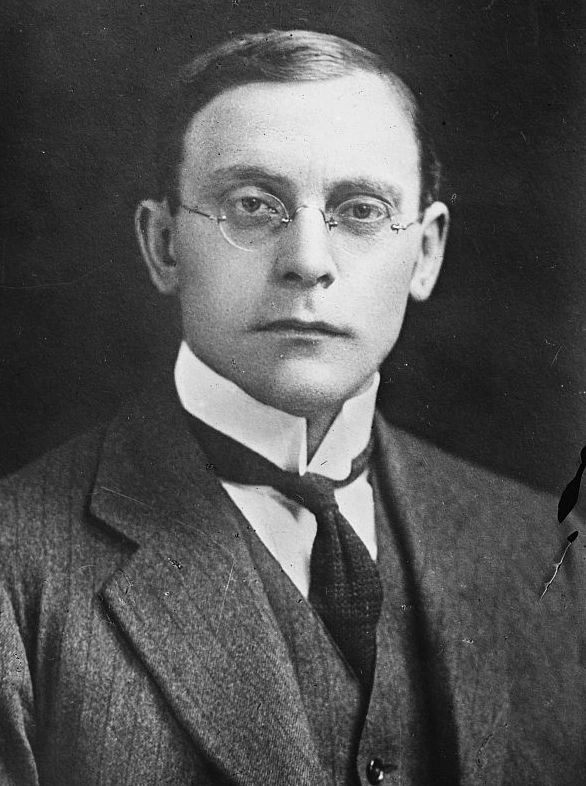
Salter was the eldest of four brothers. Their father and uncles built racing boats for rowing clubs and engaged in Oxford’s municipal politics. The boys went to a newly established public school, the City of Oxford High School which was designed to provide the opportunities of a liberal education for the sons of local tradesmen with a path to university through scholarships, and three of them continued afterwards to university. Salter’s scholarship was to the University of Oxford, where Brasenose College was experimenting with entrance scholarships for those who did particularly well in their finals. Salter had a strong desire for competitive success and approval, but found himself excluded from sports by a sudden short-sightedness and an abrupt ban on rowing initiated by his tutor. He then focused on classical philosophy and ancient history and learned to read books for pleasure, such as Plato’s Republic. Extensive reading and writing weekly essays sharpened his mind: ‘He became an inveterate questioner, determined to find not the right answer but the original one’ (Aster 2015: 12). In 1903 he won a Senior Hulme Scholarship, which allowed him to concentrate on ancient and modern history, economics and English constitutional law. He was also able to use this period to reflect on his future. After receiving his Bachelor of Arts in March 1904, he decided to try for the civil service and took the combined examination for the Home, Indian and Colonial Services in August, which exhausted him. In October he ended up at the Department of the Director of Transport at the Admiralty, which had misinformed him about his prospects for promotion. The small department did not encourage enterprise and Salter regarded his seven years there as sheer waste, though he learned about merchant shipping and acquired certain convictions about methods in public administration. He was feeling depressed and desperate, but was fortunate to share rooms with men of similar outlook and interests. After a while he became a member of the Fabian Society and befriended George Bernard Shaw, Beatrice and Sydney Webb and Herbert Wells. In 1912 he moved to Toynbee Hall, a charitable institution that made the rich and poor live more closely together. He became acquainted with more people in favour of social reform and the debates among residents suited his intellectual hunger.
Salter’s civil servant life changed significantly in 1911 when he was offered a transfer from the Admiralty to the small staff working on the new National Health Insurance Act, put through Parliament by Chancellor of the Exchequer David Lloyd George. In 1912 a new administrative machinery had to be set up for this unprecedented and huge endeavour, with two critical deadlines: July 1912, when collections of contributions would begin, and January 1913 for benefits to be payable. The novelty was that four national Commissions were given an independent authority to administer the new insurance scheme but that their non-ministerial members had to reconcile this independence with responsibility to Parliament. ‘The Commissioners became in effect Civil Servants’, concluded Salter (1961: 53). He was soon appointed private secretary to the minister in charge, Charles Masterman, who gave Salter a liberal education in all that he needed to learn for the arena he was entering, while Salter willingly played ‘the humble disciple to a respectable elder’ (Aster 2015: 21). Masterman brought Salter into contact with many of the major figures in British public life and provided an outlet for his gift of contrivance: ‘improvisation to meet special situations’ (Rock 1983: 649). Salter oversaw the procedure for the granting of ‘approved society’ status to some 23,000 societies that were to administer insurance benefits. He managed to overcome the opposition of industrial insurance companies, trade unions and Friendly Societies which defended their traditional interests. The staff succeeded in completing the form and printing of insurance stamps and cards as well as pamphlets to explain the numerous provisions of the Act to several audiences just before the first deadline of 15 July. The post office had agreed to distribute everything. The strong lobby of the British Medical Association then threatened the implementation of the Act, as doctors broke off their negotiations with the government. With the deadline of 15 January 1913 approaching, Salter played a key role in the staff’s contribution to the negotiating process by compiling a long, but simple and comprehensive, description of the Act as it directly affected the doctors and by distributing copies of this document to all practitioners throughout the country. The information made the so-called doctors’ revolt disappear. Salter was promoted to be Assistant Secretary of the English National Health Insurance Commission in 1913, his first post of executive responsibility. He enjoyed his adventurous task in health insurance, as well as the camaraderie it brought, but also felt an urge to move on once the first constructive period was over.
When war broke out in August 1914 Salter volunteered for army service, but instead spent several months at the Central Committee on Women’s Training and Employment, where he helped to put in place a civil service procedure. The new Director of Transport recalled him to the reorganized department at the Admiralty, where Salter became Superintendent of Finance in April 1915. He recruited a large staff to work on the rapid expansion of ship requisitioning. He guarded the system of standard rates of payment for requisitioned ships and the arbitration procedure to resolve disputes about compensation. A card-index system was introduced. Every ship got a card with all available information and a movable metal tab, which enabled staff to select ships that met certain criteria. This resulted in suitable intelligence about ships, cargoes and destinations. In December Salter was appointed Assistant Director of Requisitioning. He favoured a fair system with limitations on shipowners’ profits and published an estimate of these profits in 1916. Given his insights into ship movements and losses due to German submarine attacks, he advocated the centralization of all requisitioning in a central executive branch, as did George Saltmarsh who was in charge of Indian wheat shipments. In February 1917 the new government of Lloyd George created the Ministry of Shipping and appointed Salter as Director of the Requisitioning Branch. This centralization enabled economic savings to be made and information from Salter’s improved card-index system helped to overcome the Navy’s resistance against convoys, with a system of convoys on selected routes starting in May. Given the mounting shipping deficit, Salter and Thomas Royden were sent on a mission to Washington DC (from June to August) to urge the administration of President Woodrow Wilson to provide greater cooperation on shipping-related questions with the United Kingdom (UK) and to persuade the United States (US) to organize a vast shipbuilding programme. During his stay Salter began to understand the habits of the US political system and, eventually, the US government committed itself to building more vessels based on the figures provided by Salter and Royden.
Strongly aware of the need for an Allied organization to coordinate shipping with supply requirements, Salter saw an effort to create an inter-Allied shipping committee fail in January 1917, mainly due to the lack of high-level political support. Discussions with John Beale, chairman of the inter-Allied Wheat Executive (set up in 1916 to purchase, allocate and transport all cereals) and Jean Monnet, French representative in London of the Commission internationale de ravitaillement (set up in 1914 to coordinate Allied purchases of military supplies) resulted in an elaborated plan to create an Allied Maritime Transport Council (AMTC) with its own Executive. Given governmental support, the Allied conference in Paris in November 1917 agreed on the new institution, which was grounded on the continuous and detailed interlinking of national administrations for shipping and other matters. Salter became AMTC Secretary and Chairman of the Executive, with Monnet, Bernardo Attolico and George Rublee representing France, Italy and the US. The AMTC’s activities during 1918 proved to be effective. Intensive coordination resulted in strict management of available resources, while Salter found a practical compromise for the priority issue of military and food supplies (i.e., the classic debate between guns or butter) through a division of food requirements into priority and non-priority commodities. Given the American wish to create new machinery, the AMTC was discontinued shortly after the armistice of 11 November. A body for supply and relief was agreed upon in December, but this fell short and was replaced by the Supreme Economic Council in February 1919, with Salter as its Secretary. He stressed the practical need and political advantage of free imports, whereas the major powers continued Germany’s blockade during the armistice. He saw his position as a temporary appointment and felt like a privileged spectator at the Paris Peace Conference, rather than a participant.
However, when Eric Drummond became Secretary-General of the newly created League of Nations, he asked Salter to become Director of the Economic, Financial and Transit Section of the League’s Secretariat. Salter (who later learned that he was next on the list of potential Secretaries-General) accepted, knowing that Monnet and Attolico would also be Secretariat officers, and started in June 1919. As the League’s Covenant arranged only a few things about the Secretariat, its actual form arose from a debate in Paris with two different views on what the Secretariat should look like. Maurice Hankey, leading Secretary of the Peace Conference who had declined the position of League Secretary-General, preferred a small group of principal secretaries who would serve as liaison agents between their respective governments and the Secretary-General. Salter disagreed on the dual allegiance related to this proposal and in a memorandum in May argued for an ambitious League structure that was ‘effectively international’ and ‘aspired to the developed stage of international administration’ (quoted in Aster 2015: 88). Drummond followed Salter regarding ‘a truly international secretariat, whose members… must divest themselves of national preconceptions and devote themselves wholeheartedly to the service of the League’ (quoted in Dubin 1983: 472). Salter was part of the League’s Secretariat team that moved to London, where he engaged British economist Alexander Loveday and started some of the economic work prescribed and suggested in the Covenant. He advised John Maynard Keynes, who showed him a copy of the proofs of his book The Economic Consequences of the Peace, to tone down criticisms of Wilson as that would harm efforts to bring the US into the League. Keynes partially agreed. Salter was occupied with a plan to organize economic sanctions, but did not attend the conference on the topic in Geneva as the British government pressed him to take the post of General Secretary of the Reparation Commission in Paris in January 1920. Salter accepted but retained the right to return to the League. The Reparation Commission did some useful work in the early months but soon struggled with the inherent defects in the provisions of the Peace Treaty and deep divergencies of opinion between the Allies. Salter’s opportunity to influence actual policy was restricted. He maintained close contact with his League colleagues, attended the League’s Financial Conference in Brussels in September 1920, followed the first Assembly discussions in November from the Secretariat benches and helped to draft the economic clauses of the League agreement on the 1921 Silesian plebiscite. That year he also managed to finish his book Allied Shipping Control: An Experiment in International Administration (1921) at the invitation of James Shotwell of the Carnegie Foundation for International Peace. He considered leaving his post and, when an incident sabotaged the work of a Bankers’ Committee, he submitted his resignation to the Reparation Commission effective from July 1922. In early August he returned to Geneva with many ideas regarding what he could do as Head of the League’s Economic and Financial Section. His income was halved, but, as he later adjudged, this was the happiest period of work in his life.
With Austria’s hyperinflation and financial collapse taking place in August 1922, the country appealed to the League of Nations. Monnet believed that the fear of foreign intervention could be converted into a motivating force for collective assistance. Monnet, Salter and Basil Blackett of the British Treasury (present in Geneva as an expert appointed by the League, not as a British representative) advanced a plan based on cessation of note issue, control of public expenditure by a League person and a large loan raised by public issue. The Council agreed to what was a novel experiment and a delegation from the League’s Financial Committee worked in Vienna, with Salter in charge. Although the Austrians refused to allow a foreigner to control public expenditure, the League plan quickly succeeded, as its implementation made Austrian ‘flight’ money return and foreign funds pour in. The success led to a similar application in Hungary in 1923. Salter drew up a scheme in Budapest, which was accepted by the Financial Committee and the Council. This included a ‘transfer committee’ to deal with possible later strain on the currency, which proved unnecessary as Hungary recovered thoroughly. After Salter briefed Charles Dawes’s team on his experience, the ‘transfer committee’ device became part of the 1924 Dawes Plan for Germany. Salter was also the brain behind the financial schemes for refugee settlements, such as the reciprocal exchange of populations negotiated by High Commissioner for Refugees Fridtjof Nansen after the Greco-Turkish War (1919-1922), with the Financial Committee designing a scheme with a substantial loan and a special League commission to direct the work. Salter engaged in a similar approach for Bulgaria and Greece. These schemes, which took much of his time at the League, rested on both his financial and political skills and succeeded because the great powers at the time united in a common task of assistance.
Salter benefited from working closely together with experienced men in public and private finance, while the League grew in authority through its engagement in European recovery via currency stabilization. The Secretariat’s Financial and Economic Section also worked to establish a better foundation of commercial policy for international trade. The blockade during the war had resulted in high tariffs and obstacles to imports. By 1925 the Section decided to attempt to secure (by international agreement) first a reduction and then greater stability in tariffs and other impediments to international trade. This process started with a preliminary examination of the whole problem by international experts, followed by a series of particular studies overseen by Loveday. Salter explored the possibilities of a world conference, resulting in the Council’s appointment of a Preparatory Committee. Preparations took two years and, in May 1927, the World Economic Conference agreed unanimously on a comprehensive code of commercial policy behaviour. The Conference was semi-governmental, partly composed of officials nominated by governments and partly of economic and social experts picked by the League. The League was charged with the task of establishing a Standard Customs Nomenclature and of codifying arrangements for most-favoured-nation status already in existence. A diplomatic conference in 1927 agreed to a convention for the abolition of import and export restrictions and a new Economic Consultative Committee met in 1928 and 1929 to promote small free trade arrangements. However, ongoing economic nationalism, problems with German reparation payments and the 1929 US stock market crash made the recommendations of the World Economic Conference unsuccessful. Salter’s effort to make the Bank for International Settlements, created in 1930, a complement and not an alternative to League action also failed. Both the setback in the area of economic work and proposed changes of the Secretariat’s structure made Salter resign by the end of 1930, which was delayed to July 1931 in order to complete two missions to India and China.
Salter returned to London in 1931, but could not resist the invitation to attend the League’s Assembly that year as a member of the British Delegation. He had to change his speech on financial and currency policy, as the government’s policy of maintaining the pound on gold parity changed during the weekend. Salter still had a full career ahead of him. He was professor of political theory and institutions at Oxford University (1934-1944), an Independent Member of Parliament (1937-1950) and, after the outbreak of the Second World War, he became Parliamentary Secretary to the Ministry of Shipping in November 1939. Together with Monnet, chairman of the Anglo-French Coordination Committee, he placed contracts for war supplies in the US. Salter, who had married an American woman in 1940, headed a British shipping mission to Washington DC (1941-1943), like in the previous war. In 1944 he became Deputy Director-General of the United Nations Relief and Rehabilitation Administration (UNRRA), but this was a frustrating experience. UNRRA, founded in 1943, did not yet have a detailed administrative structure with issues such as personnel, regional offices, field missions and powers still to be determined. Further planning was prevented because high-level politicians in the UK and the US were unwilling to take decisions and the military in both countries kept UNRRA at arm’s length. With Salter and Director-General Herbert Lehman not being aligned, Salter resigned in September. It took until February 1945 for the British government to appoint Robert Jackson as his successor. Salter, who had joined the government with special responsibilities for questions affecting European relief in 1945, complained to Parliament in March that, fifteen months after its creation, UNRRA was still not operating on its own responsibility. Between 1951 and 1953 he was a Conservative Member of Parliament as well as Minister of State for Economic Affairs (1951-1952) and Minister of Materials (1952-1953). In 1961 he published his Memoirs of a Public Servant. He died in his sleep, a result of an earlier stroke, at his home in London in 1975.