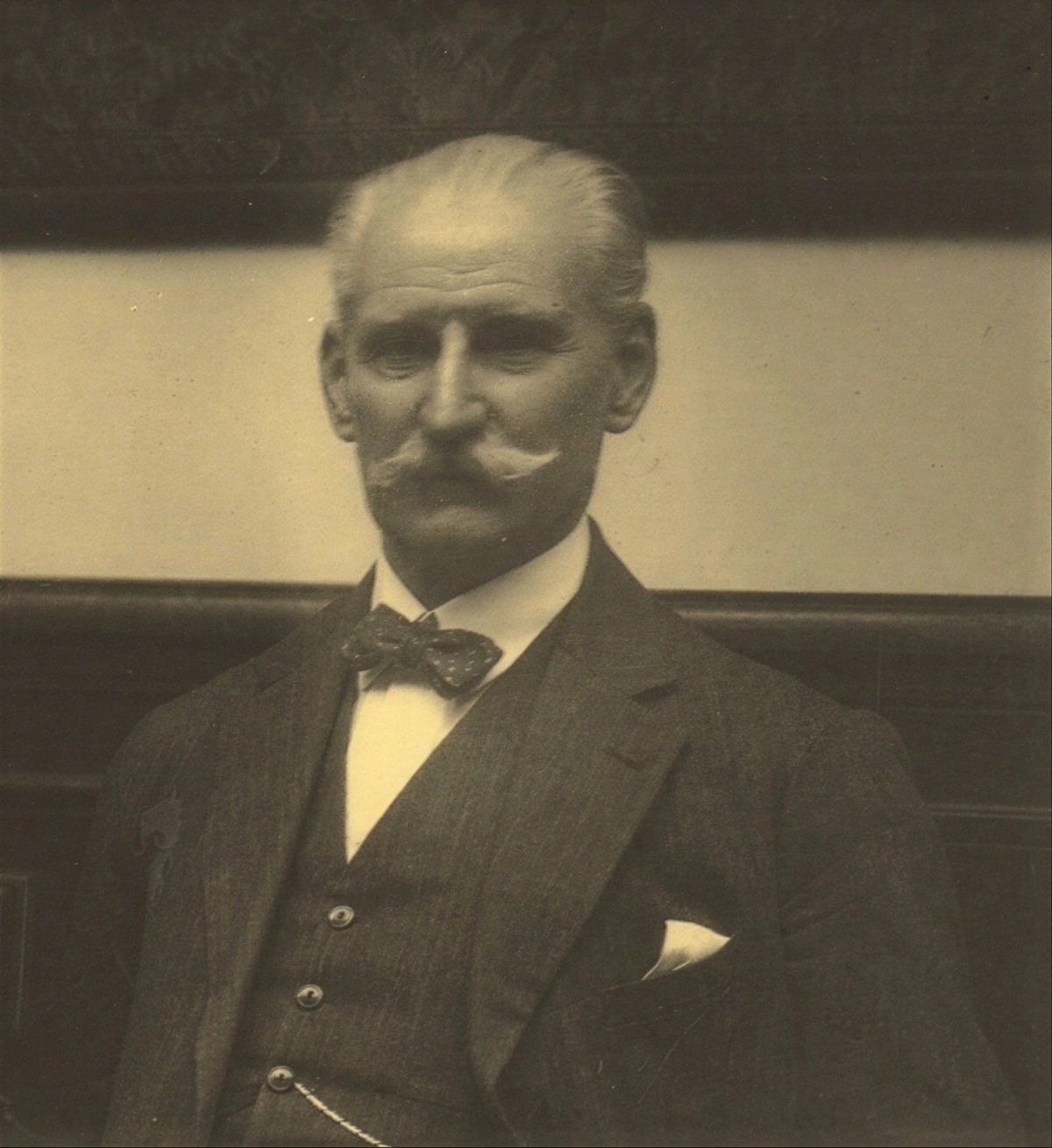
Biography
Rey grew up during turbulent times, as the Second French Empire collapsed during the Franco-Prussian War (1870-1871), followed by annexations, attempts to restore the monarchy and eventually a moderate republican political system. Rey studied at the Faculty of Law in Paris and obtained a PhD in international law in 1899, when he published La protection diplomatique et consulaire dans les échelles du Levant et de Barbarie. This comprehensive study on diplomatic and consular protections in the Levant and North Africa incorporated diplomatic documents from the archives of the French Ministry of Foreign Affairs. The work demonstrates his interest in the juridical status of ‘foreigners’ in peripheral regimes, stretching from the Near East (the Ottoman Empire) to the Far East (the Korean peninsula). For a while Rey worked as editor at the Recueil Sirey publishing house and, in 1903, started a regular collaboration with the Revue générale de droit international public, established in 1894. During the 1900s Rey authored various articles and brochures focusing on international law and international relations as an associate professor of international law at the Faculty of Law in Paris and a professor of international law at L’École des hautes études commerciales. In 1903 he published a brochure on the juridical status of Jews in Romania, a subject of contemporary relevance due to the prevalent discrimination against the Jewish population which resulted in significant emigration to the western world. This experience was significant in his future career as it provided him with a first-hand understanding of the political realities in Eastern Europe. The Russo-Japanese War of 1904-1905 and the growing European interest in the Far East prompted him to publish articles on Korea’s position in international law, the legal status of foreigners in Korea and the intricacies of extraterritorial rights and international jurisdiction in East Asia. In 1907 Rey published a book on the broader implications of the Russo-Japanese War from the perspective of international law, followed by his 1911 translation of Giulio Buzatti’s book on private international law according to the Conventions of The Hague (1899 and 1907). In 1912 Rey served at the Permanent Court of Arbitration as the Russian Empire’s secretary in the dispute between the Ottoman and Russian Empires on delayed payments.
Following the resignation of Gustave Demorgny from his post as Secretary-General of the European Commission of the Danube (ECD), André Soulange-Bodin of the French Ministry of Foreign Affairs recommended Rey as a suitable replacement in 1911. Rey’s nomination fitted a well-established pattern, as it was customary to employ native Frenchmen with a legal background to serve as ECD Secretaries. In addition to his international law teaching and research activities, Rey had also served as Secretary to the International Air Navigation Conference in Paris (18 May-29 June 1910). He was probably personally acquainted with his predecessor, who was also a law graduate with an interest in international relations and the so-called Eastern Question. Both were also students of Louis Renault, the French legal scholar and co-winner of the 1907 Nobel Peace Prize for ‘his decisive influence upon the conduct and outcome of both the Hague and the Geneva Conferences’. The suggestion for the position in Galați, Romania came from Renault himself, who was well acquainted with Rey’s ‘legal knowledge and the rectitude of his judgement’ and also appreciated his moral qualities (Basdevant 1952: 558-559).
Rey was formally designated as ECD Secretary and started on 1 July 1911. When he took over as Secretary (changed to Secretary-General in 1913), the ECD, founded in 1856, was a well-established institution with clearly defined administrative procedures. Delegates from eight member states (Austria-Hungary, France, Germany, Great Britain, Italy, the Ottoman Empire, Romania and Russia) met annually at the headquarters in Galați for two plenary sessions (in the spring and in autumn). All major decisions were taken at these meetings, while day-to-day business was conducted by the Executive Committee, made up of all Delegates present at the ECD headquarters at any given time. Commissioners would alternate in the roles of Delegate for administration and Delegate for finance, the former being directly responsible for the Commission’s Secretariat. Rey familiarized himself with his new role at the river commission by reviewing Demorgny’s recently published book La question du Danube (1911), with a preface by Renault. The review offers insights into Rey’s own perspective on the international order and the role of international organizations. Among the characteristics at the beginning of the twentieth century was ‘the organization of the Society of States, of which the different elements multiply: in Europe these are, besides the international offices becoming from day to day more numerous, the Permanent Court of Arbitration and the International Prize Court; in America, besides the flourishing Pan-American Union, the young Central-American Union which has just been born’. The ECD was recognized as ‘the most ancient of the organs of international administration’ which by the considerable services it had rendered, deserved the admiration and the gratitude of the civilized world (Rey 1912: 766-767). For Rey, the book’s most compelling chapters concerned the ECD’s internal structure, a subject on which Demorgny’s position gave him extensive knowledge. These included the Commission’s personnel, budget and ongoing projects, as well as the considerable improvements it had brought to the navigation, ‘thereby becoming much safer and so easy that sea-going vessels of over 3,000 net register tons now come up to Galatz’. These particulars were ‘until now but little known and deserved to be published in order to show that, through good understanding between the Powers, they have been able to realize a delicate and difficult work, which the bordering states could not have accomplished alone in such a short time and with such a continuity of views’ (Rey 1912: 767-768).
The ECD’s administration had undergone significant changes throughout its history. It began with a French employee as Secretary (under British Delegate John Stokes). In subsequent years, as the organization’s mandate was extended, its apparatus was adapted to the budget and human resources available. One example of this was the merging of the Secretariat and the Accounting Department into a single Central Office responsible for coordinating all administrative activities. The title of Secretary-General was given in recognition of personal merits and a significant contribution to the organization’s success. In 1910 Secretary Demorgny was given the title of Secretary-General, along with an increase in salary. During Rey’s tenure, the duties of the Secretary, who had to reside at the headquarters, were more clearly formalized. He drafted, printed and distributed the official minutes, under the direction of the President of the Commission (the diplomats rotated in this function at each plenary session), as well as the bimonthly bulletin. He attended the meetings during the plenary sessions and those of the Executive Committee, ensuring the implementation of the decisions taken. He oversaw the correspondence according to the instructions received from the ECD, the Executive Committee or the Delegates in office. He received, opened and recorded all official correspondence addressed to the ECD and distributed it among the Delegates present in Galați. He supervised the management of the organization’s archives, ensured the proper maintenance of personnel files and was responsible for the supervision of the library. He provided the non-resident Delegates with a monthly summary of the most important correspondence, together with a brief indication of the decisions taken, to keep them informed of the daily activities. He kept a register of appeals against the decisions of the Commission’s navigational agents, ensured that the ECD ruled on these appeals and performed the functions of Registrar of its Court of Appeal. He was entitled to correspond officially with the secretaries of other international organizations and unofficially with various other public or private administrations to provide the ECD with useful information for its activities. In cases where a Delegate had to be absent from headquarters and no other Delegate was available to replace him, the Secretary was authorized to assume responsibility for the management of the ECD’s daily business for a period not exceeding three days. In such cases, he was entrusted with the monitoring of current affairs, the supervision of the implementation of the decisions of the plenary and the signing of all documents, including payment orders. Finally, he was entrusted with the preservation and maintenance of the administrative building in Galați. Rey’s early activities as Secretary corresponded to a period of considerable difficulty for the organization, as the Balkans Wars (1912-1913) and Romania’s military involvement created several complicated moments in which the ECD’s neutrality appeared to be called into question. Furthermore, the decline in shipping along the Lower Danube reduced the organization’s revenues and affected its technical and administrative works. Given Rey’s active role in safeguarding the Commission’s rights and privileges, the Delegates unanimously conferred him the title of Secretary-General on 5 November 1913.
In July 1914 the eight Delegates convened in an extraordinary session and reaffirmed the Commission’s neutrality in the event of military conflict. The autumn and spring sessions of 1914 and 1915 continued with business as usual, given the Romanian government’s neutrality in relation to the First World War. However, the closure of the Turkish Straits, after the Ottoman Empire joined the war in October 1914, diminished international navigation throughout the Black Sea basin, including along the Maritime Danube. The Commission encountered mounting financial constraints, prompting it to seek financial assistance from its member states. This measure enabled the organization to remunerate its personnel and undertake urgent hydraulic works in the Danube Delta. The general mobilization in several European countries had a direct impact on the Commission’s staff, leading to a reduction in the number of employees in some of its administrative and technical services. Rey himself was mobilized in 1914 and his Deputy, J.L. Bitterlin, continued the work locally (until 1919). The situation was further complicated when Romania joined the war on the side of the Entente in August 1916. Delegates of enemy states were requested to depart Romania, while employees were interned in concentration camps. However, Romania’s military campaign was brief and disastrous and, by the end of November 1916, most of the Danube Delta (along with two thirds of pre-war Romania) had been occupied by troops of the Central Powers, while Galați remained in ‘free Romania’. With the headquarters of the Commission facing an imminent attack, a portion of the organization’s assets and archives were relocated to Odesa in Ukraine. In early 1918 they were returned to Galați, owing to the emergence of a Bolshevik threat in the Ukrainian port city. Concurrently, in the Danube Delta, under German and Austro-Hungarian coordination, the occupying forces initiated a reorganization of navigation on the Danube through the Commission of the Mouths of the Danube, that was to include Delegates from Romania and the four allied Central Powers (Austria-Hungary, Bulgaria, Germany and the Ottoman Empire). However, this ECD period, including Rey’s activities while still in Galați, is obscured by the fact that most of the Commission’s archives were lost when its headquarters was hit by bombs and burnt in a huge fire in 1917.
During the war Rey served as an officer in the French Quartermaster Corps and, in 1916, he became Secretary-General of the Committee for the Restriction of Enemy Supplies and Trade, which later was turned into the French Ministry of the Blockade. When peace negotiations started in Paris, Rey was appointed head of the protocols and archives department at the Peace Conference, as well as being one of France’s delegates and technical advisors appointed to serve in the commission for communications questions. His input proved crucial in the fact that the Versailles Treaty accepted a special international regime along the Danube. The victors consented to the preservation of the ECD, which provisionally comprised the Delegates from riparian Romania and non-riparian France, Great Britain and Italy. The specific terms of the Danube regime were to be determined by a specialized international conference. In November 1919, at the behest of the French government, the Supreme Council charged Rey with the organization of the impending conference. The conference, hosted in Paris between 1920 and 1921, culminated in the signing of the Convention for the Definitive Statute of the Danube on 23 July 1921. Rey participated actively in the debates, and his position proved to be instrumental in determining the outcomes of the conference. Decisions were also taken based on Rey’s report regarding the ECD’s situation between 1914 and 1919. The Convention established that the ECD retained its pre-war rights, prerogatives and immunities in the area of the Maritime Danube, in addition to its provisional membership structure. Other states were permitted to accede to the ECD, on the condition that they possessed sufficient commercial, maritime and European interests at the Mouths of the Danube.
The Definitive Statute met with strong opposition in Romania and, over the following decades, Romanian statesmen began to challenge the authority of the Commission, which was seen as an outdated organization that violated Romania’s sovereign rights along the Danube. One of the more significant disputes concerned the jurisdiction over the Danube section between the port cities of Galați and Brăila. The case was eventually referred to the Permanent Court of International Justice in The Hague, the Netherlands, with Rey engaged in defending the ECD’s rights. Between 1922 and 1927 Rey published extensively about aspects of Romanian jurisprudence in the Revue de droit international privé, in 1927 together with Joseph Cohen. Extensive debates ensued in the ECD, culminating in partial agreements being reached in 1930 and 1933, with the two parties agreeing to refrain from further escalating the diplomatic conflict. In 1931, to mark its 75-year anniversary, the Commission published a compendium of its activities, edited by Italian Delegate Carlo Rossetti and Rey. The volume was authored by the various chiefs of services within the organization’s intricate bureaucracy. Despite its self-congratulatory tone, this work remains the most exhaustive account of the ECD’s internal structure and operations. According to the ECD’s 1929 regulations, the Secretariat’s senior staff consisted of a Deputy Head, whose task was to assist the Secretary-General in his duties and to replace him in case of absence, a Secretary-Editor, whose task was to write correspondence, make translations and act as the organization’s librarian, and an archivist, whose task was to organize and maintain the ECD’s archives. In May 1935 the ECD, confronted with a particularly challenging financial predicament, opted to request the retirement of all personnel who had attained the age of 65. Subsequently, in November 1935, Rey formally retired from active service. However, at the behest of his successor, Etienne Thilly, he was bestowed with the title of Honorary Secretary-General in 1938. In that year the ECD lost most of its supranational executive attributions as part of the Sinaia Agreement between France, Great Britain and Romania. Between 1940 and 1944 the Danube remained under control of Nazi Germany, bringing the ECD to a standstill.
After his retirement Rey continued to write and published various legal texts. In 1921 he was elected as an associate member of the Institute of International Law in Paris. He participated regularly in its meetings and was elected as a member in 1934, receiving 47 votes, the highest number until then. In 1924 Rey nominated the Greek Red Cross for the Nobel Peace Prize. In 1928 he demonstrated a particular interest in the status of international civil servants, leveraging his expertise in the ECD to provide detailed insights into the rights and immunities of this emerging transnational bureaucracy. In the early 1940s Rey detailed his perspectives on the violations of international law by the German forces during their occupation of France in the Second World War. He also wrote a monograph on the Danube and its international regime and deposited the manuscript with the French Ministry of Foreign Affairs (its table of contents is available in Basdevant 1952: 561-564). Rey passed away in early 1952.