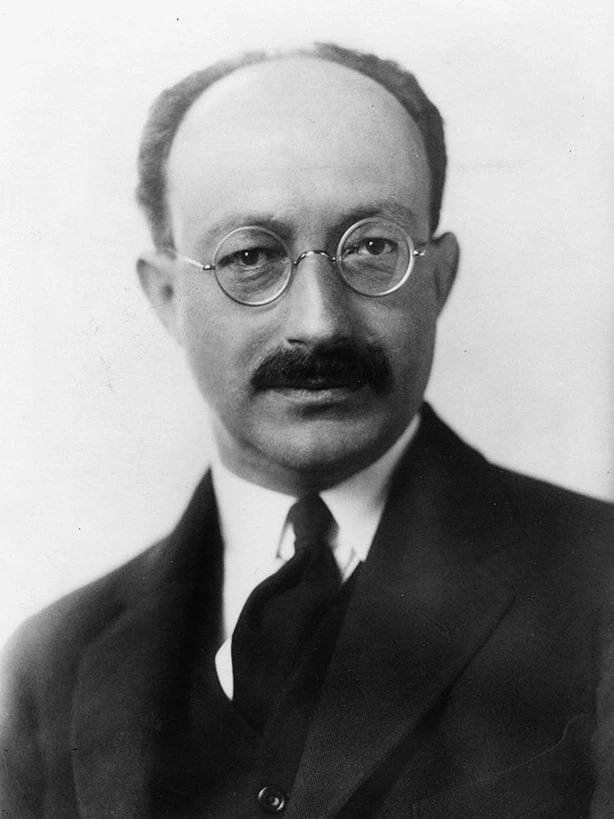
Biography
Rajchman grew up in Warsaw in the Russian-annexed part of partitioned Poland. Under the tsarist repression owning Polish books and speaking Polish at school was forbidden. Although his family knew times of material hardship, they belonged to the intellectual and artistic elite of the city. His father became the administrative director of the philharmonic concert hall and his mother was a prominent figure in the feminist movement. He and his siblings (an older sister and younger brother) grew up in a sphere of religious indifference, had a French governess to teach them French and German and went to grammar school. When Rajchman was fourteen, he and his sister Helena participated in secret pedagogical activities by distributing educational brochures destined for workers and peasants during school vacations. When the children grew older, they moved away from the world of their parents and were inspired by Edward Bellamy’s utopian novel Looking Backward, 2000-1887 (1888). Rajchman intended to study law in Cracow, whereas his parents wished that he would study medicine in Warsaw. He refused to attend a Russian institution and in a compromise was allowed to study medicine in Cracow, a city where arts and sciences flourished, and he started his studies in 1900. He became fascinated by bacteriology through his professor of medicine, Odo Bujwid, a former student of Robert Koch and Louis Pasteur who had founded the first Pasteur Institute outside France. This open-minded and progressive man and his feminist wife Kazimiera introduced Rajchman to independence-oriented and socialist activities, such as the Open University, which sponsored the Polish Social Museum that Rajchman and others created. This museum was modelled on the Musée social in Paris, set up to serve as a centre of information on workers’ conditions. In 1902 Odo Bujwid introduced Rajchman to the Ruch, an independent association that brought together the radical Left among university students. Rajchman also participated in the People’s Education Association, directed by Kazimiera Bujwid, and managed the association’s library, where he met and became engaged to Maria Bojanczyk, who came as a volunteer helper in 1903. When she brought her fiancé to meet her parents, they opposed the marriage to a man four years her senior, with her father asking Rajchman if he was ‘of the Jewish faith’ (Balinska 1998: 18). After having tried to marry in Vienna and Geneva they succeeded in Heidelberg in 1904. Rajchman helped to raise money and create a Summer University that year, which was meant to make Polish men and women acquainted with previously forbidden subjects such as socialism and materialist philosophy. In 1905, the year of violent demonstrations in Warsaw as well as revolution in Saint Petersburg and Russia’s loss to Japan in the Russo-Japanese war, Rajchman joined the Polish Socialist Party (PPS), led by Józef Piłsudski, and became responsible for the party’s Passport Bureau, which made false papers for political refugees and deserting Russian soldiers. Apart from his many social and political activities he also graduated from medical school in 1905. He returned to Warsaw to begin his medical practice and set up his own bacteriological laboratory. However, he devoted all of his time to party work. The party was split about whether independence was to be obtained by violence or by social change (Rajchman’s position). He was arrested at a clandestine party meeting and sent to prison for four months, but released after his wife’s parents intervened financially, on the condition he leave the country.
Rajchman decided to pursue his studies at the Pasteur Institute in Paris, but first spent several months in Kazan in order to obtain Russian qualifications necessary to practise medicine in Warsaw. In October 1907 he arrived at the Pasteur Institute, where he took the advanced course in microbiology and worked under the immunologist Elie Metchnikoff. In 1909 he returned to the Institute of Microbiology in Cracow. After a year and a half Odo Bujwid informed him that the Royal Institute of Health in London was looking for someone to direct its bacteriological laboratory. When the letter announced his nomination for the post, he had less than two months left to learn English. He stayed at the London institute for two years as a demonstrator of bacteriology and comparative pathology. In 1913 he became a researcher at the laboratories of King’s College and then went on to the London Hospital Medical College. When the First World War broke out he was made head of the Central Laboratory responsible for combating dysentery and also placed in charge of epidemiological studies on poliomyelitis and the Spanish flu. He had continued his political activities and established links with the Fabian Society, which allowed him to introduce PPS representatives in London to the British political world and he himself became an administrator of the Polish Information Bureau in London. In 1918 he grew restless and managed to return to Poland via Amsterdam and Berlin, where he and his family arrived just before the armistice. They reached Warsaw in late November, shortly after Poland, a country completely ravaged by war, had regained independence. Because typhus and other contagious diseases paralyzed the country, he immediately developed plans for a network of epidemic detention centres and a quarantine zone, succeeded in buying materials and in May 1919 established the National Institute of Epidemiology (later Hygiene), modelled on the Pasteur Institute (and served as Director until 1932).
When the Polish president left for the first meeting of the League of Nations’ General Assembly in 1920, he asked Rajchman to accompany him. Because the older, Paris-based International Office of Public Health (IOPH) refused cooperation, the League established a temporary Epidemics Commission, with two British officials and Rajchman as the members. It took them a year to receive some funds and dispatch the first supplies to Poland in early 1921. Rajchman also tried to get support from the Rockefeller Foundation in New York, which hesitated, given Poland’s unstable international situation. Because the sanitary situation in Eastern Europe worsened and no agreement could be reached with the IOPH, the League decided to establish a Health Section as part of the organization’s Secretariat. In June 1921 League Secretary-General Eric Drummond informed Rajchman that he would direct the Section. Rachel Crowdy, one of the first Secretariat members, had proposed him and had also suggested a higher salary, arguing that he would have to make numerous travels. Deputy Secretary-General Jean Monnet disagreed and also objected to the fact that a medical doctor could be appointed as head of a Section and instead proposed the title of ‘Chef de service’. However, Rajchman received the official title of Director. He had mixed feelings about the new job, since he wanted to dedicate himself to Poland’s reconstruction, but also felt tempted by the international invitation, expecting to return to Warsaw in a year or so.
In appointing Rajchman, Drummond had specified that he expected him to remain in Poland until November to continue the fight against epidemics, but Rajchman, aware that the centres of typhus and cholera were in Russia, believed that the problem had to be attacked at the source. He and Norman White, the Chair of the Epidemics Commission, understood that the time was right to seek Soviet collaboration on health matters. Supported by Fridtjof Nansen, who had gained the cooperation of the Russian government in prisoners of war affairs in spite of Soviet hostility to the League, Rajchman and White visited Moscow in September 1921, where they managed to overcome the suspicions of the Health Ministry. Back in Switzerland Rajchman wrote a long report on the mission that did not go unnoticed in Geneva as the report contrasted strongly with the partisan character of almost all information concerning Russia. Rajchman was labelled ‘pro-Soviet’, although his report was not blind to the regime’s defects and did not hide the miserable conditions of life in Russia. The mission helped Russia to become open to collaboration as long as the League’s health aid was material. After this trip Rajchman moved permanently to Geneva, where he collaborated closely with the head of the League’s Health Committee, Thorvald Madsen. During his stay in London Rajchman had already met the Danish bacteriologist, who also was the President of the IOPH’s Committee but was more broad-minded than this organization. They believed that Germany, though not a member of the League and in fact hostile to the organization, could not remain unrepresented on the Health Committee given the country’s high level of scientific research. Many efforts were needed to soften hostilities between the British, French and Germans, but they succeeded in holding an international conference in London in December 1921, where Germany and other countries were present and launched a survey in the form of a collective effort by laboratories working in serology, pharmacology, endocrinology and vitamin studies, which became one of the Health Section’s most significant projects.
Because the epidemic situation in Eastern Europe had deteriorated alarmingly and Poland and Russia still refused to cooperate, Rajchman and White drafted a sanitary convention and suggested that the Polish government call a pan-European conference, with the goal of promoting a series of bilateral accords and studying common measures that could eradicate epidemics. Aware that the Epidemics Commission should work directly with government authorities, Rajchman insisted that no private groups be invited, but only health and government officials, in order to encourage governments to provide assistance and not mere relief. The League-sponsored conference took place in Warsaw in March 1922 and was seen as a testing ground for the League conference in Genoa in May, which was supposed to normalize relations with Germany and Russia and re-establish commercial relations in Europe. The Warsaw conference adopted several resolutions, all of which were to be coordinated by the Health Section, and replaced the terms ‘cordon sanitaire’ and ‘quarantine’ by ‘sanitary zones’. The Germans agreed to the resolutions after having been promised a seat on the Health Committee. The French regarded a seat as unthinkable, but were aware that they could not be too hostile to German candidature. The Russians, who attended in their personal capacities, refused to vote in favour of the Health Section carrying out the Warsaw recommendations and threatened with a militant declaration against the League. Rajchman, however, refused to change anything in the final resolution, assuming that Russia would accept the League’s patronage if they were given sufficient material aid. This is what happened after the Genoa Conference, which was also charged with approving the Warsaw resolutions. Behind the scenes in Genoa Rajchman, as a member of the League’s Secretariat delegation, had to persuade various delegations of the validity of the Warsaw resolutions. The final assembly adopted these in one resolution, which did not mention the role of the League of Nations in the effort to eradicate epidemics in Eastern Europe. Rajchman, however, was satisfied that health matters had been brought to the forefront of the international stage.
The League’s Health Section (soon called Organization, like the other sections of the Secretariat) remained temporary until 1923, when it was obvious that the IOPH, strongly supported by France, wished to remain autonomous. Although both had similar mandates, the Health Organization proved the most active, particularly through Rajchman, who never lacked ideas and initiatives. He succeeded in receiving generous funding from the Rockefeller Foundation, which left the Health Organization free to choose its own programmes. It subsidized an Interchange Programme that allowed medical personnel to work with foreign counterparts and an Epidemiological Information Service, which set up a global database for sanitary statistics. Rajchman’s ambitious plans often went beyond his budget, which meant that he had to argue his cause with Drummond and the League’s Finance Committee, especially when the money in question had already been spent. He constantly initiated new studies. In 1926 the Health Committee decided to add the new science of nutrition to its programme and a few years later researchers began to explore the relationship between people’s everyday life and their state of health. While international public health started as controlling contagious diseases to protect world trade, Rajchman and his team succeeded in raising preventive and social medicine to the same rank as therapeutic medicine.
In the meantime Rajchman had become intrigued by Asia. At the request of the Japanese delegate, Mikinosuke Miyajima, White had gone to the Far East in 1923 to launch a series of epidemiological studies. The trip resulted in the establishment of the Health Organization’s Far Eastern Bureau in Singapore in 1925, which began to collect data on epidemic illnesses in seaports. When Rajchman visited Japan that year, he concluded that the West had nothing to teach the country as far as public health was concerned, since Japanese medical centres and teaching staff had already attained or surpassed the highest European and American standards, with an efficient system for registering data and a quantity of medical publications that were inaccessible to Westerners. However, Japan was threatened by illnesses originating in neighbouring countries, particularly China, which had no quarantine service. His visit to China following his stay in Japan allowed him to see China’s disastrous level of public health. The Rockefeller Foundation representative in China, John Grant, encouraged the Chinese to invite Rajchman to make a general study of the situation. Back in Geneva, Rajchman wrote a report for Drummond with his impressions and an analysis of the League’s best options for expanding the organization’s activities to Asia, as China offered innumerable possibilities for developing public health. Although officially classified as ‘confidential’ and not to be distributed to League organs, the report was circulated within the Secretariat and among Western foreign ministries.
Later Drummond remembered the report, when a Chinese withdrawal from the League was imminent in 1928 because the new Chinese Kuomintang government of Chiang Kai-shek was offended by not having received enough votes to renew its temporary Council seat as well as the government’s suggestion of Rajchman as one of three eminent figures to advise on the creation of a Chinese Ministry of Health. Rajchman spent almost two months in China in late 1929. He concluded that the Kuomintang was the only recognized authority in an utterly divided country and that sanitary improvement would be a long-term process that first required economic progress. Grant supported Rajchman, whereas the French ambassador reported negatively to his government. However, the League followed Rajchman’s policy of cooperating on an equal footing with China (expressed in Rajchman’s term ‘technical cooperation’, hence not assistance) and (on Grant’s advice) sent a permanent advisor to Nanking to coordinate the work between the League and the planned Ministry of Health. Invited by Chiang, Rajchman visited China again in 1931, followed by Robert Haas and Arthur Salter, Directors of the Transit Section and the Economic Section. They cooperated closely with Chiang’s Harvard-educated brother-in-law, Tzu-wen (T.V.) Soong, who as minister and as President of the Bank of China favoured open relationships with the West. In April this resulted in the decision to start League-coordinated reconstruction projects to modernize China, focusing on health, education, transportation systems and agriculture (which lasted through 1941). In August the Chinese government called on Rajchman again after the spectacular flooding of the Yellow and Yangtze Rivers. Rajchman stopped over in Tokyo to (successfully) solicit aid from the Japanese government, but in China one week later was caught off guard by the Japanese military occupation of Manchuria. He concluded that the army had not informed the civilian government and in September advised China to address the League rather than negotiating with Japan. This failed however when Japan did not consent to any League interference. Rajchman then urged Drummond to immediately send a commission of neutral observers to act on the spot, but it took the League until January 1932 to set up a commission, which did not arrive until April. However, Japan had announced the country’s withdrawal from the League in March, after the Council’s refusal to recognize Japanese Manchuria. The League decided to continue technical cooperation with China and, after debate about his close connections with the Chinese government, sent Rajchman on an extended six-month mission in 1933. With the help of Monnet, Rajchman’s efforts resulted in the creation of the China Development Finance Corporation, but progress was obstructed by a growing enmity between Soon and Chiang, who directed operations against Mao Tse-tung and his companions-in-arms.
When Rajchman returned from China in 1934, he had become an increasingly well-known figure, but he was also controversial, given his role in the Manchurian affair and his willingness to cooperate with the Soviet Union, which had joined the League in 1934. Soviet relations with the Health Organization improved after Rajchman’s visit to Moscow in 1935. Relations with Germany, however, had become impossible, with Nazi Germany withdrawing from the League and the work of the Health Organization. In 1933 Rajchman had sent a colleague to Germany to study the effects of Nazi policy on the medical profession, while also exploring a way to find jobs for Jewish scientists in China, where trained personnel were lacking. In 1935 a world conference on nutrition was convened on Rajchman’s initiative, which established a minimal nutritional level necessary for maintaining health. However, during these years his room for manoeuvre as Director became increasingly smaller. His staff and the Health Committee’s membership were reduced in number, with the newly appointed Committee driven by a group of personal opponents. He also became the target of numerous attacks instigated by the Polish press and clashed with the Health Committee when he unofficially collected and shipped (due to a missing official request) anti-typhoid vaccines to Spain. His image in Geneva was rapidly deteriorating and the new conservative League Secretary-General Joseph Avenol kept him out of decisions touching on the work in China, even forbidding him from distributing an emergency aid plan within the Health Organization.
On 4 January 1939 Avenol informed Rajchman that for reorganization reasons the Health Organization’s directorate had disappeared. Rajchman replied by resigning on 1 February. He moved his family to France, travelled to the United States (US) and began to dedicate his efforts to China, which he saw as the first victim of fascism and the world war he feared. Through his connections he planned a conference with Jawaharlal Nehru to establish cooperation between China and India and also worked to promote Franco-Chinese military cooperation, but unsuccessfully. In late 1939 the Polish government-in-exile delegated him to oversee humanitarian affairs. However, organizing food aid for occupied Poland was a complex affair. He cooperated with Herbert Hoover and Maurice Pate just as he had done in Europe after the First World War. Rajchman was in France in June 1940, when the Germans were marching on Paris, and had to return to the US through Spain, Portugal and Bermuda. When his Polish role became superfluous, T.V. Soong, who had arrived in the US to seek aid for China, hired him as a Washington-based consultant to the Bank of China in July. Given Rajchman’s good connections in the Franklin Delano Roosevelt administration (though there was distrust in the State Department), the Soong-Rajchman partnership, advocating American support for the Chinese cause, was successful with the China Defense Supplies, which represented China in land-lease affairs. Rajchman, however, became more and more uncomfortable in his association with the Kuomintang regime and wanted to engage in European reconstruction. By the end of 1943 he gave up his post with the Chinese, but continued to advise Soong personally and helped to write Soong’s speech when he signed the United Nations (UN) Charter as head of the Chinese delegation in San Francisco in April 1945.
In September 1943 Rajchman published the article ‘A United Nations Health Service – Why Not?’ in Free World and suggested financing this service by an international health tax to be paid by all member countries. In early 1944 Salter, who had become Deputy Director-General of the United Nations Relief and Rehabilitation Administration (UNRRA) asked Rajchman to develop programmes for epidemiology and aid to refugees. Rajchman’s memorandum resulted in a Washington Office to serve UNRRA and a Commission of Health Planning for Europe in London. After great soul-searching and aware that Poland would be rebuilt under Soviet influence, in 1945 Rajchman decided to associate with the new government in Lublin and to become the Polish delegate for UNRRA, which would enable him to be active. The government-in-exile also backed his candidacy. He returned to Poland in July 1945, where he assisted in securing aid for Poland. However, his sympathy with the regime weakened when the repatriation issue arose, with the Soviets insisting on forced repatriation and the Americans maintaining that people should be free to go wherever they wished. This controversy, along with the onset of the Cold War, led the US government to announce its withdrawal, which meant the demise of UNRRA given the US share of the budget. When this was discussed at the UNRRA Council in Geneva in June 1946, Rajchman, who opposed the dissolution, proposed using the residual funds to help children, the primary victims of war. While Director-General Fiorello La Guardia held the assembly spellbound, Rajchman and others drew up a resolution for a UN International Children’s Emergency Fund (UNICEF), which was passed unanimously. La Guardia presented the proposal to the UN Economic and Social Council in September, Rajchman drew up a Charter and the UN General Assembly created UNICEF in December 1946, designating Rajchman as Chairman of the Executive Board, knowing that he wanted Pate to serve as Executive Director. Pate accepted on the condition that UNICEF must help all children in need. Rajchman proved to be the intellectual driving force of UNICEF, which had a mandate that enabled the organization to expand the scope of aid programmes and to establish financing that was independent of the UN’s budget. Rajchman had four campaign priorities: penicillin, DDT (an insecticide used to prevent typhus), milk and BCG (the anti-tubercular vaccine), while assistance was given to countries only if they had adopted connecting programmes. Since the constitution had a provision for permanency, UNICEF had to define organizational objectives for when war emergency faded but the needs of children continued to exist. Whereas Eleanor Roosevelt defended the disbanding of UNICEF and absorption into the World Health Organization (WHO) and the Food and Agriculture Organization, Pakistan and Brazil succeeded in making the UN General Assembly vote in favour of continuing UNICEF in 1950. Rajchman had not been asked to participate in the founding process of the WHO, partly because of the desire to start from scratch, but also because some Americans saw him as a citizen from a Communist country. When the McCarthy hearings in the US labelled numerous American collaborators as Communist sympathizers, Rajchman insisted that UNICEF defend the organization’s American employees, but became suspected himself. His position in UNICEF came to an abrupt end in March 1950, when the Soviet delegate demanded the expulsion of the Kuomintang Chinese delegate. Rajchman insisted on a vote. When the majority voted against the expulsion, the Soviet delegate walked out of the session, followed by the Czech and Polish delegates. Given his now controversial position, Rajchman resigned as Chairman and left for France. He also lost his position as Polish delegate when Poland asked the UNICEF mission to leave and confiscated his diplomatic passport. He maintained his links with UNICEF as Deputy Chair of the French-backed International Children’s Centre, which was set up with his help by Robert Debré in 1950. This allowed him to continue helping Poland, while Pate continued consulting him on UNICEF issues. The Polish government gave him a new passport in 1956, but during a stay in the US in 1957 he was accused of having been a Soviet Spy during the war. He decided to ignore the subpoena by a Senate committee and returned to France. His last visit to Poland was in 1963 to attend the anniversary of the National Institute of Hygiene. His health then weakened and he died in 1965.
July 2018: literature added