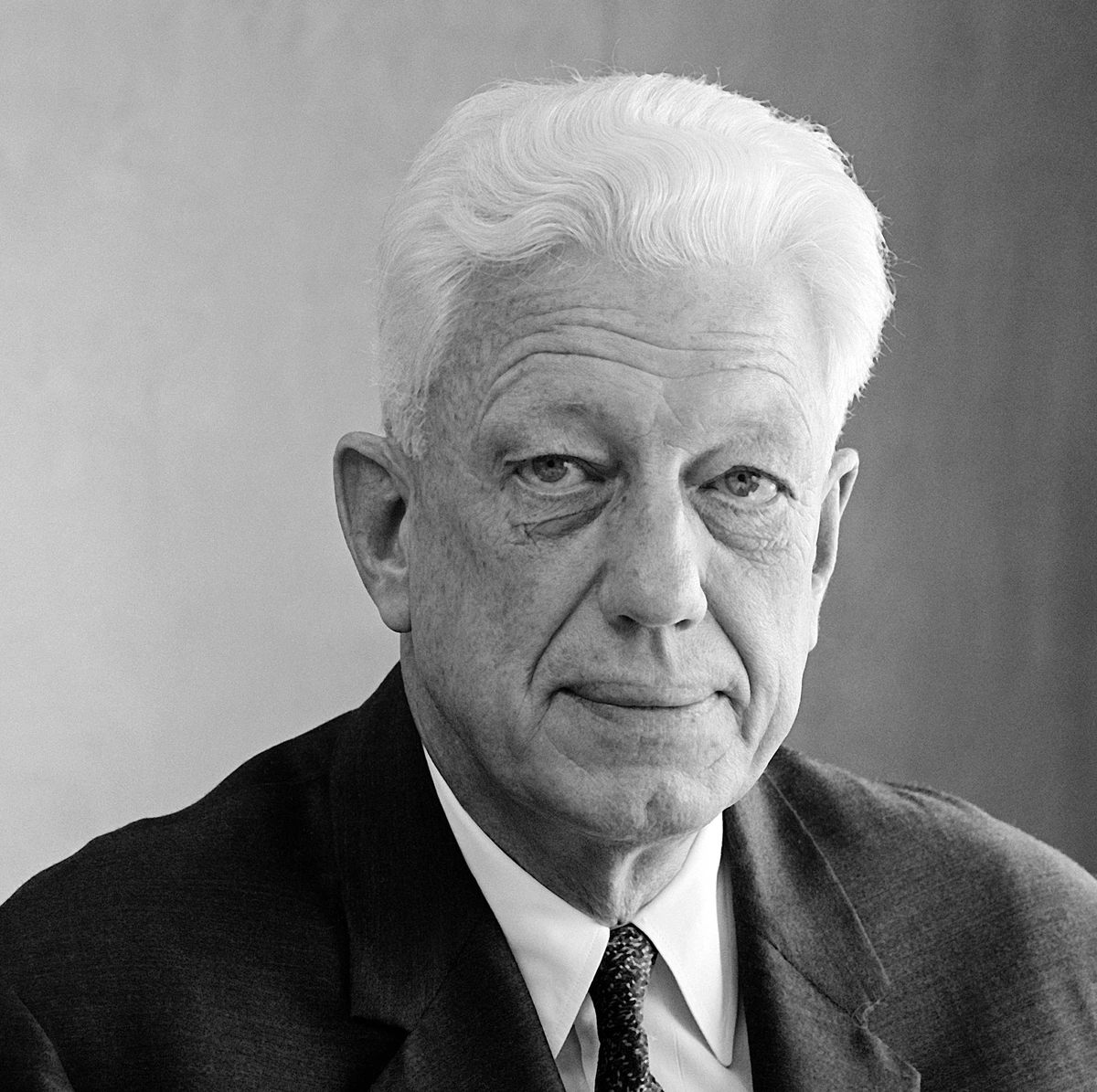
Biography
When Pate was three years old, his family moved from Nebraska to Denver, Colorado where he graduated from East Denver High School in 1911. Pate was the oldest of seven children, three of whom died in infancy of polio, diphtheria and after drinking non-pasteurized milk. He enrolled at Princeton University in New Jersey, where he was selected as a member of Phi Beta Kappa. In 1913 he travelled in Europe with his father and after the outbreak of the First World War worked on the undergraduate Red Cross Committee. In 1915 he graduated with high honors and a Bachelor of Science degree in mathematics and physics. He then worked as a janitor, clerk and messenger in a bank in Harley, Iowa where his uncle served as president. In 1916 he considered joining the Canadian Army, but instead went to New York City where he signed up to work with Herbert Hoover’s Belgium Relief Commission, which raised funds to purchase wheat and other foodstuffs that were then shipped to Belgium, prepared for consumption and then carefully distributed so as not to get in the hands of the occupying German army. Pate subsequently distinguished himself as the replacement for the field representative in Tournai, Belgium. When the United States (US) entered the war, he enlisted in the US Army and was sent to France with the rank of a Master Sergeant with the 29th Regiment of Engineers and subsequently served with the 74th Regiment. Three days after the end of the war he was promoted to Second Lieutenant. In February 1919 he signed up to work again with Hoover and in April was assigned to head the children’s nutrition operation that the American Relief Administration (ARA), a relief mission to Europe and later post-revolutionary Russia funded by the US Congress and private donations, was undertaking in Poland. Pate directed that endeavor and the ARA’s European Children’s Fund, a private charitable organization that Hoover had devised because he found that children were still suffering in the aftermath of war. After surveying the conditions in Russia, he directed the Russian famine relief fund until the ARA was disbanded in 1922.
Pate remained in Poland, where he did financial and sales work for the Standard Oil Company of New Jersey from 1922 to 1927 and became an assistant to the Warsaw manager of the firm’s Polish subsidiary. In 1926 he married Jadwiga Monkowska, the socialite daughter of an old Polish landowning family, at their home in Warsaw. For the following eight years he headed his own firm in Warsaw, which imported US cars, trucks and tractors. During this time, he also served as the Warsaw representative of several US banks and one English bank. In 1935 the couple moved to the US and for the next four years he acted as consultant to the brokerage firm of Paine Webber and Company and served as a director of the Rockford Machine Tool Company and of the Sunflower Gasoline Corporation. His wife, however, was unhappy in the US, missing her family and home, and returned to Poland. Although they were divorced in 1937, they remained friends for the rest of her life and Pate was at her bedside when she died in 1960. After the German invasion of Poland in September 1939, with Hoover’s backing Pate organized and became president of the Commission for Polish Relief, a privately operated organization that sent supplies to the Poles. After the Japanese attack on Pearl Harbor in December 1941 and the US engagement in the Allied war effort, Polish relief was impossible at least as far as Americans were concerned. As a consequence, Pate joined the American Red Cross and was named Director of Relief to Prisoners of War, with headquarters in Washington DC. He held that post until 1946, during which he arranged for the shipment of supplies to Americans in prison camps in Europe and the Far East.
Between March and June 1946 Pate accompanied Hoover on a survey of war-devastated countries, a tour requested by US President Harry S Truman in order to review the famine conditions around the world. They visited 27 countries, with Pate assessing the relief needs of children. Their report on famine prevention was credited with being a moving factor in US support for the creation of the United Nations (UN) International Children’s Emergency Fund (UNICEF). In August 1946 the US government, due to a controversy with the Soviet Union, decided to withdraw from the United Nations Relief and Rehabilitation Administration (UNRRA), set up in 1943, which implied the liquidation of this Allied institution along with the daily supplementary meals it was helping to provide to some five million European children. When the Council of the UNRRA discussed this situation, it proposed to the UN that a children’s fund be created and that part of its work be financed with UNRRA’s residual assets. This idea was suggested by Ludwik Rajchman, the former Director of the League of Nations Health Organization and the Polish representative on the UNRRA Council, who, ‘more than any other individual, was the founder of UNICEF’, according to Richard Jolly (2014: 14). Rajchman drew up a Charter and the UN General Assembly established UNICEF on 11 December 1946 as a temporary emergency operation. Rajchman, described as UNICEF’s ‘intellectual driving force’ (Balinska 1998: 206), was designated as Chairman of the Executive Board. Rajchman, who had met Pate when he was with the Commission on Polish Relief, is also credited for having persuaded UN Secretary-General Trygve Lie to appoint Pate as UNICEF’s first Executive Director. The only opposition seems to have been from the US, where he was not seen as a ‘modern internationalist’ and perhaps too closely associated with Hoover, whose counsel Pate had sought out before agreeing to have Rajchman lobby on his behalf (Black 1986: 35). However, Pate did meet the other requirements needed to get US support for UNICEF: he was an American, a humanitarian and a Republican (Beigbeder 2001: 12). Thinking this would be a temporary assignment, until the postwar emergencies had been concluded, Pate readily accepted Lie’s offer. However, he made a condition of acceptance that there would be no discrimination against children of any nationality, least of all children in former enemy countries. This was a policy followed in the second half of the 1940s by helping both sides of civil wars in China and also the Middle East. Pate furthermore insisted that he should have a clear line of authority from the UN Secretary-General and that he should have a free hand in the choice of his staff and in directing UNICEF’s activities.
Pate, who was selected to be Executive Director in January 1947, brought to UNICEF both a businessperson’s concern for cost effectiveness and a belief that with patience all obstacles can be overcome. The same month he announced UNICEF’s immediate objectives: 450 million dollars’ worth of supplies to go to 20 million children and nursing and pregnant mothers. The first pledge came from the US in the form of 40 million dollars. As Maggie Black (1996: 8) put it: ‘Pate both leaned on the US administration in his efforts to build a financial base for ‘[UN]ICEF’ and managed to harness public and political compassion for children from sources all over the world’. Still, during UNICEF’s early years ‘financial crisis was constantly threatened’ (Black 1986: 63). In part this was because UNICEF, unlike other UN organizations which received their financial allocations from member states on an assessed basis, was conceived as a fund toward which governments and people contributed voluntarily. Pate actually valued this unusual basis for funding, as it forced him and his staff to come up with innovative ways for raising money. These included fundraising from the general public through UNICEF’s greeting card operation, formally established in 1951, key events like house-to-house Halloween ‘Trick or Treat’ (which Pate initially vetoed) and the recruitment of public figures to speak and appear in films on UNICEF’s behalf, the most well-known of whom was the actor and comedian Danny Kaye, who in 1954 became UNICEF’s first Goodwill Ambassador. The consequence of these initiatives was to make UNICEF a household name around the world.
In 1950 the UN General Assembly resolved that UNICEF should continue beyond the postwar emergency phase for another three years, with a focus on helping governments in economically less developed countries set up their own services for children. This was not without controversy, as four permanent UN specialized agencies, directly concerned with UNICEF’s programs (the International Labour Organization, the Food and Agriculture Organization, the United Nations Educational, Scientific and Cultural Organization and especially the World Health Organization), had been opposed to UNICEF’s extension. Apart from emergency relief, they contended that their organizations, or other UN agencies, covered every aspect of what the UN Secretary-General had envisaged for UNICEF. Instead of UNICEF, they wanted a program making and coordinating committee comprised of the heads of the concerned UN agencies. The specialized agencies’ opposition had been joined by the US government, which contended that the emergency that had given rise to UNICEF was coming to a close. Moreover, there were key US officials who were antagonistic toward Rajchman (Beigbeder 2001: 13-18). During the first four years of the organization 80 per cent of UNICEF program expenditures were for children in Europe. Among the first to receive aid were children in Romania in the form of penicillin and sulfa guanidine, while powdered milk was sent to Austria, Greece, Poland and Yugoslavia. Requests, however, quickly came from throughout the world, especially from Asia and the Middle East. Accordingly, when the three-year temporary authorization was about to expire, a resolution to make it a permanent organization was passed unanimously. Much credit for that sea change was given to ‘the devotion and efficiency’ of Pate and his staff as well as the ‘guidance’ of Rajchman and the UNICEF Executive Board (Beigbeder 2001: 17).
When UNICEF became a permanent part of the UN system in 1953, its name was shortened to UN Children’s Fund, but it retained the same acronym. The name change underscored acceptance of the need to be concerned about children’s welfare, even after the emergency situation of the Second World War and its aftermath had passed. Whereas Pate had initially turned to Latin America as a source of funds, he quickly realized the needs there were great. He therefore initiated a Protein Advisory Group in 1955. In a similar vein, while investigations in the early 1950s revealed widespread malnutrition among children, it was not until late in that decade that protein deficiencies were addressed by supplying milk. However, the focus in the 1950s was on the eradication of epidemic diseases, including tuberculosis, yaws, trachoma and malaria. Pate also developed a reputation for responding quickly to requests in crises. Twenty-four hours after the Hungarian revolution had broken out in October 1956, Pate said that he was going there. While the government did not admit other UN officials, Pate surveyed the situation in Budapest during three days before dispatching orders for the arrangement of UNICEF aid. Shortly after the Congo crisis in July 1960 UN Secretary-General Dag Hammarskjöld asked him to implement a program of emergency food distribution. Pate promised to be on a plane the next night and arrived in Leopoldville two days later.
In spite of UNICEF’s continuous aid, by 1959 Pate feared that the organization had lost its uniqueness, if not actually its direction, in an era of evolving post-colonialism and a global focus on development. Accordingly, in November of that year he sent a letter to one hundred of his professional staff seeking their views in response to a question: Quo Vadis? This was followed up, in 1960, by a Survey on the Needs of Children, which was sent to member governments, asking them for their priorities. In June 1961 Pate presented Children of Developing Countries, a report to UNICEF’s Executive Board in which he called for every project to be planned and phased in as a part of each country’s national plans, focusing on planning for children in national development, strengthening the family and community and advocacy. UNICEF would henceforth be seen as a development organization, still focused on the child, but no longer simply a humanitarian and welfare organization. Maternal health was always a major UNICEF goal, but the organization also began emphasizing that women could be best assisted by combining the objectives of training, better child rearing, community involvement and raising wages. Similarly, it was only in the 1960s that Pate began voicing concerns about children in poor urban areas and pushing for recipient countries to conduct the project evaluations. Pate remarried in 1961 to Martha Lucas, an educator who promoted international cooperation through education and served on the board of the United Negro College Fund that he had met through a mutual friend. After their marriage she accompanied Pate during his extensive travel on behalf of UNICEF. Pate died suddenly of a heart attack at Bellevue Hospital in Manhattan in January 1965, only a few months before he was to retire. Months before he died, he had begun to court and to recommend his choice for a successor, Henry Richardson Labouisse. The US, the organization’s largest contributor and most influential member of the Executive Board, had made clear that a US citizen should succeed Pate, so Labouisse fit with their required criteria as well. Labouisse became UNICEF’s new Executive Director in June 1965.
At the time of Pate’s death, UNICEF had more than 550 long-term programs and had helped over 55 million children in 116 countries. Pate had visited nearly all of the 133 countries in which UNICEF operated during his tenure and saw the number of countries contributing funds grow from 35 in 1951 to 118 in 1965. Hoover referred to Pate as ‘the most efficient human angel I have ever met’ (quoted in Charnow 1989: 18). Pate imbued in UNICEF, according to Jolly (2014: 17-18) three main characteristics: ‘a spirit of self-criticism, a willingness to learn from experience and a deep sense of trusteeship for the funds contributed to it’. While it is impossible to prove that Pate’s deep concern for the welfare of sick children arose from the death in infancy of three of his siblings (Charnow 1989: 15), what is incontestable is the incomparable role Pate played in the establishment and evolution of UNICEF and the organization’s devotion to saving and improving the lives of children in the post-Second World War era. Pate initiated UNICEF’s geographical expansion beyond Europe and its conversion from a humanitarian to a development institution. He introduced the innovative country approach and planning for the ‘whole child’ in national development. He overcame the opposition of UN specialized agencies to UNICEF’s existence and expansion. Building on the precedents in Yugoslavia, the US and Belgium, Pate promoted the establishment of National Committees throughout the world, which although not a part of UNICEF’s formal structure, significantly expanded UNICEF’s influence in member countries. Pate also insured that UNICEF provided relief to children on both sides of civil conflicts and in Communist countries, even though that exposed him to criticism from dominant donors and was subsequently rejected by the recipient authorities. Such precedents, which accorded with Pate’s initial conditions for accepting the position as Executive Director, distinguished UNICEF from other UN bodies.
Pate received many honors and awards for his humanitarian work, in 1948 the Parents’ Magazine award for outstanding service to children, in 1949 the Foreign Press Association’s annual award for his contribution to international understanding and in 1950 the Loyal League Philanthropies citation for outstanding achievement in the field of child welfare. He received an honorary Doctor of Human Letters degree from Denison University in 1956 and an honorary doctoral degree from Princeton University in 1958. He declined a Norwegian nomination for the Nobel Peace Prize in 1960, because he felt the contributions of the entire UNICEF organization should be recognized instead of one individual’s contribution. Nine months after he died UNICEF was awarded the 1965 Nobel Peace Prize. The UNICEF Maurice Pate Leadership for Children Award was established after his death and is named in his honor. Pate’s organization, the Maurice Pate Institute for Human Survival, donated his 100-acre property near Redding, Connecticut to the Mahayana Sutra and Tantra Center of Connecticut, now called Do Ngak Kunphen Ling Tibetan Buddhist Center for Universal Peace, in 1997.