Biography
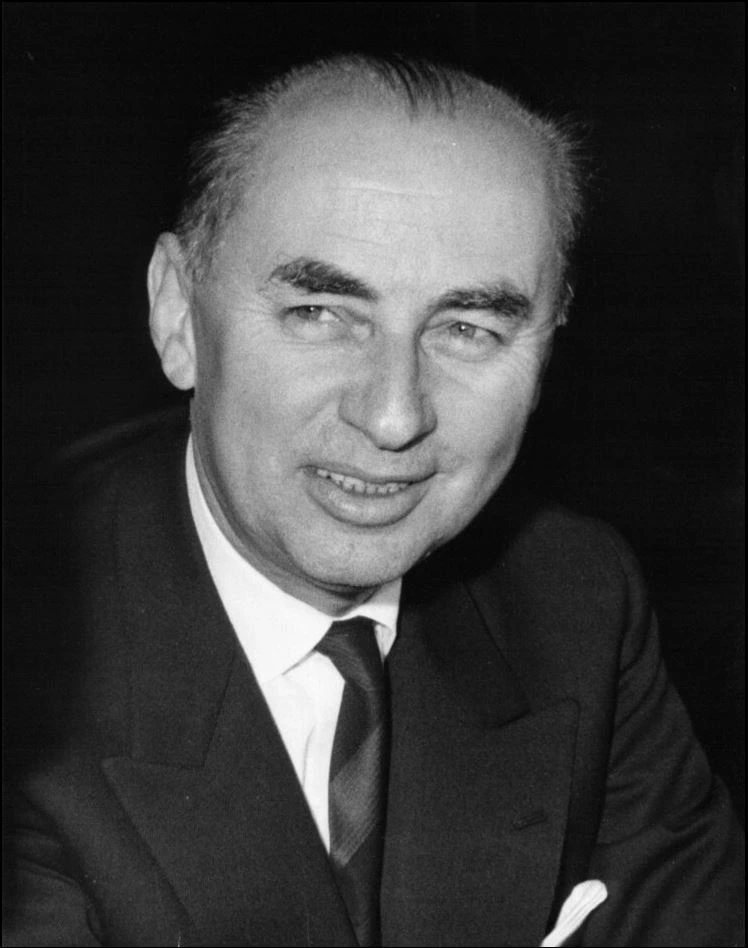
Maheu is an example of meritocratic upward mobility, as his grandparents were illiterate and his parents were primary school teachers. He had his secondary education at the Lycée de Toulouse and the Lycée Louis-le-Grand in Paris. Maheu successfully passed the difficult exam of the Ecole Normale Supérieure in the rue d’Ulm in Paris. In this elite school he met the later existentialist philosophers and political activists Jean-Paul Sartre and Simone de Beauvoir. According to a fellow student, and future colleague at the United Nations Educational, Scientific and Cultural Organization (UNESCO), Emile Delavenay, Maheu was very individualistic. In her Memoires of a Dutiful Daughter (in French: Paris 1958: 328-331, 333-339) de Beauvoir mentions him under the name of André Herbaud, describing him as rationalistic, anticlerical, antimilitarist and antinationalist. In The Words, an account of his youth, Sartre (in French: Paris 1964: 162-164) described Maheu as hypersensitive and a rebel: an anti-conformist. Maheu studied at the Sorbonne University and became a philosophy teacher at the Lycée de Coutances. From 1931 to 1933 he served as lecturer at the Romanisches Seminar of the University of Cologne, where he observed the rise and growth of Nazism in German society. He left Germany 28 February 1933, the day the Reichstag burned. These events reinforced his internationalism and pacifism, which contributed to his decision in 1948 to send his seventeen-year old son Jean to Germany in order to establish links with young Germans and contribute to French-German reconciliation. From 1933 to 1939 Maheu taught at the French Institute in London, where he met the brother of the pacifist author Aldous Huxley, the British biologist Julian Huxley, who in 1946 became UNESCO’s first Director-General. From 1940 until 1942 Maheu taught at the French-Muslim College, a secondary school in Rabat in the French protectorate Morocco. In 1943 and 1944 he headed the service department of the information agency France-Afrique in Algiers, Algeria. In 1945 he entered the Cabinet of the French Residents-General in Morocco, Gabriel Puaux and his successor Erick Labonne, and worked on the reform of school teaching. His stay in Morocco made Maheu aware of the problems of the ‘Third World’ and the necessity for colonies to become independent and achieve economic development. Being in favour of preparing for Morocco’s independence, unlike Labonne, he left his post in 1946.
In September 1946 Maheu entered UNESCO in Paris thanks to his former fellow student Jean Thomas. He became chief, and sole member, of the Division of the Free Flow of Information. In 1948 UNESCO’s second Director-General, Jaime Torres Bodet, appointed him as head of his Cabinet and in 1954 Maheu became Under Director-General. From 1955 to 1958 Maheu served as UNESCO’s representative at the United Nations (UN) headquarters in New York. The American Luther Evans, who became UNESCO Director-General in July 1953, had appointed him there in order to get rid of him, as the two men did not get along on many topics. Maheu experienced this period as an ‘exile’ (Delavenay 1992: 395), but applied himself with determination to improve the coordination between UNESCO and various UN bodies, to increase UNESCO’s place and role in the UN system and to improve the coordination between the various often-competing UN specialized agencies. In 1958 he successfully lobbied in UNESCO’s Executive Council in favour of the Italian Vittorino Veronese as the new Director-General, partly as revenge on Evans, and in 1959 he became Assistant Director-General under Veronese. When Veronese resigned for medical reasons in November 1961, Maheu became Acting Director-General and in November 1962 was elected Director-General.
During the 1960s Maheu advocated an increase in UNESCO’s budget, which most Western member-states opposed. Across his years at the top he advocated new orientations for the organization by making it both an operational agency and an intellectual forum. He initiated many technical assistance projects in developing countries, notably educational projects in Africa, and regarded education a vital activity for UNESCO. He presented himself as a teacher and educator, even if he had taught for only a few years of his life. In this spirit, in 1966 he created a Philosophy Division in UNESCO. Previously, in 1963, he announced in the newspapers Le Monde and The Sunday Times that UNESCO should adopt advanced and progressive positions with regard to decolonization, disarmament and racism. He maintained this position in spite of the opposition of many Western states, notably the United States and the United Kingdom, which were anxious about his ambitions. The Eastern bloc and the developing countries, however, favoured this orientation. In November 1963 Maheu made an official trip to Algeria, where he, as the first director of a UN agency to travel to this newly independent country, was received with great honour and treated as a head of state.
Maheu succeeded in making UNESCO popular and prestigious as a result of its review The UNESCO Courier and the UNESCO clubs for young people who share a commitment to UNESCO’s ideals. He also promoted the organization’s action in the field of world heritage and culture. One of UNESCO’s main achievements during his directorship was the rescue of the Abu Simbel temples in Nubia, southern Egypt, in 1968. This gave UNESCO legitimacy in the field of world cultural heritage, followed in 1972 by the adoption of the Convention Concerning the Protection of the World Cultural and Nature Heritage, known as World Heritage Convention. From that date UNESCO has registered cultural and natural sites on the World Heritage List, nowadays one of the organization’s most well liked activities. During Maheu’s two successive terms (1962-1974), UNESCO devoted itself more and more to the developing world by promoting the idea of ‘cultural development’, that is the idea that culture can contribute to economic development. UNESCO encouraged Third World countries to use their own cultural resources in order to attain economic progress. In spite of his educational and cultural ideas Maheu was not very fond of science and even reticent about it, unlike Pierre Auger, a fellow student at the Ecole Normale Supérieure and head of UNESCO’s Science Department under Maheu. Maheu preferred a synthesis, believing that UNESCO should promote both universalism and cultural diversity. He expressed his ideas in a book published in 1966, when UNESCO adopted its Declaration of Principles of International Cultural Cooperation, which also tries to reconcile universalism and multiculturalism. In 1968 Maheu was unanimously re-elected over the Indian candidate Humayun Kabir, after he obtained the support of the Third World countries. During his two terms he moved UNESCO closer to the Catholic Church, having good relations with pope Paul VI, who in his encyclical Populorum Progressio (1967) had developed cultural ideas which were close to UNESCO’s principles. Maheu was also favourable of cooperation with Spain under general Francisco Franco, because he believed it could help Spain to progress toward democracy. He even decided to organize the 1971 Executive Council session in Madrid.
During his 14 years at the top of UNESCO Maheu, who retired on 14 November 1974, was devoted to his job. He often said that he had ‘merged his own life with the life of the organization’ (Benton 1963). His colleague Jean Thomas (1976: 503-504) argued that he gave ‘the best of himself to this institution to accomplish the best of his life’ and underlined his ‘fervour’, his ‘unremitting patience’ and ‘faith’ in UNESCO: ‘one has rarely seen a man empathize to such an extent with his post’. However, the French author Jean d’Ormesson (1974), who worked at UNESCO, wrote that Maheu at the top of UNESCO led ‘a sort of moral dictatorship’. Maheu was regarded as very authoritarian. Thomas (1976) recalled his ‘increasing taste for power’ and his colleague Michel Prévost (1996: 100, 101 and 243) evoked ‘his very bad-tempered nature’ and mentioned that he could be ‘tyrannical’ and could ‘insult his best collaborators’. When the UNESCO staff organized a staff round table in order to discuss the problem of authoritarianism in the functioning of the organization in 1970, Maheu (1970) felt it was an attack against him which called his leadership into question. He succeeded in defusing, i.e. forestalling, the contestation. In 1973 Maheu was awarded the Montaigne Prize and in 1974 Maheu and his successor Amadou Mahtar M’Bow were together awarded for UNESCO the John XXIII Prize. In Maheu’s honour the UNESCO staff association created the René Maheu International Civil Service Prize in 1974. Maheu died of cancer one year later.