Biography
Lubbers’ parents came from Roman Catholic entrepreneurial families. After his father bought out management in 1955, he became the owner of a successful steel construction company near Rotterdam. Lubbers was sent to a Jesuit Boarding School known for having the country’s best teachers. His school years coincided with the Aggiornamento, the era in which the Catholic Church opened to modern times. As an economics student Lubbers spent a few months in Geneva, Switzerland, where United Nations (UN) Secretary-General Dag Hammarskjöld impressed him greatly when Lubbers, representing the Catholic students’ organization Pax Romana, attended a session of the UN Economic and Social Council. In 1962 Lubbers graduated cum laude. He aimed for an academic career but, due to his father’s sudden death, Lubbers and his brother were charged with running the family business. Influenced by the anti-establishment movement of the 1960s, Lubbers, like many of his generation, engaged in politics, wishing to break open entrenched political structures. As a young entrepreneur he was appointed Minister of Economic Affairs in 1973, representing the Catholic Peoples Party in a progressive coalition government dominated by Social Democrats. Lubbers established his reputation by taking drastic measures, such as car-free Sundays during the 1973 oil crisis. In 1978 he was elected leader of the Christen Democratisch Appel (CDA) parliamentary faction (a merger of the Catholic Peoples Party with two smaller Protestant parties). Lubbers turned out to be a skillful matchmaker who formulated ingenious compromises and perfected a misty political language (‘lubberiaans’) mentioned in Dutch dictionaries. In November 1982 he became Prime Minister, spearheading a center-right, so-called ‘no nonsense’ coalition, which aimed to reduce the budget gap significantly. Despite fierce social protests, the government did not back down. An article in Time magazine, ‘Ruud Shock’, established his reputation abroad. Although the Prime Minister is just the first among equal government members (formally the Council of Ministers decides), Lubbers often was the decisive voice in decision-making because he had an overview of all files, detailed knowledge about them, political experience and communication skills.
Debate over whether or not to deploy cruise missiles in the Netherlands began with the 1979 North Atlantic Treaty Organization (NATO) decision to modernize intermediate range nuclear weapons and lasted until the final Dutch government decision to deploy them in the Netherlands in November 1985. Lubbers managed to keep the deeply divided Dutch society together by postponing for as long as possible and setting conditions to the Soviet Union. He defended his approach to United States (US) President Ronald Reagan in the Oval Office twice and corresponded with Soviet leader Mikhail Gorbachev. Lubbers eventually succeeded in guiding a clever compromise through the Dutch Parliament. This outcome helps to explain why his CDA party won 54 out of 150 seats in the parliamentary elections of May 1986, still a record number for a single party in Dutch politics. Lubbers stayed Prime Minister for twelve years. Although mass unemployment remained persistent, the country’s economic and psychological recovery during the years 1982-1994 is largely attributed to the government coalitions led by Lubbers. After his departure the CDA party dropped from 54 to 34 seats in the 1994 elections and was sent into opposition.
As Head of Government and member of the European Council, Lubbers played an important role in the revival of European integration that started around 1984. Commission President Jacques Delors considered Lubbers to be one of the key figures, who was prepared to subordinate Dutch interests to European consensus. With the European Summits gaining more substance the spell of powerlessness was gradually broken. A timetable was drawn up with actions that had to be taken to complete the Single European Market, but this planning was thwarted overnight by the fall of the Berlin Wall (9 November 1989). When German Chancellor Helmut Kohl launched a plan with the prospect of German unification Lubbers called for caution. Kohl felt let down and later portrayed Lubbers as an opponent of German unity. Lubbers saw this as a lie manufactured afterwards to undermine his candidacy for the Presidency of the European Commission. In December 1991 the European Council, chaired by Lubbers, reached an agreement on the Treaty of Maastricht establishing the European Union (EU). Lubbers was interested in following in Delors’ footsteps, but the tide was already turning. After the 1990 Gulf War and Yugoslavia’s break up after 1991 the EU lost momentum and, as far as the Commission’s Presidency was concerned, Lubbers came across an unspoken veto by Kohl.
In 1994 Lubbers left politics and returned to the family business. He also became part-time professor of globalization at Tilburg University in the Netherlands and a visiting professor at the John F. Kennedy School of Government at Harvard University in the US. He was Vice-Chairman of the Independent World Commission on the Oceans and Chair of Globus, the Institute for Globalisation and Development based in Tilburg. A Dutch lobbying effort to have him appointed as NATO Secretary-General in 1995 failed, as Lubbers did not secure essential US backing. In November 1999 he was elected International President of the World Wide Fund for Nature. Shortly thereafter he encountered UN Secretary-General Kofi Annan and responded positively to Annan’s initiative for a Global Compact network that encouraged companies to engage in sustainable business practices. The same year Lubbers learned that his former ministerial colleague Jan Pronk was being considered to become UN High Commissioner for Refugees (UNHCR). According to Lubbers, he unexpectedly discovered that Annan was interested in him and that his ‘not available’ position would not automatically lead to Pronk’s appointment. Pronk suspected that Lubbers had lobbied Annan and Maurice Strong, former Chair of the UN Conference on Environment and Development and the person behind the Earth Charter movement. Lubbers’ offer to take the position without salary may have played a role, as well as the reported support of Queen Beatrix.
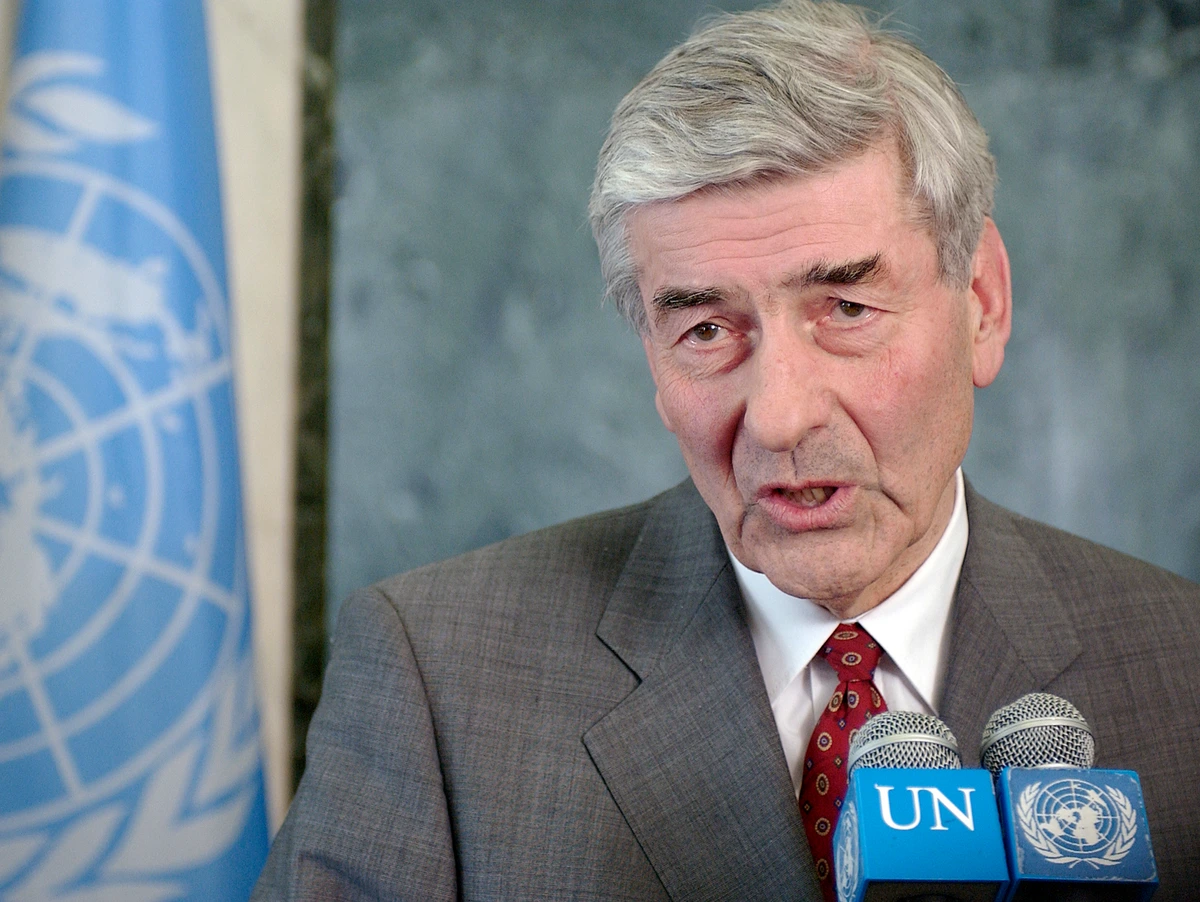
Following his nomination by Secretary-General Annan, the UN General Assembly approved Lubbers without a vote. He succeeded Sadako Ogata and began as High Commissioner on 1 January 2001. The UNHCR had 240 offices in 115 countries and 6,000 staff members (900 at Geneva headquarters). Worldwide an estimated 22 million refugees existed, including five million Internally Displaced Persons. The UNHCR spent a billion dollars annually. One-fifth to one-quarter of its budget came from the US, with the Netherlands the third largest contributor after Japan (during 2000-2004). It was expected that Lubbers’ appointment would lead to more voluntary European contributions. Lubbers started the job without knowing exactly what it was about. His only previous dealings with the refugee issue were related to his European Council membership and the increasingly stricter Dutch requirements for admission of refugees in the early 1990s. He admitted that as Prime Minister he preferred that refugees did not come to the Netherlands, but, according to his staff, after his first visit as High Commissioner to a refugee camp he was completely converted. He faced a lack of funding and a rise of restrictive asylum policy measures in the rich Northern countries in an era of increasing security concerns, fueled by terrorist threats and illegal migration. Nine months after taking office, the September 11 terrorist attacks against the US took place. The US and the United Kingdom used this as a justification to invade Afghanistan (October 2001) and Saddam Hussein’s Iraq (March 2003).
In line with his Dutch leadership approach, Lubbers started vigorously. Everyone who met him was impressed by his energy and work ethic. His personal involvement was considered genuine. As refugees had no government to stand up for them, he viewed them his people. Endless meetings were held and stacks of documents reviewed at the large table in his office, where about ten people could sit. However, to the irritation of some managers in the higher echelons, he often paid little attention to bureaucratic hierarchy, simply calling the policy officer in charge straight to his office. The UNHCR’s firefighting mentality was reflected in its annual budget and mandate that had to be renewed every five years. In 2001 the ‘UNHCR 2004’ process was initiated to provide tools to better respond to the new challenges. The temporary limitation of its mandate was lifted, and the organization was incorporated into the UN Development Group, which allowed for a longer-term focus. As the UNHCR could indirectly assist with preventing terrorism and crime, Lubbers urged its Executive Committee to recognize that the organization’s task encompassed more than humanitarian work and needed a broader financial base. Internally he introduced new insights from the business world, aiming for an agency with a minimum of bureaucracy and hierarchy and a maximum of flexibility, accountability and transparency. In June 2001 he presented his major austerity plan, cutting programs around the world and reducing the staff by about sixteen per cent. In April 2002 he split the Division of Resource Management into one department dealing with financial resources (aimed at sharpening fiscal discipline) and another one dealing with human resources. He also promoted a new corporate culture focused on the exchange of ideas, irrespective of grade, seniority and tenure. In 2004 a consultancy firm reviewed all business processes and the organization incorporated results-based management practices that rewarded excellence. Lubbers repeatedly expressed his dissatisfaction that the organization’s overall funding was lagging, observing in October 2002 that more energy was put into managing the shortfalls than the budget itself. Executive Committee members often urged the organization to increase its presence or raise certain standards, but without having budgets for that. Better financial management paid off. After several years of constraints, the organization ended up better funded (by late 2003) and no longer in a financial crisis (by October 2004).
During Lubbers’ term in office the number of refugees decreased from 22 to 17 million. In the Balkans more than one million returned home after the war’s end in 1999. In 2002 nearly two million refugees returned to Afghanistan, the largest refugee repatriation in three decades. Peace also came to Angola, Sierra Leone and Sri Lanka, while East Timor became independent. 2003 was another positive year, albeit tainted by the bombing of the UN headquarters in Baghdad, Iraq, killing 22 people, among them UN High Commissioner for Human Rights Sergio Vieira de Mello. Major repatriation operations took place in Afghanistan, Angola and Eritrea. Over the years there were fewer conflicts, except for the Darfur region in Sudan. Simultaneously a less friendly climate towards refugees began to prevail. Lubbers attributed this to heightened security and global terrorism concerns and the widespread xenophobia fueled by politicians. He characterized 2004 as a reasonably good year in a troublesome world, but was pessimistic about Iraq, where all UN staff were withdrawn. Anti-American sentiment was growing, with the UNHCR regarded as American-sided, which prevented it from functioning effectively in the Islamic world.
Lubbers made frequent trips as High Commissioner, all of which he paid for himself. Almost every month he visited conflict areas to stay personally informed and encourage his staff. Shortly before the US invasion of Afghanistan following the September 11 attacks he took a small plane to the country to negotiate with the Taliban. Later, after discussions with the Congolese government, he travelled into the jungle to meet a rebel leader. He regarded direct talks with regional opponents and warlords as necessary for later negotiations, with the refugee situation always of greatest importance to ensure safe escape, shelter and return. His trips lasted about four to ten days. The suffering did not leave him unaffected, as he showed. These passionate years turned out to be very exhausting for the well over sixty-year-old Lubbers, both mentally and physically. He occasionally returned early from trips due to gastro-intestinal symptoms ostensibly due to hygiene in camps, but eventually it was discovered he was suffering from a narrowing of blood vessels, requiring an angioplasty.
As High Commissioner Lubbers acted as guardian of the right to asylum, being the highest advocate for refugees and the CEO who stood up for his staff. He diligently fulfilled all roles. Fearing a new humanitarian disaster, he urged the EU to monitor the situation in Kosovo in February 2001. In March he addressed the UN Human Rights Commission, warning that refugees and economic migrants had become seriously confused in the public mind by extremist politicians who stereotyped refugees as social threats. On 10 October 2001, three days after the invasion of Afghanistan, he pointed to the increasing risk of people associating terrorist attacks with Afghans, refugees and Muslims. In February 2002 he objected to the Australian practice of detaining asylum seekers and in September he called on Rwanda to stop the forced return of Congolese refugees. In virtually every crisis he insisted on opening the borders. He also briefed the UN Security Council on specific humanitarian crises: in February 2002 in relation to the situation in Sierra Leone and in May 2004 on Darfur. In October 2002 Lubbers expressed strong criticism of a research report by the UN Office of Internal Oversight Services on the issue of sexual exploitation in West Africa. He felt that the report had unfairly damaged the reputation of his staff and argued that the abuse was committed by peacekeepers and the photos in the report had been tampered with. He was then criticized for his handling of this issue. Later, Lubbers suggested this might have played a role in his forced resignation in 2005.
Just before the US-led invasion of Iraq in March 2003 Lubbers warned against any large-scale relief operation for Iraqis coming at the expense of vital aid programmes in Africa since too many people in the world had already paid a price because of the international community’s focus on Iraq. Shortly thereafter, he also turned against the US introduction of detention for incoming asylum seekers from thirty classified (mainly Islamic) countries, as these measures were in violation of international human rights norms and standards. In the case of Iraq, Lubbers argued that the US had not sufficiently considered the possibility of supporting the weapons inspectors with UN peacekeepers and that the UN should have been at the centre of any solution. Lubbers repeatedly made direct contact with EU institutions. At an informal meeting with the European Council in March 2003 he launched a plan for a common asylum policy under UNHCR guidance. After joint processing, refugees found in need of protection should be granted asylum in one of the EU countries, taking into consideration their needs and skills. For those not found in need of protection, collective EU action should be taken to ensure their prompt return to their countries of origin. However, the plan received insufficient support. In 2004 and early 2005 Lubbers expressed sharp criticism of EU proposals to amend asylum legislation. He called upon European leaders to focus on creating a fair and efficient system, not simply a fast one.
Conceptualizing and packaging were among Lubbers’ strong points, always aiming at extra attention and more funds. He was the architect of Convention Plus, the plan to revitalize the 1951 Refugee Convention through multilateral agreements with individual countries focused on sustainable solutions and, in post-conflict situations, the implementation of the Four R-Program (Repatriation, Rehabilitation, Reconstruction and Reintegration) that linked refugee care to development aid. Convention Plus was closely linked to the new Agenda for Protection the UNHCR adopted in October 2002. The Agenda’s main themes were the need for better protection, more durable solutions and improved burden sharing. Lubbers proposed a biannual Forum of Experts to develop new ideas. After the Forum’s third meeting in October 2004, he reported optimistically that links between development assistance and refugees, self-reliance and Four R-Programs were gaining acceptance. He planned for a Convention Plus Unit to continue to operate in 2005 and, from the beginning of 2006, the study results were to be integrated. Lubbers wanted the UNHCR to recalibrate itself to tackle not only humanitarian emergencies but also to promote burden sharing and long-term solutions. However, academics and non-governmental organizations were sceptical from the beginning, as they believed that Convention Plus was based on a Europe-led containment agenda. The ultimate outcome did not meet expectations and the process failed to provide norms for burden-sharing. When the initiative ended in November 2005, the documents with soft law status Lubbers planned for had never materialized. The close association with Lubbers’ personal approach is considered one of the reasons for failure, but discussions mainly broke down over the increasing polarization between Northern and Southern states. In the end, a bridge-builder and solution-finder like Lubbers was sorely missed. The Forum of Experts would meet five times, but at the last two meetings in April and November 2005 the Dutch architect of the initiative was no longer present.
Lubbers’ trip to West Africa in early February 2005 turned out to be his last trip, as he was forced to step down as High Commissioner on 20 February after a leak to the press of an internal investigation report into a sexual harassment accusation against him. Secretary-General Annan decided that the accusation could not be proven, but reprimanded Lubbers for his interference with the procedure. Lubbers claimed that he had to speak up after the complaint was leaked in May 2004 and had raised questions among his staff. The leak coincided with his annual visit to the US, which raised the question of whether this was related to his criticism of the Americans. Annan, however, could not handle another damaging affair, as he was pressured to clean up the UN after several scandals. Obsessed with vindication, Lubbers kept pushing for measures against the internal investigation office. Eventually, when Annan confirmed Lubbers’ resignation on 24 February, it was not because of the allegation but due to his conduct since then. American Wendy Chamberlain succeeded Lubbers as Acting High Commissioner until 15 June, when António Gueterres (who went on to become UN Secretary-General) from Portugal took over.
After his departure as High Commissioner Lubbers still liked to engage in discussing world problems and continued to commit himself to the Earth Charter. In the Netherlands he was asked to expedite coalition negotiations as a Minister of State in 2005 and 2010. However, ‘the case’ proved an obsession that kept him preoccupied. As he got older his depressions became increasingly frequent. In 2018 he died at 78 by euthanasia. Despite his handling of ‘the case’, Lubbers’ dedication to the UNHCR and his accomplishments remain undervalued.