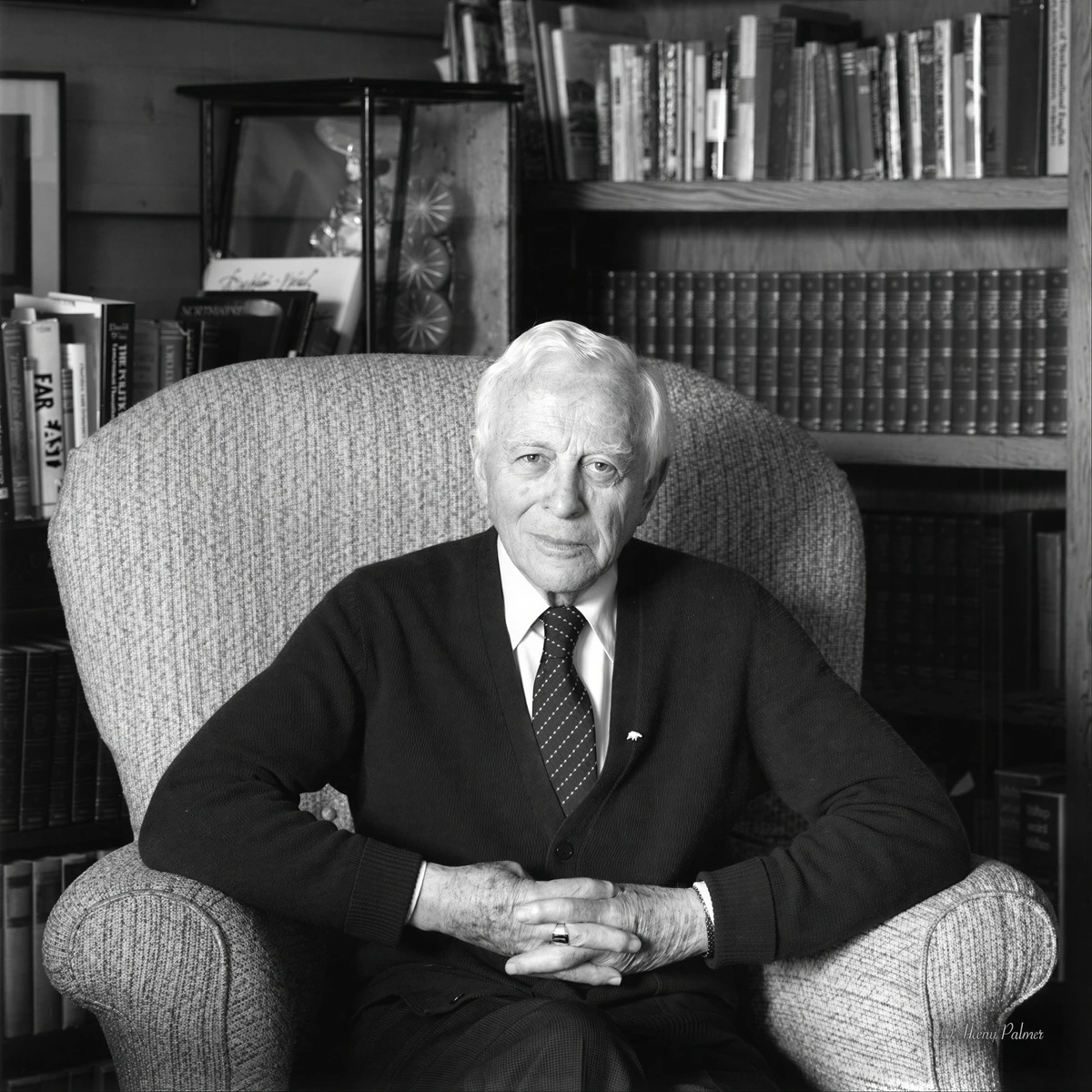
Biography
After his family had moved from Toronto, Keenleyside grew up in Vancouver, British Columbia, then a frontier town on the border between Canada and the United States (US). He was the child of devout Christian parents (a Methodist father and a Baptist mother) and attended four church services each Sunday as a child, but was not himself religious, taking from this experience only a lifelong abstention from alcoholic drinks. In his recollection, the Keenleyside family was comfortable but not wealthy. In Vancouver his family preferred Japanese-Canadian ‘boys’ as servants and Keenleyside (1981: 103-104) recalled being impressed with the Japanese and Chinese clients who he served in his first job as teller at the Royal Bank of Canada. With British Columbians in the early twentieth century increasingly opposed to Asian migration to Canada’s Pacific-coast province (Gilmour 2014), this early liberal attitude towards racial issues set Keenleyside apart from many of his contemporaries. During the First World War he completed high school, enrolled at the University of British Columbia (UBC) in Vancouver, served with the Second Canadian Tank Battalion and then returned to UBC, where he met Katherine Pillsbury. They married in 1924 and he treated her as an intellectual partner with whom he shared similar social attitudes. He disagreed with what he saw as a prevailing view that the poor were to be blamed for their poverty and he (1981: 106) wrote later: ‘Poverty is a poison no less potent than drugs; as the Bible has it, “The destruction of the poor is their poverty.” We both came to realize that in such cases a censorious attitude was seldom justified and almost never helpful’. Keenleyside’s first advocacy work began as a graduate student in the US at Clark University in Worcester, Massachusetts, where he would earn his Master’s (1921) and doctorate (1923) degrees with a focus on the history of Canada-US relations. He joined the American Birth Control League, founded by Margaret Sanger, and became embroiled in controversy when his research led him to deliver public speeches that used the case of publicly owned railways in Canada as evidence that public ownership did not always lead to disaster. American Progressive politicians used his speeches as evidence in campaigns for public ownership. Keenleyside briefly taught at Penn State, Brown and Syracuse universities before returning to teach history at the University of British Columbia from 1926 to 1928.
Along with Lester Pearson, Keenleyside was one of two men to win appointment in the first competitive examination for Canada’s Department of External Affairs in 1928. Winning praise from Prime Minister William Lyon Mackenzie King, he was soon tasked with opening Canada’s first legation (embassy) in Tokyo, Japan, where he served from 1929 to 1936 as First Secretary. The posting earned him a reputation for ‘meticulous reporting of Far Eastern affairs’ (Meehan 2004: 16) from Canada’s only diplomatic outpost outside Europe and North America. Unlike many contemporaries, Keenleyside (1981: 406) dismissed Inazo Nitobe, the ranking Japanese official at the League of Nations, as a ‘fake liberal’. During this time Canadian hopes for increased trade with Japan were less notable than the progress of Canadian Christian missionaries. While posted to Tokyo, Keenleyside published his dissertation on Canadian-American relations (in 1929) and authored a second book on the history of the Japanese school system (published in 1937), both to favorable notices. On his return to Canada in 1936 he became head of the American and Far Eastern Division and subsequently Assistant Under-Secretary of State for External Affairs. Touring the country during the Great Depression on a speaking tour about Japan, Keenleyside (1981: 457) ‘came to the view that while there were more violent crimes there was none so shameful as poverty’. His stance as a progressive outlier in the Ottawa bureaucracy was solidified when he became the leading voice of resistance to deportations of Japanese-Canadians from the West coast and into the interior during the Second World War. He filled numerous wartime roles including membership on a commission looking into illegal Asian migration to British Columbia, a problem found to be minimal. In 1940 he became Canadian secretary on the Canada-U.S. Permanent Joint Board of Defence. Perhaps to remove him from Ottawa, he was offered the post of Canadian ambassador to Mexico, a role he filled from 1944 to 1947. However, the diplomat’s life no longer suited the ambitious Keenleyside. He resigned to become Deputy Minister of Canada’s Department of Mines and Resources (1947-1949), where he implemented numerous reforms and re-organizations in the government department that dealt directly with northern regional development, forestry, national parks, immigration policy, indigenous people and the rule of Canada’s Northwest Territories. He ensured that Canada accepted more postwar European refugees than all other countries combined, calling this his proudest achievement in public affairs (Keenleyside 1982: 300). He was also Commissioner of the Northwest Territories (1947-1950) and in that capacity he led a ‘distinct departure from the former laisser-faire approach to economic development’ in the North. Education spending soared by 575 per cent and welfare spending by 176 per cent compared to national averages of 42 and 49 per cent (Grant 1990: 81). His approach to the North, Canada’s less-developed periphery, was reformist and interventionist in administration, modernizing in economic development policy, and paternalistic towards the indigenous peoples of the North, though he pressed for voting rights to be given to Inuit and First Nations residents.
Keenleyside was close to Brock Chisholm, the controversial Canadian deputy minister of health who became first Director-General of the World Health Organization in 1948. Keenleyside’s interest in United Nations (UN) affairs was further piqued when he delivered one of the keynote addresses at the UN Scientific Conference on Conservation and Utilization of Resources, held in New York in 1949. In 1950 he agreed to head a UN technical assistance mission to Bolivia, set up by the Expanded Programme of Technical Assistance of the UN, which recommended an innovative plan for foreign nationals to work directly within the Bolivian civil service as ‘administrative assistants’. This injection of expertise would ‘telescope into a single generation or less the economic and social advance that will otherwise involve a slow progression over many decades’, the mission’s final report argued (Webster 2011: 253). Bolivia’s government then nominated him for the position of Director-General of the newly created Technical Assistance Administration (TAA) of the UN. The perceived opportunity for the UN to play a leading role in development at a time when early hopes that the organization would be central in the fields of peace and security were fading, combined with Keenleyside’s relatively interventionist approach. He was acceptable to the major players, increasingly at odds with official Ottawa as a more left-leaning voice than most of his colleagues (and thus available), and came with both diplomatic and administrative experience and a reputation for dynamism and managerial skill. Within the UN Secretariat it was discussed whether Rául Prebisch would play a role in the TAA, but UN Secretary-General Trygve Lie decided to keep Prebisch in Latin America as Executive Secretary of the UN Economic Commission for Latin America. Keenleyside took office on 23 September 1950, with Gustavo Martinez Cabanas from Mexico as Deputy Director-General. The TAA was one of the few operational units in the UN Secretariat, as Economic Affairs, Social Affairs and other units mostly carried out research functions. The body was concerned with upholding the leading role of the UN in global development vis-à-vis both national governments and the specialized agencies. Keenleyside attempted, with limited success, to build a separate reputation and autonomy within the UN bureaucracy for the TAA. The institution in New York had a staff of almost 200, with more than 600 experts drawn from 55 countries and serving in 65 other countries. Despite objections from leading contributors, including the US, Keenleyside worked to overcome Soviet suspicion of UN technical assistance work, ultimately bringing the Soviet Union and its allies into the work program. Keenleyside took a low profile. Only a refusal to shake hands with former Nazi economist and then advisor to the Indonesian government, Hjalmar Schacht, on a visit to Indonesia put his name on the front pages. He left intellectual and visionary leadership to others, such as experts dispatched to less-developed countries under TAA auspices and the UN Secretary-General, to whom the TAA Director-General had to report. Keenleyside’s leadership style was operational and managerial, seeking to enhance TAA status and budgets within the UN System and to position the UN as the major actor in international aid. Considerable effort went to trying to obtain funds, but the TAA was always constrained by limited funding due to the voluntary nature of annual pledging conferences and a cap on the percentage of the budget that could come from the US (initially 60, later 40 per cent). The TAA, nevertheless, had a clear vision, emphasizing helping ‘Third World’ countries to write and implement national development plans inspired by left-leaning European Social Democratic governments. Keenleyside’s standard letter of welcome to experts thus billed technical assistance as a ‘great crusade for human progress’ guided by ‘high purposes’. This kind of assistance was, he wrote, ‘based upon the assumption that it is possible and practical to transfer knowledge and techniques from one area to another for the purpose of advancing the economic and social development of the people of the world’ (Keenleyside 1952 welcome letter, UN Archives, S-0441-1483-03).
Keenleyside’s own politics, which he described as Labour Cooperative in the British mold, were shared at other levels of the TAA leadership and among many of the technical advisors recruited by the TAA for service in less-developed countries around the world. Thus the TAA emerged as a home to Social Democratic thinkers, including a number of experts from the Commonwealth countries and Western Europe, who at times provided an alternative approach to American Liberal development economists. The TAA was subordinated to the Technical Assistance Board under David Owen in Geneva, Switzerland, which grouped all the specialized agencies, and the Technical Assistance Committee of governments. In practice, however, Keenleyside did not welcome this oversight by higher bodies and the TAA largely ran its own show and set its own priorities. Under Lie’s Secretary-Generalship the TAA was left with a high degree of operational autonomy. However, this was eroded under Dag Hammarskjöld, who backed technical assistance but did not see a separate agency as vital. When Hammarskjöld elected to fold the TAA into the Economic and Social department of his Secretariat in 1958, Keenleyside was close to UN retirement age. He stayed on briefly, beginning in February 1959, as Under Secretary-General for Public Administration to assist in Hammarskjöld’s efforts to establish a UN public administration cadre under the title of OPEX (provision of OPerational and EXecutive personnel). He elected to return to British Columbia, then undergoing ‘a quite phenomenal period of expansion’, suggesting that a job offer there offered the chance to administer ‘development programmes in my own country’ (Keenleyside personal letter to Hammarskjöld, 24 February 1959, Library and Archives Canada, Keenleyside papers 30/32). He formally retired from the UN on 1 December 1959.
Keenleyside immediately became chairman of the British Columbia Power Commission, a recently nationalized public electricity utility, and he continued as co-chairman of an enlarged British Columbia Hydro and Power Authority until 1969. A hydroelectric dam, commissioned in 1968 and spanning the Columbia River, was named after him. Keenleyside rounded out his international experience as Associate Commissioner-General for the UN Conference on Human Settlements (Habitat) held in Vancouver in 1976. He continued to work in various voluntary capacities from his home office in Victoria until his death in 1992. Honors include an Order of Canada for ‘service at the United Nations and in public administration’ in 1969 and a Pearson Peace Medal in 1982, though he believed that the award he was most likely to be remembered for was a county fair award for best mince pie, won in the late 1940s while he was working in Ottawa as deputy minister.
The TAA, and Keenleyside’s role as its leader for its entire existence between 1950 and 1958, are mostly forgotten and barely mentioned in histories of international development. Yet, the agency allowed the UN to position itself as a primary actor in global economics and to enhance the aspirations of developing countries. Keenleyside entered international development work optimistically. In common with other UN officials in this earliest period of UN involvement in economic development, he spoke of this work as a crusade. In 1950 Lie had referred to the new mission of technical assistance as ‘a worldwide crusade against poverty’ (Lie 1954: 144). The transfer of expertise, it was hoped, would mean rapid transformation and growth in less-developed countries. The TAA under his leadership became the concrete vehicle in which the UN sought to play a leading role in the global technical assistance universe, alongside national governments, the Commonwealth with its Colombo Plan and the UN specialized agencies with which it cooperated and also at times competed. Keenleyside (1966: 202) regarded the TAA’s history as ‘strenuous, exciting, but short’ and left the TAA job much less optimistic, seeing the development mission as only moderately successful. Similar dilemmas would face the UN Special Fund, set up in 1959, and the UN Development Programme after its foundation in 1965.
20 July 2018: picture ca. 1984, not 1994