Biography
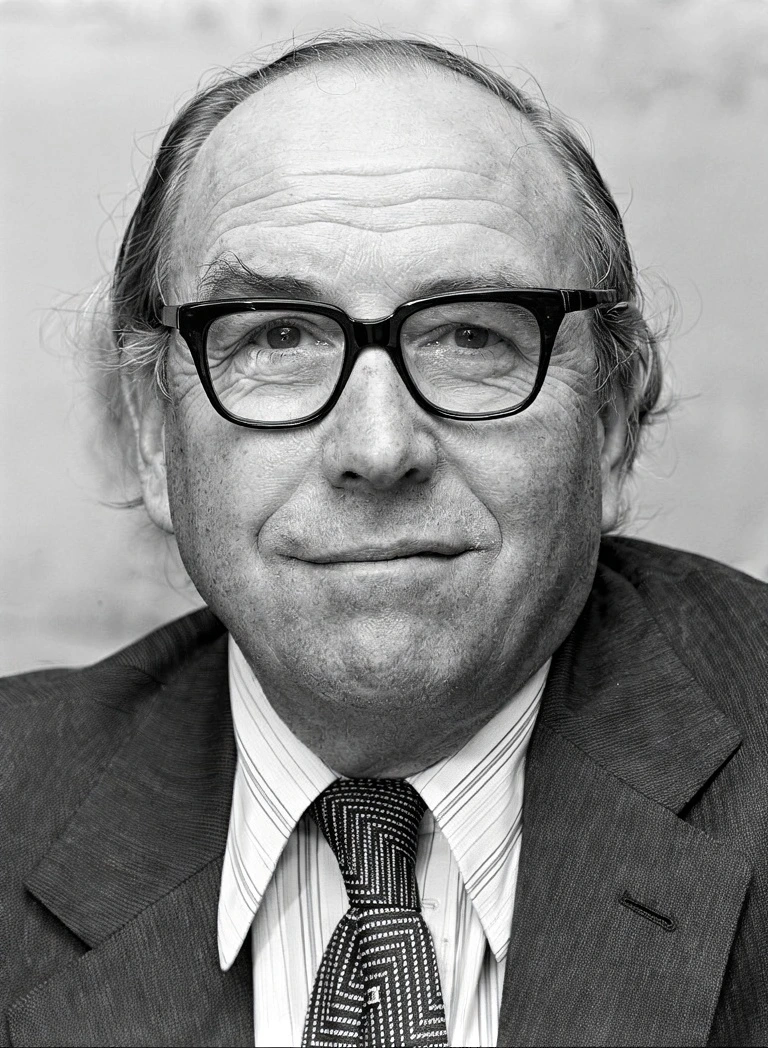
Jenkins’ father was a coalminer who became a trade union official (1921-1935) and finished his career as a Member of Parliament (1935-1946) for the Labour Party. Brought up in a political and Francophile household (thanks to a miner’s scholarship his father had spent a year in Paris, where he had met French socialist leader Jean Jaurès), Jenkins attended grammar school and read politics, philosophy and economics at the University of Oxford (1938-1941), where he became highly involved in student politics. He spent much of the war period as an intelligence officer at Bletchley Park. Following the war, Jenkins set his sights on a political career. In 1948 he successfully fought a by-election as the Labour candidate for Central Southwark and entered Parliament as the then youngest member. Labour lost power in 1951, meaning that he spent much of his early parliamentary life as an opposition back-bencher. During this stage of his career he developed an interest in, and enthusiasm for, European integration. In 1955 and 1956 he served as a Labour delegate to the Council of Europe, a period which coincided with what is termed la relance européenne, involving crucially the birth of the European Economic Community (EEC). Jenkins co-authored a report assessing the impact that the new structure would have, particularly its effect on those countries, like the United Kingdom (UK), that initially did not take part. The seeds of what became a career-shaping enthusiasm had been sown. By 1961 when the Conservative government of Harold Macmillan applied to join the EEC, Jenkins, although still only a backbencher, had become one of the most forceful Labour advocates for entry.
Harold Wilson’s victory in the 1964 general election allowed Jenkins to begin his ministerial career. Between 1964 and 1970 he was successively Minister of Aviation, Home Secretary and Chancellor of the Exchequer. In the two latter roles he gained a reputation as one of the most effective figures on the Labour right. He also rose to be Deputy Leader of the party. His ambitions of securing the top job in British politics seemed realisable, especially as Wilson had confided that he did not intend to serve for the whole of his third term. But Labour’s surprise defeat in the 1970 general election scuppered Jenkins’ hopes, not least because while in opposition Labour began to slide back into a more Eurosceptic position very distant from Jenkins’ views. His role as the leader of Labour’s pro-Europeans was a crucial factor in securing parliamentary support for British EEC accession. The Edward Heath government only won the decisive October 1971 vote because 69 Labour rebels defied a three-line whip and voted in favour of membership. But it came at the cost of Jenkins’ standing within the party. By 1974, when Labour regained power, Jenkins was badly out of step with much of his party. Because of his pro-European views, he was denied the job of Foreign Secretary and returned instead for a second stint as Home Secretary.
In 1975 Jenkins served as chairman of the UK in Europe, the cross-party grouping campaigning for a ‘yes’ vote in the referendum that Wilson had called on EEC membership. He had the satisfaction of seeing two-thirds of the British electorate vote to remain within the EEC. But the mutual disillusionment between Jenkins and Labour continued to grow, which explains why he accepted Wilson’s January 1976 approach about becoming the next President of the European Commission. The Prime Minister’s offer reflected a consensus between the leaders of France, Germany and the UK that François-Xavier Ortoli’s successor as Commission President needed to be British and a heavyweight politician. The EEC Council of Ministers approved Jenkins’ appointment in July 1976. Most unusually this allowed Jenkins to spend nearly six months trying to influence the identity of those appointed to his Commission, although his patchy success in doing so was an early reminder of the limitations of his power.
On becoming Commission President on 6 January 1977 Jenkins sought to prioritize a small number of policy areas. His initial focus, once he had completed the delicate task of distributing jobs amongst the members of his team, was the ongoing battle to ensure that the Commission President was invited to participate in the newly established global summits of the G7. The agenda of these annual get-togethers of Western leaders overlapped significantly with the responsibilities of the EEC. The participation of the Commission President could both limit any potential clash between European and global commitments and help relay the views of those EEC member states too small to qualify for the G7. But procuring an invitation could only be done in the teeth of strong opposition from the French and British. The hard-fought battle for the Commission to take part dominated Jenkins’ first few months in Brussels. The effort was ultimately crowned with success, despite some petty limitations such as not inviting the Commission President to some of the leaders’ dinners that the French and others sought at first to impose. Jenkins did not choose this confrontation (he had inherited it from the previous Commission), but his success was an enduring achievement and one that helped reassure the smaller member states that he was prepared to fight their corner against the larger member states who had been so central to his appointment.
The push for greater monetary integration constituted Jenkins’ next priority and led to the most high-profile achievement of his presidency. Turning the Community into a stable currency zone in an increasingly turbulent world economy had been a goal of the EEC since the early 1970s, but the EEC’s early efforts proved largely unsuccessful. There was therefore a high element of risk in Jenkins’ decision to use an October 1977 speech in Florence to urge a renewed push in this direction. He also took a chance in terms of the internal politics of the Commission, since monetary affairs were the responsibility of his predecessor, Ortoli, who had stayed on in Brussels as a member of Jenkins’ Commission. Any presidential initiative in this field risked alienating one of his most powerful colleagues, especially as Jenkins’ instincts and style were much bolder and more ambitious than those of the former President. But in the end the gamble proved worthwhile. He avoided a serious clash with Ortoli (there was some tension but ultimately the two were able to work together) and Jenkins’ highly visible advocacy helped set the stage for a Franco-German push which ultimately led to the 1979 launch of the European Monetary System (EMS). Once German Chancellor Helmut Schmidt and French President Valéry Giscard d’Estaing seized the initiative, Jenkins’ own role in the making of the EMS diminished greatly and the final monetary mechanism devised bore little direct resemblance to the vision that Jenkins had sketched out 18 months earlier in Florence. But neither of these realities seriously undermined Jenkins’ achievement, as he had been able to show that the Commission and its President could still play an important role in pushing the Community forward and developing its policy agenda. At a time when confidence in the European Commission was at a low ebb, this demonstration of how much influence it could still exert was of considerable value.
Also of crucial importance was Jenkins’ role in transforming the Commission from a sceptic towards Community enlargement into a forceful and effective advocate of southern enlargement. This change involved both internal reorganizations, creating structures and divisions of labour within the Commission that allowed for a more focused and systematic approach to the Greek, Spanish and Portuguese accession bids, and a clear political lead from its President. The new Commission approach proved highly valuable to Greece’s final push to attain EEC membership with a strong and constructive partnership emerging between the Commission and the Greek government. This was all the more remarkable given the earlier mutual suspicion. The Commission also began a constructive dialogue with the Spanish and Portuguese applicants, as well as urging the member states to begin to think through the full implications of a much larger Community. But the enlargement issue also underlined the Commission’s powerlessness when confronted with a strong effort by a large member state to obstruct forward movement. Jenkins could do little once Giscard decided that he wanted to put the brakes on Spanish accession. Thus, Spain and Portugal finally joined the Community in 1986 rather than the early 1980s as Jenkins had hoped.
A final success was Jenkins’ role in striking the May 1980 deal that temporarily brought a halt to the confrontation between the UK and its partners over the British contribution to the EEC’s budget. The row over how much the British should pay into Community coffers broke out in 1979 and was already threatening to poison relations between newly elected Prime Minister Margaret Thatcher and her main European counterparts. At the Dublin summit of November 1979 neither Schmidt and Giscard made any effort to hide their impatience and lack of sympathy for Thatcher’s strident demands. The position of the British Commission President was particularly awkward in this time, since Jenkins had to tread a very narrow path between explaining and responding to British requests and appearing to take a stance that was viewed as too favourable to his country of origin. In the end the Commission President and his team were able to contribute significantly to the agreement attained between foreign ministers at the 29-30 May 1980 Council meeting, suggesting the basic three-part package that temporarily settled the row, and skilfully using all their powers of persuasion to devise wording that all could accept. As ever with Community affairs, the Commission shared any credit for reaching a deal with the Council Presidency, held by Emilio Colombo, the Italian Foreign Minister, and with some of the other key national negotiators, notably Klaus von Dohnanyi, the German representative. Also crucial was the role played by Peter Carrington, the British Foreign Secretary, and Ian Gilmore, a Foreign Office Minister, who managed, not without difficulty, to persuade Thatcher to accept the agreement reached. The bargain struck was an important one and gave all parties to the dispute the time and space to begin the search for a more permanent solution. Jenkins was also later proved right in his assessment that a full resolution of the British budgetary dispute could only be secured within the context of a much wider renegotiation of the EEC budgetary system, although the increases in Community expenditure agreed to at Fontainebleau in 1984 and in the so-called Jacques Delors I Package of 1988 fell far short of the sums that Jenkins had spoken of in some of his final speeches before leaving Brussels.
Jenkins’ achievements as Commission President co-existed with a string of equally significant disappointments. Little progress was made during the 1977-1980 period on modification of the Common Agricultural Policy (CAP), a genuinely European response to the energy crisis triggered by the Second Oil Shock of 1978-1979, or on institutional reform, whether of the Commission itself or of the broader Community system. Jenkins commissioned a report from an expert committee, chaired by former member of the European Coal and Steel Community’s High Authority Dirk Spierenburg, which made some useful recommendations about how the Commission could operate more effectively, but several suggestions proved impossible to implement in the absence of member state support. More fundamentally, the EEC still struggled to demonstrate that it could be the key mechanism by which Western Europe responded to the economic downturn of the 1970s, despite Jenkins being convinced that it could be. One of the main claims in his Florence speech was that eliminating the currency instability that plagued the Continent would have much more general knock-on effects on Europe’s wider economic performance. No such transformation was delivered by the time that Jenkins’ term came to an end, with Western Europe still in the economic doldrums as the 1980s began.
To some extent these disappointments reflected the difficulties of leadership within an institution like the European Commission. Jenkins, like all Commission Presidents before and since, lacked the power to hire and fire his fellow Commissioners. Instead, each owed their appointment (and their prospects of serving a further term should they want one) to their national government. A Commission President can, therefore, find it hard to impose themselves on their colleagues. The route to success instead lies through persistent persuasion and the careful building of internal consensus. This was something at which Jenkins proved reasonably effective, especially on questions like enlargement. But the need to accommodate the preferences and sensibilities of his key colleagues, especially the so-called ‘Four Horsemen’: also the Commissioners Étienne Davignon (1971-1985), Ortoli and Finn Gundelach (1977-1981) and Emile Noël, the long serving Secretary-General of the European Commission, made certain policy initiatives almost impossible to contemplate. Deep-rooted change to the CAP, for instance, would not have been feasible without a major confrontation at the heart of the Commission. The internal balance of the institution over which he presided was hence at least one factor explaining the lack of progress on this important dossier. Similarly, Jenkins was hamstrung on other issues by the lack of an effective Commissioner. For instance, the prospects of a strong Commission push towards a more coordinated European energy policy were not helped by the fact that Guido Brunner, the Commissioner responsible, was someone who Jenkins did not view highly and with whom he had a rather prickly relationship.
Even more fundamentally, however, the failures of the Jenkins’ era were a product of the wider power dynamics of the European Community system. A Commission President can be an influential and inspirational figure. But virtually all of the key decisions that a Commission President needs to take can only be acted upon and turned into reality with the support of the member states. Furthermore, in the late 1970s and early 1980s this needed to be unanimous support. Achieving this during Jenkins’ time in office was very difficult. These years were a time of crisis when all European governments were under pressure to preserve scarce resources for their individual national needs rather than collective multilateral action. In addition, this was an era of deep ideological cleavages within Western Europe not just about what action needed to be taken in response to the economic crisis (statist, interventionist solutions or market-led reform) but even about whether or not Europe was the best level to act. Leaders like Giscard and Schmidt were clearly tempted to use the new collective instruments of global Western governance like the G7 mechanisms as the main methods to respond to an economic downturn that affected North America and Japan as well as Western Europe. In due course the frailties of the global instruments became more apparent, and Western Europe started feeling left behind by the rather earlier arrival of economic recovery in the America of Ronald Reagan and in Japan. This helped persuade the main governments of Western Europe by the mid-1980s that they needed to act regionally in order to avoid being left behind, rather than continuing to hope for global solutions. But when Jenkins was in office this decisive choice in favour of European rather than global action had yet to be made and, in its absence, it was an uphill struggle for any Commission President, however effective or eloquent, to persuade European governments to approve a systematic Community response to the economic crisis. The economic and political context in which Jenkins served, to put it differently, goes a long way to explain his inability to achieve many of the goals that he had set himself.
A final factor at the end of his term was the powerful counterpull of British politics. Jenkins had accepted the post of Commission President largely because of the ending of his hopes of becoming Labour leader and hence Prime Minister. But his British political ambitions did not wholly disappear. The outcome of the 1979 general election, with a defeated Labour Party split by internecine warfare, but also with Thatcher initially appearing to be a weak and contested leader of a fractious Conservative Party, seemed to offer Jenkins a potential way back into British politics through the revitalization of the political centre. This was the vision that Jenkins outlined during his BBC Dimbleby lecture in November 1979. As a result, during Jenkins’ final year in Brussels he was at least partially distracted by contemplating the launch of a new centrist party. This probably did not diminish his short-term effectiveness too much and did not stand in the way of securing the May 1980 deal on the British budgetary question. But it mattered more for the way in which the lure of a British political return helped convince Jenkins that he should not seek a second term as Commission President. In rejecting a second term, Jenkins placed a further major limitation on his capacity to transform the European Commission and wider European Community. Given the slowness of European politics, there are significant constraints on how much any Commission President can accomplish in one four-year term. By deciding to restrict himself to a single term, Jenkins was putting a restrictive cap on the amount that he could accomplish in Brussels.
All told Jenkins should probably be regarded as a good Commission President but not a great one. He had his significant accomplishments, most notably his role in the launch of the EMS and the turn-around that he oversaw in the Commission’s approach to enlargement. He also demonstrated how much an able and effective politician in the Commission President’s seat could contribute to high level discussion whether bilaterally in his many exchanges with European and world leaders or multilaterally through the European Council or the G7. But he also fell short of many aspirations, primarily because the political context in which he was operating was not conducive to major advance. There was hence an element of wistfulness for what he could have accomplished had the conditions been right, when he left Brussels on 6 January 1981, succeeded by Gaston Thorn from Luxembourg, and made his return to British politics.
After leaving Brussels, Jenkins threw himself back into the domestic political fray, becoming one of the founding members and the first leader of the Social Democratic Party (SDP) which was launched in March 1981 and seemed during the early 1980s on the verge of breaking the UK’s two-party mould. The SDP campaigned for a centrist approach to British politics, including strong support for EEC membership (which Labour then opposed), more moderate economic policies than Thatcherism and electoral reform. In the 1983 General Election, the SDP in alliance with the Liberal Party secured 25 percent of the total vote, just behind Labour’s 28 percent. But the British electoral system meant that this translated into just 23 seats, compared with Labour’s 209. After this disappointment Jenkins was replaced as party leader by David Owen. In 1987 Jenkins also lost his parliamentary seat. Elevation to the House of Lords shortly after his electoral defeat, though, ensured he retained a political platform and some prominence which he later used as an unofficial advisor and counsellor to Tony Blair and New Labour.
Alongside his political career Jenkins was also a highly successful author and biographer. This was something that had begun even before his election to Parliament, as he published his first book, a biography of Clement Attlee, in 1948. But it continued intermittently throughout the rest of his life, as well as a well-regarded volume of memoirs, A Life at the Centre (1991), and a published version of the diary that he kept as Commission President: European Diary, 1977-81 (1989). From 1987 until his death in 2003 he was also Chancellor of the University of Oxford.