Biography
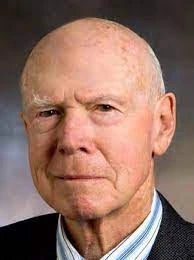
Ingram, a descendant from English pioneer settlers in Southern Australia, was the eldest of three children in a lower middle class family. Although most English pioneers were of Protestant faith, his family was baptized Catholic due to the influence of two Irish great grandmothers. Only his mother had any secondary schooling. His father left school at the age of twelve and, after unemployment during the Great Depression, worked as a salesman of Austin motorcars. He had to give up this business during the Second World War and, unable to serve in the military because of a crippled leg, found a position as government clerk. In 1944 Ingram graduated from De la Salle College, his Catholic high school. His parents encouraged him to seek the security of a civil service position. He followed their advice and took up a clerical position with the Victorian State Rivers and Water Supply Commission and began part-time studies for an economics degree at Melbourne University. In the spring of 1945 his mother pointed out a newspaper advertisement calling for applications to the Australian diplomatic service and the next year Ingram successfully participated in the competitive examination. A completed university degree was not required, given the high number of young men who had suspended their studies due to military service. He began an 18-month training course at Canberra University College, during which time he became acquainted with the works of political thinkers and economists such as Hans Morgenthau, James Burnham, Karl Marx and Friedrich Hayek.
After his initial years working at the Foreign Ministry in the capital Canberra, Ingram’s first overseas assignment brought him to Tel Aviv, Israel in 1950. That same year he married a French woman from Paris who had left Europe after the Second World War and found employment at the French legation in Canberra. In 1956 Ingram was posted to Washington DC, Australia’s most important foreign embassy. His first direct experience with the United Nations (UN) came in 1956-1957, when he joined the Australian delegation to the UN General Assembly, where the Soviet invasion of Hungary and the Suez Crisis were debated. After his stay in New York Ingram opened and was Chargé d’Affaires of Australia’s representation to the European Economic Community in Brussels, Belgium. Subsequently he was Counsellor at the Embassy in Jakarta, Indonesia and then returned to Australia’s UN mission, where he worked as Counsellor for trade and development issues following the establishment of the UN Conference on Trade and Development in 1964. After his return to Canberra he became Assistant Secretary in charge of the Foreign Ministry’s Asian and Pacific Department. In 1970 he was appointed Ambassador to the Philippines and in 1973-1974 he served as Australia’s High Commissioner to Canada as well as the Caribbean states of Barbados, Guyana, Jamaica and Trinidad and Tobago. In January 1975 Ingram returned to Canberra yet again, this time to head the Australian Development Assistance Agency’s bilateral division. The Agency was re-named Australian Development Assistance Bureau (ADAB) and put under firmer control of the Foreign Ministry in 1976. Ingram became the Bureau’s Director and as chief executive initiated and expanded assistance programmes in China and Southeastern Asia. Together with the Australian economist and Vice Chancellor of the Australian National University, Sir John Crawford he promoted science and technology in the aid activities and helped to establish the Australian Centre for International Agricultural Research. The conservative government’s desire to cut back on ADAB’s personnel characterized his time in office, as he had to fight ‘daunting battles over money and staff’ (Ingram 2007: 34). In this function he also served as Australia’s Alternate Governor of the World Bank, the Asian Development Bank and the International Fund for Agricultural Development between 1975 and 1982. Furthermore he represented Australia at high-level meetings of the Development Assistance Committee of the Organization for Economic Cooperation and Development in Paris, France and was a member of the North-South Round Table (which was founded in 1977 to debate development policy and UN actions) as well as a member of the Australian National Commission for the UN Educational, Scientific and Cultural Organization. In recognition of his public service for the country, Ingram was appointed an Officer of the Order of Australia in 1984.
When Ingram began to search for a senior international post, the World Food Programme (WFP), the UN’s ‘food aid arm’, did not come to his mind, as he ‘shared the conventional prejudice against food aid’ (Ingram 2007: 37). However, at a conference in Paris in the spring of 1981 Dieter Bommer, Assistant Director-General of the Food and Agriculture Organization (FAO), informed him that WFP Executive Director Garson Vogel had recently died and that FAO Director-General Edouard Saouma was looking for candidates to fill the post. Bommer suggested a meeting with Saouma, a Lebanese agricultural professional and at the time one of the few UN executive heads from a developing country. The WFP, based at FAO headquarters in Rome, Italy had been established as a joint UN/FAO unit for the delivery of food aid to developing countries in 1962, at first on an experimental basis for three years. The WFP’s constitutional texts provided for close links between the WFP and its parent organizations, particularly the FAO. Its General Regulations accorded the FAO Director-General extensive supervisory rights. When Ingram met Saouma in the early summer, it was clear that Saouma would play a crucial role in selecting the new Executive Director, who was to be appointed jointly by the UN Secretary-General and the FAO Director-General. As Ingram (2007: 47-50) describes it, it was thanks to Saouma that he was eventually selected. Ingram found it difficult to mobilize even the support of his own government, and many countries supported Acting Executive Director, Bernardo Brito, from Brazil. John Shaw (2001: 214) writes that Saouma ‘felt somewhat indebted to Australia’ because the Australian government had supported his proposals for the FAO budget. Ingram claims that there was no link to the FAO budget and emphasizes instead Saouma’s unwillingness to accept a contender from a developing country in the food organizations. A collaborator with Saouma mentions a third reason for Saouma’s support for Ingram: his opposition to an American candidate who the United States (US) government had put forward (Interview with the author, 20 September 2011). Whatever his motivation, Saouma finally convinced Javier Pérez de Cuéllar, the new UN Secretary-General, that Ingram was the right person for the position. Ingram’s appointment was announced on 25 February 1982 and he assumed office on 5 April.
During his first months in office Ingram developed an ambitious reform agenda for the WFP. The initial tool for reform was a supplementary budget, through which he wanted to strengthen key sections, including the WFP’s then one-man policy ‘division’. Yet, when Ingram submitted his proposals to the FAO, the reaction was sceptical and consequently the number of new posts was cut down from ten to two. The FAO, which had played an important role in advancing the idea of multilateral food aid in the 1950s and 1960s, saw itself as responsible for policy issues and argued that donors would be reluctant towards increases in headquarters staff. Ingram contended that responsibilities for food aid policy had been transferred by UN General Assembly Resolution 3404 (XXX) of 28 November 1975 to the newly constituted Committee of Food Aid Policies and Programmes (CFA), the inter-governmental body that oversaw the work of WFP. In October 1982 the amended budget proposal passed the CFA without opposition. The clash with the FAO over the supplementary budget made Ingram realize that he had a fundamentally different perspective of the status of the WFP and the role of the Executive Director than Saouma. Ingram regarded the original legal regulations, according to which the WFP Secretariat reported to both the UN Secretary-General and the FAO Director-General, as pro forma matters that were not meant to establish FAO supervision but merely to assist the WFP when it was set up as an experimental programme. For Saouma, however, the same legal regulations were an important element of the international food aid regime, which ensured a multilateral supervision of how donor states, particularly the US, used the agricultural surpluses they were providing. During the summer of 1982 Ingram sought and received an opinion on the limits of his authority from the UN Legal Counsel and his interpretation of the legal texts was largely confirmed. When he handed over Pérez de Cuéllar’s endorsement of the document, Saouma was outraged that Ingram had done this behind his back and regarded the action as a breach of trust. Saouma disagreed with the UN Legal Counsel’s opinion and the FAO Legal Counsel wrote an opposing opinion in 1983 (FAO Archives, Legal Office, FP 1/5). Ingram was taken aback by Saouma’s reaction and began to see Saouma as a person driven by a desire for control and a need for power.
Still, Ingram refrained from making the legal opinion public and continued his efforts to strengthen the WFP’s management. In the summer of 1983 he submitted a biennial budget that expanded WFP’s headquarters staff considerably and rejected FAO’s demands for reductions and the CFA accepted the budget. His relationship with Saouma was not entirely bad, however, as the two met regularly for conversations. The relationship deteriorated towards the end of 1983 and Ingram began to keep a diary in January 1984. A dubious affair concerning a tender for the insurance of the maritime transports of WFP food aid led to a ‘collapse of trust’ (see Ingram 2007: 113-127). A German insurance broker had called Hansa, the Swedish insurer of these transports, and claimed that he had reliable sources of information from within WFP/FAO on the bids of other insurers and offered his assistance in ensuring the renewal of Hansa’s contract with the WFP. When Hansa revealed this to the WFP, WFP and FAO officials separately undertook intensive examinations but were unable to find the source. In the course of the affair Ingram gained the impression that the FAO was trying to discredit the WFP, rather than protect its ‘ward’, with the FAO Director-General being the ‘trustee’ of the WFP funds. In the spring of 1984 Ingram rejected FAO’s edits on three WFP policy papers for submission to the WFP’s governing body, which made the FAO submit its own set of policy papers. Once again Ingram prevailed, because although the CFA rejected aspects of the WFP’s policy papers, it stated that in the future only one set of policy papers should be submitted and that this was the purview of the WFP Executive Director. A report by Maurice Bertrand, the French Inspector on the UN Joint Inspection Unit, provided an avenue for reform, as it argued that the problems with the WFP’s personnel administration were due to its outdated constitutional regulations, which required revision and updating. The regulations provided that the Executive Director should appoint WFP senior staff ‘in agreement’ with the UN Secretary-General and the FAO Director-General. Ingram noted in his diaries (20 January 1984) that Saouma had ‘used’ the regulations ‘to impose his choices’. The pressure for reform resulting from Bertrand’s report led to the establishment of a joint UN/FAO Task Force, consisting of high-ranking UN and FAO officials, which began its work in January 1985 and produced its report in May. It brought some substantial new delegations of authority from the FAO Director-General to the WFP Executive Director, including the establishment of an internal audit unit for the WFP. It did not, however, alter the constitutional texts. Ingram accepted the report and promised to do his best to make it work. The period after the Task Force report was relatively peaceful and Ingram used this time to make several advances for the WFP. He brought in consultants from McKinsey in an effort to reform the WFP’s management structure. He arranged for the organization to get its own logo in order to increase visibility. He attempted to launch a partnership with the World Bank, where WFP food aid would have been used to mitigate the negative effects of the Bank’s structural adjustment measures. He developed a closer relationship with the UN High Commissioner for Refugees and established the Protracted Refugee Operation, a new category of food aid project. This hybrid between emergency and development operations is the precursor of the Protracted Relief and Recovery Operation, the WFP’s largest programme category in 2013. Ingram also initiated a reform of the procedures of the CFA, which shifted the discussion and approval of food aid projects from the governing body’s plenary into a smaller Sub-Committee of Projects.
In 1987 Ingram was up for re-appointment in April and Saouma for re-election in November. Both men continued in their offices, although many donor countries resisted Saouma’s re-election. Saouma and Pérez de Cuéllar re-appointed Ingram, not the least due to the strong representations of support by governments in the CFA. The relationship between WFP and FAO deteriorated again at the beginning of 1988, when the FAO’s internal audit team demanded access to the WFP internal audit papers and reports. Ingram denied access because he feared that the FAO would use the documentation to exercise pressure or discredit the WFP. He regarded the 1984 maritime insurance affair as a precedent. Saouma accepted Ingram’s decision only reluctantly and blamed him for his ‘pressure tactics’. In his diaries (11 April 1988) Ingram noted that this ‘episode (over the accounts) has convinced me that the [constitutional] texts must be changed. But how to do it and when?’. Constitutional reform had seemed improbable after the Task Force reform of 1985, but the ‘how’ and ‘when’ of constitutional reform turned out to be closely linked to the audit issue. In August 1988 Saouma declined to certify the WFP accounts because he lacked documentation and the issue was debated at the FAO, UN and WFP governing bodies in autumn. In December 1989 the CFA finally decided to request the FAO’s External Auditor to clarify the accounts issue and to invite the UN Secretary-General and the FAO Director-General to appoint an eminent person to study the relationships between the WFP, FAO and UN. Pérez de Cuéllar and Saouma failed to agree on an eminent person until June 1990, leaving Ingram room to put forward his own proposals for constitutional reform. The CFA then set up a Sub-Committee, which debated reform proposals in September and October, though without reaching an agreement. The final breakthrough in the negotiations on institutional reform came at the CFA session in December, when an informal CFA working group agreed on a ‘package deal’ that would grant the WFP administrative and financial independence and give developing countries greater representation on the CFA. For Saouma, the FAO-WFP conflict was a North-South issue, a question of whether the FAO, where developing countries held the majority in all bodies, could control food aid flows and their impact on local agriculture. Ingram’s quest for reform appeared to Saouma as a quest for donor control, in particular by the US and the then Assistant Secretary of State for International Organization Affairs, John Bolton (Interviews by the author, 20 September 2011 and 23 May 2012). However, for Ingram the issue of the WFP’s institutional autonomy was decidedly not a North-South issue and definitely not an issue of him being a donor tool longing for ‘untrammelled power’, as Saouma had portrayed the matter (Ingram 2007: 283). In order to achieve reform Ingram decided to demonstrate that he would not personally benefit from the new powers accorded to the Executive Director. At the beginning of the decisive December session he declared that he would not seek a third term in office and thus would leave the WFP shortly after a possible reform (CFA verbatim records, 3 December 1990). This decision may have had an important impact on the subsequent negotiations on the future institutional structure of the WFP. The separation of the WFP from the FAO, which the UN Legal Office described as one of the largest reforms in the history of the UN system (Ingram diaries, 2 January 1991), was agreed upon by an informal CFA working group two days after Ingram renounced a third term. The reform was then approved by a special CFA session in March 1991 and by the UN and FAO governing bodies in the summer and autumn of 1991. With the WFP’s status now clarified, the UN Secretary-General entrusted Ingram as WFP Executive Director to serve as his representative in humanitarian negotiations in Ethiopia, Djibouti and Sudan in 1991. With the conflict solved and the WFP independent, Ingram could be appointed without giving the impression of the UN Secretariat taking sides. Shortly before Ingram left, the CFA established a separate voluntary fund, the Immediate Response Account, which increased the flexibility of emergency food aid operations and is still active.
In April 1992 Ingram retired as WFP Executive Director and returned to Canberra, where he became director of the Australian Institute for International Affairs, serving for one term. He was subsequently elected a Fellow of the Institute. Between 1990 and 1997 he also served on the Board of Trustees of the International Food Policy Research Institute in Washington DC, founded in 1975 to analyse the economics of and develop policies on food and agriculture. In 1992 Ingram received the Alan Shawn Feinstein World Hunger Award for his work as WFP Executive Director and the WFP gave him the Food for Life Award in 2000. From 1996 to 1999 Ingram was the chair of the Australian Crawford Fund, which raises awareness of the benefits of international agricultural research. Ingram led the task force on world food security that the Crawford Fund established in 2008. Ingram has published articles on international humanitarian cooperation (1993), a monograph about his leadership and reform of the WFP (2007) and a family history of the Ingrams in Australia (2009). With his wife he founded the Ingram Fund for International Law and Development at the University of New South Wales in Sydney, which aims to promote the study, teaching and dissemination of international law and to foster understanding of the impact of law on the interests of developing countries.
Ingram was the first Australian to head a UN agency. During his time in office the WFP was transformed from what was widely regarded as a unit of the FAO into an independent UN agency. This transformation was largely due to his efforts. Both the contributions to WFP and the number of staff increased during Ingram’s tenure. His wish to reform and manage the WFP independently collided with FAO Director-General Saouma’s desire to keep the WFP closely tied to the FAO’s development work, which led to a drawn-out conflict between the UN food organizations. Close collaborators have described both men as strong personalities who had clear agendas for their organizations, but who were separated by different ideas about the role of the WFP in these agendas. For Saouma, who had little doubt that the WFP should be closely supervised by the FAO given the existing regulations, food aid appeared as an important resource to support FAO-designed agricultural development projects in developing countries. Ingram for his part had a fundamentally different perspective on the role and standing of the WFP and the office of Executive Director. For him, it was precisely the capacity to manage independently that Saouma had seemed to infringe upon soon after Ingram assumed office. The foundations for the conflict were thus laid already in the first months of Ingram’s tenure. Ingram (2007) has described his struggle as a case of much needed leadership in the UN system. It had important consequences for the development of the WFP in the 1990s and 2000s, during which the UN’s food aid organization became the ‘world’s largest humanitarian agency’ (Shaw 2011).
March 2025: date of death added