Biography
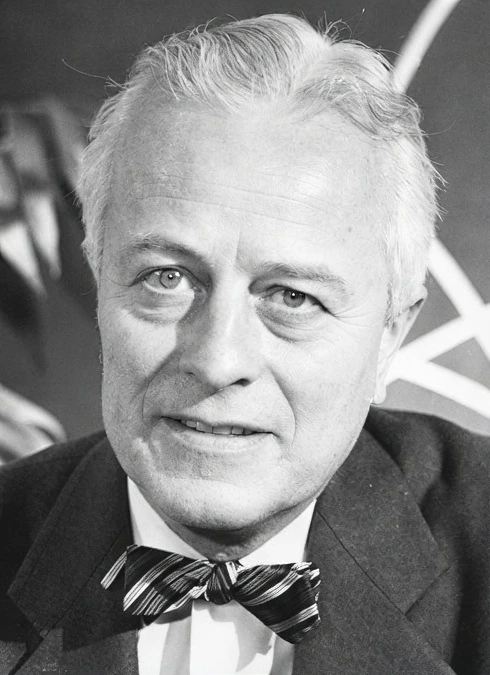
Cole grew up in Steuben County in upstate New York, where he attended public schools. His father was a lawyer who also served as a principal of several high schools. He was a member of several fraternal organizations, such as the Freemasons and the Odd Fellows. As a Republican politician his father became a member of the New York State Assembly (1920) and Senate (1923), where he led the legislature in discussing public education and later served as the fourth Commissioner of Education of the State of New York (1940-1942). Cole earned his Bachelor of Arts degree, with Phi Beta Kappa honors, from Colgate University in 1925. He taught for two years in Corning Free Academy in Corning, New York, before enrolling in Albany Law School of Union University, where he received his Bachelor of Laws in 1929, the year he married Betty Thomas, a graduate of Simmons College in Boston. Admitted to the New York Bar in 1930, he began to practice law in Bath, New York. With his brother Robert he established the firm of Cole & Cole. But, like his father, Cole also entered politics. He was unsuccessful in his quest for the Republican nomination to the United States (US) Congress in 1932, but in November 1934, at the age of 30, he was elected to the US House of Representatives. He was the youngest Republican member of the Seventy-fourth Congress and was re-elected to the eleven succeeding Congresses (serving until his resignation on 1 December 1957). Having joined the Navy Reserve in 1939, he achieved the rank of lieutenant commander and was the ranking Republican member of the Naval Affairs Committee when it was merged with the Military Affairs Committee in 1946, forming the Armed Services Committee, a merger that he personally opposed.
In 1946 Cole was also appointed as one of the members of the newly formed Joint Committee on Atomic Energy. After the first Committee chair, Senator Brien McMahon, had completed his two-year term of office, there was a deadlock over whether to select a member from the Senate or the House. It took an intervention by House Speaker Joe Martin and Senate Majority Leader Bob Taft to agree on a rotation plan, but on 1 April 1953 the committee chose Cole as its leader for a two-year period. As chair Cole announced that the first order of business was consideration of changes in the Atomic Energy Act of 1946 (the so-called McMahon Act) to allow for private atomic power development for peaceful industrial development. The resulting revisions made it possible for the peaceful uses of atomic energy to be developed more rapidly in the US and for applications to be made more broadly available to other countries. The legislation also authorized steps facilitating US participation in establishing what became the International Atomic Energy Agency (IAEA). As committee chair Cole was outspoken in what he regarded as US complacency toward the Soviet Union’s atomic progress. He urged the adoption of a large-scale hydrogen bomb program to meet the challenge of the Soviet Union, which he believed would soon be able to devastate the US. He took that position, even though in 1950 he had expressed doubts about the morality and practicality of the hydrogen bomb and had introduced a resolution for world disarmament to be directed by the United Nations (UN). He also reversed his long-standing advocacy of limiting government spending to favor the immediate expenditure of large sums for continental defense. Since the law required the Atomic Energy Commission (a government agency) to inform the Joint Committee of all atomic energy matters, Cole was unusually knowledgeable about atomic and hydrogen power. Moreover he served as a member of the Congressional delegation to the Geneva ‘Atoms for Peace’ Conference in 1955 and was a member of the US delegation to the Conference to Draft the Statute of the IAEA in October 1956. On a lighter note, during the summer of 1956 Cole was awarded the first prize for his entry in the open needlepoint class at the Steuben County Fair in New York.
On 18 June 1957 the US Senate gave its advice and consent to ratify the treaty establishing the IAEA. The next day a bill to provide for US participation in the IAEA was introduced and, after hearings, duly enacted. At the same time the US government initiated discussions about having Cole selected as the IAEA’s first Director General, even though the Agency was not to come into being until 29 July 1957, with the first General Conference scheduled to open on 1 October. Cole’s nomination was met with some resistance, as it had been the understanding of many delegations that the first Director General of the IAEA would be a scientist from a neutral country. Harry Brynielsson, Managing Director of the Swedish Atomic Energy Company (Aktiebolaget Atomenergi), and Dr. Paul R. Jolles, the Swiss secretary of the preparatory commission, were mentioned. Europeans in particular held Cole’s ignorance of nuclear science against him and he readily admitted that he was no scientist, but indeed a ‘layman’ (We Are Leading 1953: 18, 19). However, no other appointee would have promised as much assurance of US congressional support during the first years of the IAEA as did Cole. The US government contended that it was appropriate for a US national to be selected as Director General because President Dwight D. Eisenhower had in 1953 been the first head of state to call for such an agency and the US had played a leading role in the development of the peaceful uses of atomic energy. The Soviets were especially concerned that with an American at its helm the IAEA would be run as an instrument of US foreign policy, something that proved not be to the case. Some haggling with the Soviet delegate to the IAEA, Vasily S. Emeyanov, ensued over the posts that the Soviets would get in return to agreeing to a US Director General. It has been suggested that Soviet concurrence was premised on the election of Ambassador Pavel Winkler of Czechoslovakia as the first Chairman of the IAEA Board (Fischer 1997: 60). While Cole said that he would put Soviet bloc representatives in some of the Agency’s key positions, he denied that he had made any promises in advance in order to secure his election (Cole to Name 1957: A6). As a consequence of his election Cole resigned from Congress effective 1 December 1957. He called it a leave of absence, saying that he would return after his four years as Director General and expected to resume his same level of seniority in the House of Representatives (Cole Prepared 1957: 2), but by April of 1959 he was quoted as saying: ‘I dearly love Washington as the most beautiful city in the World, but I wouldn’t want to return to the strain of politics there – all those pressures, all that sniping of constituents’ (Atoms for Peace 1959: 7).
Although Cole’s election by the IAEA General Conference was without public objection, it soon became clear that his relations with the Board would not be smooth. UN Under Secretary-General Ralph Bunche, who represented the UN at the IAEA on a number of occasions, remarked that ‘the Cold War raged more violently on the IAEA Board than in the UN itself’ (Fischer 1997: 74). The increasing intensity of the Cold War and the Soviet Union’s growing influence on the IAEA’s governing body led the US State Department, after a single year of the IAEA’s operation, to give preferential treatment to bilateral and regional arrangements rather than the global ones that the IAEA was established to administer (Stoessinger 1959: 404). Cole’s personal characteristics compounded problems as well. His background as chair of the Joint Committee on Atomic Energy of the US Congress did not prepare him well for being a servant of the IAEA’s member states, and he also had little experience in administration or diplomacy. In Congress he was not a ‘glad-hander’, as he was ‘inclined to introversion and moments of pensive moodiness’. At times his temper flared and his face flushed and he had a reputation for stubbornness, reportedly the source of his nickname ‘Stub’ (Atomic Needler 1957: 10). At the IAEA his impatience with protocol and diplomatic conventions ‘did not always endear him to the ambassadors with whom he had to deal, and he sometimes had difficulty in selecting the right issues on which to stand’ (Fischer 1997: 74-75). Furthermore Cole had a penchant for proposing and, at times, starting costly projects that seemed out of synch with the IAEA’s mandate. He also demanded that he be paid a salary and living allowances second only to that of the UN Secretary-General, reportedly 20,000 and 10,000 US dollar respectively. The salary was comparable to that of the heads of the International Monetary Fund and the International Bank for Reconstruction and Development, both based in Washington DC, but at the Vienna-based organization it exceeded that of the Austrian Chancellor and President. This annoyed economy-minded delegations from Western Europe and those from countries with small economies (Cole Named 1957: A4).
Many saw Cole and the IAEA as starting slowly, focusing on hiring staff and making governments aware of its existence. Cole himself remarked: ‘None of us has been completely happy or satisfied with the Agency’s progress’. He went on to add, however, that ‘many share my own feeling that much has been done in a comparatively short time, that there is a demonstrable need for such an international organization and that its usefulness will become more and more evident as time goes along, especially as and when electricity can be made from nuclear energy with greater economy and efficiency than from conventional fuels’ (Cole 1961: 17). General Conference President Hiero Furuuchi of Japan contended that the IAEA ‘found its feet’ and came ‘to grips with reality’ in its second year (Cole 1960: 78). The agency issued a manual on the safe handling of radioisotopes and Brynielsson worked on the controversial problem of disposal of radioactive wastes at sea. In 1958 the Board of Governors established a Scientific Advisory Committee (SAC), which reviewed programs, most of which dealt with training and education services and providing technical assistance missions to Latin America to assist governments in developing their nuclear programs (Khan 1987: 7). In establishing the SAC, Cole recommended that it provide advice to him rather than to the Board, a suggestion which would have taken it out of the political arena. The Board rejected the suggestion (Stoessinger 1959: 399). Cole’s ‘activist style’ (impatience with political consensus building) was one of the reasons for ‘widespread opposition to his candidacy for a second term in office’ and, in fact, the US did not even propose him for reappointment, apparently largely because of his advocacy of international safeguards and opposition to bilateral agreements (Schiff 1984: 73-74). Cole himself was proud of his and the Agency’s accomplishments in his term as Director General and contended that the need for a regulatory climate or framework within which the atomic energy could operate was clearer than when the Agency was first created (Cole 1961: 18), but others saw it as having had few substantive programs (Hall 1987: 52-53). Much credit for what was accomplished during Cole’s one term in office has been credited to the capable nuclear pioneers who he persuaded to work at the Agency, such as Henry Seligman, the Deputy Director General of Research and Isotopes, and Jolles, the Deputy Director General of Administration.
After Cole left the IAEA, he resumed his legal practice, this time in Washington DC. In 1954 he was awarded an honorary degree by Colgate University, where he was a trustee from 1944 to 1950. He was also a trustee of Elmira College in New York from 1952 tot 1959 and of the Woodlawn Foundation, which supports nonprofit organizations that receive pastoral care from the Catholic Prelature of Opus Dei. Cole himself was a member of the Presbyterian Church, a Mason, a Shriner, a member of the Knights Templar and Sigma Nu, Pi Delta Epsilon and Delta Sigma Rho fraternities. He continued practicing law in Washington DC, residing in Arlington, Virginia, until he was eighty years old. He died of cancer two years later at the George Washington University Hospital in Washington DC and was buried in Pleasant Valley Cemetery in Hammondsport, New York.