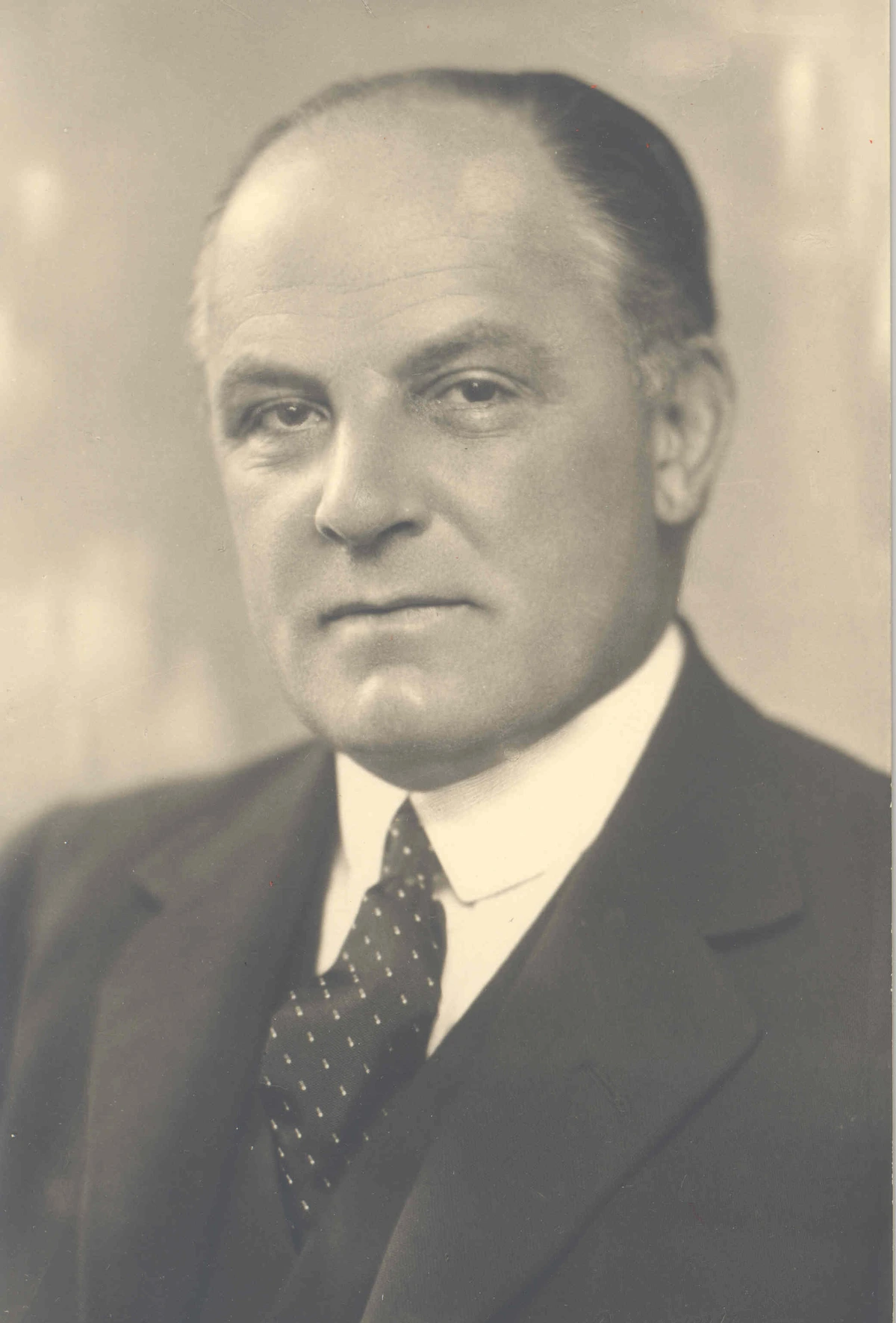
Biography
Butler was one of four children (two sons and two daughters) and reared in an educated and active milieu. His mother was a granddaughter of the (Anglican) Church of Ireland Archbishop of Armagh and Primate of All Ireland, Marcus Gervais Beresford. His father was an academic expert in Coptic civilization. An Old Etonian who counted John Maynard Keynes among his classmates, Butler completed his undergraduate studies at Balliol College, Oxford, as a Brackenbury Scholar and a Jenkyns Exhibitioner. He graduated with first class honours in literae humaniores in 1905, and became a fellow of Oxford’s prestigious All Souls College in 1905 through its notoriously difficult examination process, remaining in the post through 1912. In 1906 he spent a year travelling through Germany and France, acquiring the language skills and familiarizing himself with the local cultures, beyond his cursory understanding drawn from the writings of Tacitus and Thomas Carlyle. Butler joined the British Civil Service in 1907. He truly would have preferred to join the Foreign Office. However, there were no immediate openings in that Office, and by the time they were liable to open up he would have aged out of eligibility, so he instead spent a year working for the Local Government Board before transferring upward to the Home Office. In 1910 he married the daughter of Samuel Abraham Walker, an assistant inspector-general of the Royal Irish Constabulary, in Newcastle upon Tyne (she was born 2 March 1890 in Tralee, County Kerry, and died 11 September 1989 in Braintree, Essex).
Butler was Secretary to the British delegation to the Conference on Aerial Navigation in 1910, which is noted as his first experience in international policy making. That same year he joined the Industrial Department of the Home Office, attaining the position of Acting Assistant Secretary in 1914. His section of the Home Office, concerned with blockades, was merged with the comparable section in the Foreign Office in 1916. This merger permitted his promotion to Secretary of the Foreign Trade Department. At the insistence of William Clive Bridgman, Parliamentary Secretary to the Ministry of Labour, Butler was appointed Assistant Secretary of that Ministry in 1917. Promoted to Principal Assistant Secretary in 1919, he became a member of the British delegation to the Commission on International Labour Legislation, which met during the Versailles Peace Conference in early 1919 to draw up the labour clauses of the peace treaty with Germany. The final product of the Commission (the Constitution of a new labour organization) was by and large based on the draft presented by two employees of the British Ministry of Labour: Butler and Edward J. Phelan, who would eventually become the fourth Director (retroactively named Director-General) of the International Labour Office, the Secretariat of the International Labour Organization (ILO) in Geneva. Coming to the table with a prepared draft that was the sole basis of discussion (as no other delegation on the Commission was so prepared), the British perspective ended up as that enshrined in the treaty. The ILO’s tripartite structure, based on cooperation between governments, employers and workers, was included in this draft.
After the Versailles Peace Conference Butler was named Secretary of the Organizing Committee for the First Session of the International Labour Conference of the nascent Permanent Organization of Labour (later the ILO), to be held in Washington, DC in autumn 1919. With this essential preparatory role, Butler was chosen to be Secretary-General of the first session of the conference. Butler’s roles in organizing and carrying out the conference can be counted as a groundbreaking milestone setting the example for almost every international conference which followed. Eric Drummond, a British subject, was appointed Secretary-General of the League of Nations in 1919. This appointment made it difficult to imagine a second Brit (Butler) at the helm of another League entity without accusations of hegemony, despite the fact that his name was one of the most often cited for the job. With the other strong candidate, Frenchman Arthur Fontaine, out of the running due to his post as permanent Chairman of the Governing Body, Albert Thomas of France was elected the first Director of the International Labour Office after multiple votes. Though suspicious of Butler, given his heavy involvement in the creation of the ILO, Thomas’ first act was to appoint Butler, on 29 January 1920, to the post of Deputy Director of the International Labour Office (officially he remained seconded from the British Ministry of Labour). To speak of Butler’s work as Deputy Director is difficult because the notion of Thomas as figurehead in that early period ran deep, and continues to do so today. Nevertheless Butler played an important role behind the scenes, for example, taking charge of the International Labour Office while Thomas and Phelan completed six weeks of consultation with labour affiliates in the United States in 1922. Butler himself undertook an industrial tour of the US and Canada five years later, for consultations with labour leaders, in the hopes of nudging the US towards membership in the ILO. Butler also took on a publicity role, speaking about the work of the ILO on its tenth anniversary. Undoubtedly Butler kept in contact with his former Home Office colleagues, such as his former chief and British government Governing Body representative Malcolm Delevingne, to mutual benefit.
On 1 July 1932 Butler began as Director of the International Labour Office in the aftermath of Thomas’ unexpected passing in May. The ILO he inherited, while stronger than its parent organization, the League, was facing turbulence of its own, beyond that imposed by the Great Depression. Internally, Thomas had left behind an organization filled with mistrust between services. Butler solved this in part by ‘de-nationalizing’ the Director’s Cabinet, making it ‘a truly international organ’ (Reymond 1986: 22-23). He redistributed decision-making power downwards: chiefs of departments or sections, previously reporting to the top for all important decisions, were reincarnated as Assistant Directors with decentralized authority. In relation to its parent organization, Butler managed, on at least one level, to create a more harmonious working relationship between the ILO and the League of Nations. The ILO had always been subsumed to the League with regards to its budget, and Thomas’ defence of his organization’s proposals was always known to be a stormy event in the League Assembly. With Butler in office, the drama fell away from ILO budget approval in the League Assembly. Butler was trusted as a manager. Externally, great interest in regional labour entities, particularly in Latin America, loomed as a threat to the ILO. Criticisms of the overwhelming European-ness of the ILO had begun to be raised towards the end of Thomas’ term of office. At the close of the 15th Session of the International Labour Conference, William Gemmill, the South African employer delegate, apologized for the ‘overseas representatives’ interjecting perhaps too frequently, but followed-up saying it was necessary in order for the broader ILO not to ‘forget about all of us’ (15th Session of the ILC, 1931, Record of Proceedings: 485). Butler is often credited as being the solution to the ILO’s European bent. He did indeed have the good fortune to be Director when a 1922 reform of Article 393 of the ILO Constitution, which mandated a certain number of the Government representatives on the Governing Body were to be selected from non-European countries, came into force by virtue of Argentina’s ratification of the amendment in 1934, so this achievement is often credited to him. More convincing is Butler’s institution of increased regional activity. Butler called for the first regional conference of the ILO (of American ILO member-states) in Santiago, Chile in 1936, as a place where the region could discuss issues and perspectives of specific interest. This first step towards regional awareness benefited the ILO well into the future, as it proved quite beneficial during the Second World War and the rapid decolonization of the post-war era.
Butler’s most well-known achievement as Director was to secure US accession to the ILO in 1934. When the US Senate failed to ratify the Treaty of Versailles in March 1920, the US abstained not only from the League, but also from the ILO. Despite facing a prominent anti-internationalist bent, the ILO doggedly worked towards US accession. In May 1920 an ILO Correspondent’s Office was established in Washington DC, non-member territory, in order to persuade US policy makers that membership in the ILO was worth their while, as well as to sell publications and collect data. Beyond the permanent lobbying post, there were also contacts by high-level officials, such as Thomas’ 1922 mission to Springfield, Illinois, to court the American Federation of Labor, and Butler’s 1927 industrial mission to North America. Butler benefited from a climate favourable to US accession, particularly with the election of Franklin Delano Roosevelt to the US presidency in 1932. At the First Session of the International Labour Conference in 1919 Butler became aware of Roosevelt’s enthusiasm for the ILO when Roosevelt, then Assistant Secretary of the Navy, lent office space to the Conference Secretariat. Roosevelt even met with Butler in November 1933. Additionally, Butler had an ally in Frances Perkins, Roosevelt’s Secretary of Labor and the first female Cabinet member in the US. Butler, as Deputy Director, had consulted with Perkins, then New York’s Industrial Commissioner, on unemployment (a cherished issue for Butler) in the early 1930s. Both were keen to have the US join the ILO and leaned on President Roosevelt to this effect. It has been said that Butler’s success in securing US accession to the ILO was a breaking of ties with the League of Nations, which did not count the US as a member.
Beyond the monumental coup of US accession to the ILO, Butler’s tenure as Director was marked by several other membership changes. The Soviet Union joined the ILO at the same time as the US, to much less fanfare. Germany, admitted under the Weimar Republic in 1919 at the First Session of the International Labour Conference, withdrew as Nazi Germany in 1933, officially coming into effect in 1935. Butler directed the ILO through the murky waters with aplomb, keeping world opinion focused on the positive achievements of the ILO as opposed to the rapidly crumbling structure of the League. The positive achievements were many: under his direction, such important conventions as the Forty-Hour Week Convention (1935, no. 47), the Holidays with Pay Convention (1936, no. 52), and several specialized insurance conventions (conventions 35-40, all from 1933) were passed by the International Labour Conference. These conventions afforded important protections for workers, a step towards recovery in the immediate aftermath of the Great Depression.
On 28 April 1938 Butler gave notice of his resignation to the ILO Governing Body. The official version, still propagated by the ILO today on its website, recounts that he left to become the first Warden of Nuffield College, Oxford, which shows a rather peaceful career transition. The true impetus, recounted in some scandalous stories in the press at the time and in several reminiscences since, is that Butler became caught in an unfortunate battle over the replacement of the Director of the Paris Branch Office of the ILO. Paris Branch Office Director Fernand Maurette had passed away in April 1937 and the French government sought to have Marius Viple, then Chief of the ILO’s Information and Press Service in Geneva, placed in the post. Butler was not fond of such an appointment. He and Viple had some animosity between them, not the least of which was that Butler deemed Viple incompetent, too political, as having enemies who might endanger the reputation of the ILO, and incapable of holding the confidence of French employers. In order to avoid open conflict with the French government, Butler resigned. His contract ended 31 December.
From 1938 to 1943 Butler was Warden at Nuffield College. It was a good fit, as Nuffield was to be an exclusively graduate entity which would give place to courses of study in economics and political and social sciences. Not unlike the ILO, it was to be a hub for research on contemporary problems. However, with the outbreak of the Second World War, his role at Nuffield took a backseat to his appointment as Southern Regional Commissioner for Civil Defence. In May 1942 he was poached by the British government for the post of Head of the British Information Service at the British Embassy in Washington, DC. He finally resigned from Nuffield in June 1943, concentrating on his work at the Embassy through 1946, where his enduring legacy is that of having successfully instilled American confidence in British information. There appears to have been a de facto consensus on suitable post-ILO Directorship appointments: not only was Butler serving in an Embassy post, but so was his successor at the ILO, John G. Winant, who ended up at the US Embassy in the United Kingdom. After returning to the UK, Butler became the Chairman of the British Section of the European League for Economic Cooperation. In 1950 he published the first volume of an uncompleted autobiography, Confident Morning, which unfortunately only covered his life up through the founding of the ILO. That year he returned to the ILO as one of nine appointed members of the Fact-Finding and Conciliation Commission on Freedom of Association, whose aim was to decide how to best examine complaints falling under the purview of ILO Convention no. 87 in the context of ILO collaboration with the United Nations. The work of the Commission barely begun, he passed away at the Dunedin Nursing Home in March 1951 at the age of 67.
Butler was appointed CB (Companion of the Order of the Bath) in 1919 and KCMG (Knight Commander of St. Michael and St. George) in 1946. His record at the ILO is clear. Compared to Thomas’ legacy as the inspirational, enthusiastic founder, Butler was the level-headed realist. He took Thomas’ ILO and adapted it to a world experiencing deep economic and political shifts. His prior experience in the British Ministry of Labour and as Deputy Director of the ILO served him well: he had a keen sense for focusing on feasible goals that would benefit the ILO and had the ILO’s best interests in mind when resigning in 1938. His post-ILO career had, unfortunately, the effect of confirming a truism about the post of the ILO Director: he was not on equal footing with the representatives of national governments involved in ILO negotiation. Butler took a step down from national/international diplomacy to lead a graduate school, and later, once returned to the British government, was given an inferior position as a Minister in the Foreign Service. Despite his experience running an international organization, Butler was considered a diplomat back home. And yet, his legacy with the ILO cannot be forgotten. In The Times he was eulogized as trailblazing by Edward J. Phelan, and ‘tireless in all his efforts’ by Major Edward Beddington-Behrens (1951).
May 2021: ILO explained in heading and dates in office specified